
Flowers
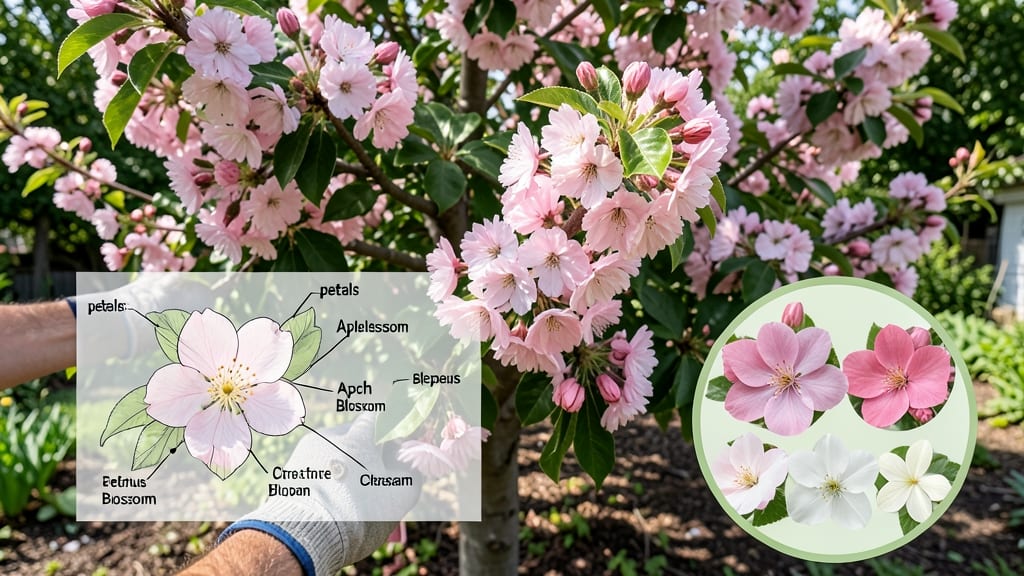
Fruit tree flowers identification is the first step to knowing what will grow in your orchard. 🌸 I’ve spent years watching blossoms transform into fruit, and the key lies in bloom shape, leaf arrangement, and timing—each tells a story about the tree’s future harvest. A peach tree’s delicate pink pom-poms, for example, mean sweet summer fruit, while apple blossoms’ white clusters signal crisp autumn bites.
Season matters just as much as shape. Early spring brings stone fruit blooms (peaches, cherries), while apples and pears wait until late spring when frost danger passes. Evergreen leaves under flowers?
Citrus. Smooth bark with clusters? Probably an apple. These clues help you prune at the right time, protect blooms from pests, and even predict yield—because not all flowers turn into fruit.
Ornamental flowers can trick you—some fruit trees (like flowering crabapples) look stunning but produce tiny, tart fruit. Others (like Bradford pears) bloom beautifully but drop fruit early. Knowing the difference saves time and heartache. With practice, you’ll spot the subtle hints that separate a productive tree from a pretty-but-useless one.
This skill changes how you garden: you’ll time pruning to preserve next year’s blooms, spot pollination problems early, and even choose trees that thrive in your climate. Start with just three trees—peach, apple, and cherry—and soon you’ll recognize them by sight alone.
What Triggers Flowering Differences
Fruit tree flowers don’t bloom randomly—they follow precise biological cues tied to genetics, climate, and environmental signals. Understanding these triggers helps gardeners predict blooming patterns and troubleshoot unexpected delays or absences. Here’s why your fruit tree’s flowers might look (or act) differently than expected:
Every fruit tree species has an inherent flowering schedule hardwired into its DNA. For example:
- Stone fruits (peaches, cherries, plums): Most bloom early spring (March–April) because their ancestors evolved in temperate climates where cold winters signal safety to flower. Without sufficient chilling hours (300–1,000+ hours below 45°F), buds may fail to open entirely, a phenomenon called bud dormancy.
- Citrus (oranges, lemons): These tropical trees rely on short-day photoperiodism—they flower when daylight shortens in late summer/fall. If artificial lights extend daylight beyond 12 hours, flowering can be suppressed.
- Apples and pears: They often need cross-pollination from another compatible variety to set fruit. If only one tree blooms (e.g., a lone ‘Honeycrisp’ apple), flowers may drop early due to lack of pollination partners.
Actionable tip: Check your tree’s cultivar tag—some modern hybrids (like ‘Jazz’ apple) are bred for partial self-fruitfulness, meaning they’ll set some fruit alone but thrive with neighbors.
Fruit trees evolved in specific climates, and modern weather throws their internal clocks off. Three key climate-related causes disrupt flowering:
| Issue | Scientific Cause | What Happens to Flowers |
|---|---|---|
| Insufficient chilling hours | Trees like peaches need endodormancy—a deep rest period triggered by cold. Without it, buds stay dormant or produce weak, deformed flowers. | Flowers bloom late, are sparse, or drop prematurely. |
| Heat waves during bloom | High temps (>85°F) during flowering can sterilize pollen or cause flower abortion (buds fall off). | Flowers open but fail to pollinate; fruit set drops by 50–90%. |
| Late frosts | Frost damages receptive stigma (the flower’s pollen-catching surface), killing it within hours. | Flowers blacken and die; no fruit forms. |
Pro tip: Use frost blankets or micro-sprinklers to raise temps by just 2–3°F—enough to protect blooms. For chilling-hour deficits, plant low-chill varieties like ‘Bonanza’ peach (200–300 hours) in warm zones.
Flowers are metabolically expensive—if a tree is struggling, it’ll prioritize survival over reproduction. Common stressors that sabotage blooms:
- Water extremes:
- Drought: Causes abscisic acid (a stress hormone) to spike, triggering premature flower drop.
- Overwatering: Roots suffocate, limiting nutrient uptake. Flowers may form but lack vibrant colors or pollen.
- Nutrient imbalances:
- Too much nitrogen (from fresh manure or over-fertilizing) leads to luxuriant foliage but no flowers.
- Deficiencies in phosphorus or potassium weaken flower structures, making them prone to disease or frost damage.
- Pests/diseases:
- Scale insects or spider mites sap nutrients from leaves, reducing photosynthates (sugar) available for blooms.
- Fungal infections (e.g., brown rot in stone fruits) can mummify flowers before they open.
✨ Quick fix: Conduct a soil test in late winter. If phosphorus is low (<20 ppm), apply bone meal (3–4 lbs per 100 sq ft) in early spring to fuel flowering.
Just like humans, fruit trees have a biological lifespan for peak flowering. Two age-related issues stand out:
- Young trees (1–3 years):
They often skip flowering to focus on root and trunk growth. This is normal—wait until the tree is 3–5 feet tall with a trunk diameter of 1–2 inches.
- Over-mature trees (20+ years):
Energy shifts to maintenance over reproduction. Signs include:
- Smaller, less vibrant flowers.
- Flowers appear later in the season (e.g., June instead of April).
- Increased blind wood (branches with no buds).
💡 Renewal tip: For older trees, perform rejuvenation pruning in late winter—cut back 30–50% of the canopy to stimulate new growth and flowering. Pair this with a balanced fertilizer (10-10-10) in early spring.
Quick Fixes for Flower ID Confusion
Identifying fruit tree flowers can feel like solving a puzzle—especially when blooms look eerily similar or seasonal changes muddle your memory. But with the right strategies, you can turn frustration into confidence! Below, we’ve mapped common challenges to practical solutions, so you can spot, name, and celebrate those blossoms like a pro.
Cause: Overlapping bloom times (e.g., cherry and plum trees both flower in spring) or similar petal shapes (white/pink blooms abound!). Fix:
- 🔍 Zoom in on details:
- Petal count: Peach trees have 5 petals; apple trees often have 5 stamens (the "male" parts) radiating from the center.
- Leaf shape: Check the new leaves sprouting alongside flowers. Apple tree leaves are oval with jagged edges; pear leaves are more pointed.
- Scent: Some flowers (like magnolia) are fragrant; others (e.g., crabapple) are nearly odorless.
- 📸 Snap a side-by-side: Use your phone to compare unknown blooms with a flower ID app (like PictureThis or PlantNet). Upload a photo, and let tech do the heavy lifting!
- 📅 Track bloom seasons: Create a simple chart for your region. For example:
| Tree Type | Bloom Time | Key Clue |
|---|---|---|
| Apple | Late April–May | Pink buds, 5 stamens, serrated leaves |
| Cherry (Sweet) | March–April | White/pink clusters, smooth leaves, almond scent |
| Peach | February–March | Single white/pink flowers, fuzzy buds, lance-shaped leaves |
💡 Prevention Tip: Label your trees in fall with waterproof tags (include species + year planted). A 5-minute effort now saves hours of head-scratching later!
Cause: Flowers drop before leaves emerge (common in early spring), or you’re identifying from a distance. Fix:
- 🌿 Hunt for "bud scales": Many fruit trees have bud scales (protective layers on branches) that hint at the species. For example:
- Peach/nectarine: Buds are fuzzy and hairy.
- Plum: Buds are smooth with a single scale.
- 👁️ Look for "leaf scars": After flowers fall, inspect last year’s branches for leaf scars (the marks where leaves detached). Apple trees often have a "U"-shaped scar; pears have a crescent shape.
- 📱 Use a macro lens: If leaves are tiny or far away, attach a phone macro lens ($10–$20) to capture textures like leaf hairs or vein patterns.
🔥 Pro Tip: If all else fails, wait 2–3 weeks. Most fruit trees leaf out within a month of blooming—then identification becomes a breeze!
Cause: Late frosts, drought, or unseasonable warmth can delay or advance blooms. Fix:
- 📅 Adjust your calendar: Use local frost dates to predict shifts. For example, if your area had an early spring, expect peach trees to bloom 2–3 weeks ahead of schedule.
- 💧 Monitor water stress: Drought can stunt flowers. If blooms are sparse, give trees a deep watering (1–2 inches per week) and mulch to retain moisture.
- 🌡️ Check for heat damage: Sudden heat waves (>85°F) can cause flowers to abort (drop prematurely). If this happens, focus on next year’s blooms and improve airflow around the tree.
✨ Prevention Tip: Plant cold-hardy varieties suited to your zone. For example, Honeycrisp apples thrive in Zones 3–8, while Elberta peaches prefer Zones 5–9.
Cause: Bees or butterflies avoiding certain flowers might signal poor health or pesticide exposure. Fix: - 🐝 Observe pollinator patterns: - Healthy trees: Attract bees and butterflies. Lack of bees?
The tree might be self-incompatible (needs another tree for pollination). - Pesticide poisoning: If flowers are covered in dead insects, switch to organic sprays like neem oil.
- 🌼 Hand-pollinate if needed: For small trees, gently transfer pollen with a paintbrush between flowers on different branches.
🎯 Quick Test: Sprinkle a little sugar water on flowers. If bees swarm within minutes, the tree is healthy and attractive!
If you’re still stumped, try these last-resort tricks: - 🌳 Ask a local expert: Post a photo on r/whatsthisplant or visit your county extension office. - 🔬 Dig for roots: The root structure can hint at the species (e.g., apple trees have fibrous roots; peach trees have taproots). - 🍎 Taste-test (carefully!): If the tree is mature, sample a ripe fruit (only if you’re certain it’s non-toxic!).
Sweet-tart = apple; fuzzy skin = peach; stone pit = plum.
With these fixes, you’ll go from guessing to guru in no time. Remember: even the best gardeners misidentify blooms now and then—it’s all part of the joy of learning! 🌿
Frequently asked questions
How can I tell the difference between apple and pear tree flowers?
Apple tree flowers typically grow in clusters of 5-6 with 5 prominent stamens radiating from the center, and their leaves have jagged edges. Pear flowers often appear in smaller clusters with fewer stamens, and their leaves are more pointed. Check the leaf shape—apple leaves are oval, while pear leaves are narrower.
Why do some fruit tree flowers not turn into fruit?
Several factors can prevent fruit formation: lack of pollination (especially for apples and pears), late frosts damaging flowers, or nutrient deficiencies like low phosphorus. Stone fruits (peaches, cherries) also need sufficient chilling hours—without enough cold winter temperatures, buds may fail to open properly.
Can I identify fruit trees by their flowers before leaves appear?
Yes! Look at the bud scales—peach and nectarine buds are fuzzy, while plum buds are smooth. Apple buds are typically larger with visible stamens. For citrus trees, check for evergreen leaves even if flowers are the only visible part. If you're still unsure, wait until leaves emerge—they provide crucial identification clues.
What's the best time of day to photograph fruit tree flowers for identification?
Morning is ideal because dew enhances petal details, and flowers are fully open. Avoid midday when shadows can obscure key features. Use natural light and include both close-ups of flowers and wider shots showing branch structure. A macro lens attachment for your phone can help capture fine details like petal texture.
Are there any fruit trees with year-round flowers?
Most fruit trees have seasonal blooms, but some tropical varieties like citrus trees (oranges, lemons) can flower multiple times per year in warm climates. In temperate zones, they typically bloom in late winter/early spring. Flowering crabapples (ornamental varieties) may bloom more prolifically but produce minimal fruit compared to edible varieties.