
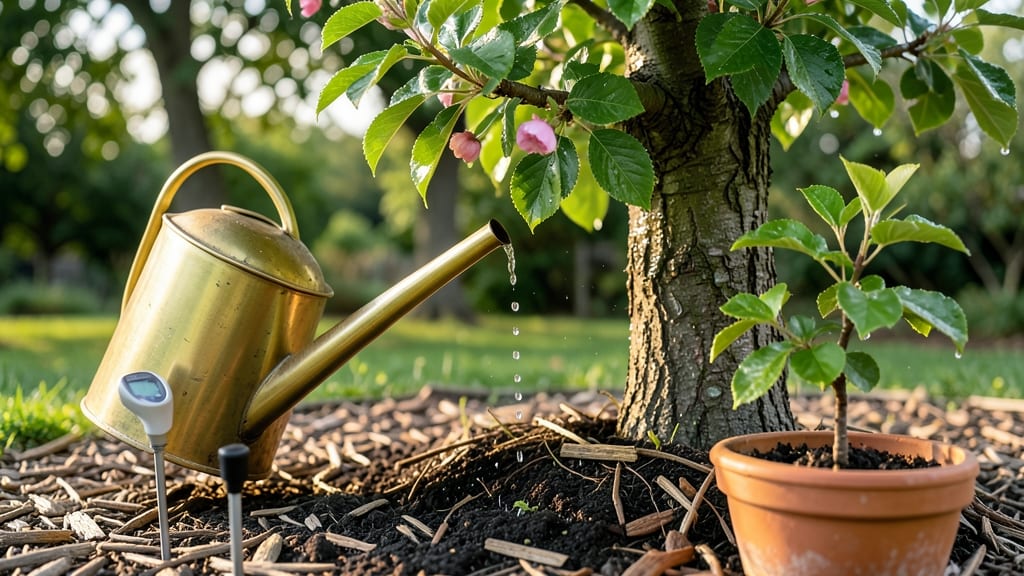
How Much Water Does a Cherry Tree Need: Seasonal Guide for Thriving Growth

How To

How Much Water Does a Cherry Tree Need: Seasonal Guide for Thriving Growth

A cherry tree 🍒 needs about 15-50 gallons of water per week, depending on its age and the season—too little stunts growth, while too much drowns roots.

Struggling to keep your cherry tree healthy? Overwatering or underwatering can both spell disaster—discover the exact watering schedule your tree needs to thrive year-round.

Young trees in Zone 6a need deep waterings every 5-7 days in summer, while mature trees can stretch that to every 10-14 days once established.

Below, I’ll break down seasonal adjustments, soil checks, and smart irrigation tricks to keep your tree hydrated without wasting a drop.

🌸
Spring
Deep watering
☀️
Summer
Every 5-7 days
🍂
Fall
Bi-weekly
❄️
Winter
Monthly

Cherry tree watering requirements by season: a month-by-month breakdown

Watering your cherry tree correctly is the difference between a thriving orchard and a struggling sapling. Unlike drought-resistant shrubs, cherry trees demand consistent moisture, especially during their critical growth phases.

But here’s the catch: too much water can suffocate roots, while too little stresses the tree during flowering and fruiting. Let’s break down exactly how much water your cherry tree needs each month, from spring planting to winter dormancy.

First, understand that young cherry trees (under 3 years old) need more frequent watering than mature specimens. Their root systems are shallow and can’t reach deep moisture yet. Meanwhile, established trees develop deeper roots over time, making them slightly more drought-tolerant—but only slightly.

Always prioritize deep watering over shallow sprinkles to encourage roots to grow downward where they’ll find stability.

Soil type plays a huge role: clay soils hold moisture longer but can become waterlogged, while sandy soils drain quickly and require more frequent watering. If you’re unsure about your soil, do the finger test—stick your finger 2-3 inches deep. If it feels dry, it’s time to water. Aim for 1-2 inches of water per week during the growing season, adjusting for rainfall.

Seasonal shifts demand adjustments: spring is about establishing roots, summer requires drought resilience, fall prepares the tree for winter, and winter means minimal watering. Let’s dive into the month-by-month schedule your cherry tree craves to stay healthy and productive.

Month Watering Frequency Water Amount Key Notes
January Monthly 5-10 gallons Dormant season; water only if soil is bone-dry.
February Monthly 5-10 gallons Pre-bud stage; minimal water needed.
March Every 10-14 days 15-20 gallons Increase as buds swell; critical for root growth.
April Weekly 20-30 gallons Flowering begins; deep watering essential.
May Every 5-7 days 25-35 gallons Fruiting stage; monitor soil moisture closely.
June Every 5-7 days 30-40 gallons Peak fruit development; drought stress risks high.
July Every 5-7 days 30-40 gallons Harvest season; reduce water slightly to improve flavor.
August Every 7-10 days 25-35 gallons Post-harvest recovery; taper watering gradually.
September Bi-weekly 15-20 gallons

Signs your cherry tree is overwatered or underwatered (and how to fix it)

Your cherry tree depends on consistent moisture but suffers just as much from too much water as too little. Yellowing leaves, wilting branches, or fungal growth on the bark can all signal water stress.

The key is understanding the subtle differences between overwatering and underwatering so you can act fast before the problem spreads.

Overwatering often creates soggy soil that suffocates roots, while underwatering leaves the tree dehydrated and struggling to absorb nutrients. Both conditions weaken your tree's defenses, making it vulnerable to pests and diseases. Let’s break down the telltale signs and how to restore balance to your cherry tree’s health.

⚠️ How Much Water Does a Cherry Tree Need?
Young trees: 15-20 gallons every 5-7 days (deep watering).
Mature trees: 30-50 gallons every 7-14 days (adjust for rainfall).
Soil check: Stick your finger 2-3 inches deep—if dry, water; if soggy, wait. Morning watering prevents fungal growth. Mulch retains moisture and regulates soil temperature.

One of the first warning signs of overwatering is yellowing leaves that stay yellow even as they age. Unlike nutrient deficiencies, these leaves often appear soggy or develop brown edges.

Check the soil—if it smells like rot or feels mushy, your tree is drowning. Root rot is a common consequence, and once established, it’s nearly impossible to reverse.

For underwatered cherry trees, look for crispy leaf edges and leaves that curl inward to conserve moisture. The tree may also drop leaves prematurely or develop small, dry fruits.

If the bark feels dry and brittle, it’s a clear sign the roots aren’t getting enough water. Act quickly by giving the tree a deep soak and monitoring its recovery.

To fix overwatering, improve drainage by amending the soil with compost or sand to create a looser texture. Avoid watering until the top 3-4 inches of soil feel dry. For underwatered trees, water deeply once a week during dry spells, ensuring the water penetrates 12-18 inches deep.

A drip irrigation system can help maintain consistent moisture without overdoing it.

Long-term, focus on soil health to prevent water stress. Test your soil’s drainage and pH levels—cherry trees thrive in slightly acidic soil (pH 6.0-6.5). Add organic mulch, like wood chips, to retain moisture and protect roots from temperature extremes.

Regularly check for fungal growth or pests, as stressed trees are more susceptible to these issues.

With the right balance of water, soil, and care, your cherry tree will reward you with lush foliage and abundant fruit for years to come. Keep an eye on those leaves—they’re your tree’s way of communicating its needs! 🍒💧

★★★★★4.7(7 reviews)
Categories How To