
Light Requirements
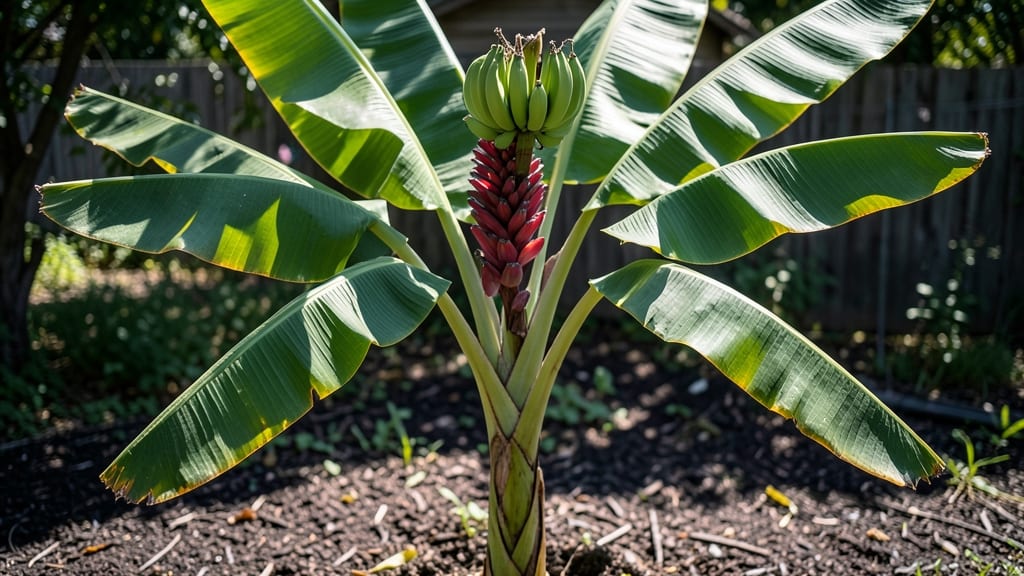
Growing banana trees in full sun means year-round tropical vibes and sweet harvests you’ll brag about. 🌿 I’ve grown mine in hot, sunny climates for years, and the secret isn’t just sunlight—it’s matching the right soil, water, and a few smart tricks to keep them thriving.
Most people assume banana trees need shade, but with the proper care, they actually love basking in the sun.
The first step is soil—banana trees crave well-draining, slightly acidic soil (think 6.0–7.5 pH) mixed with compost. Too much clay or poor drainage, and you’ll end up with root rot. Water deeply 2–3 times a week (more in extreme heat), but let the top 2–3 inches dry out between soakings.
Mulching helps retain moisture and keeps roots cool, which is key in full sun.
Your trees will reward you with bold, glossy leaves and eventually, those iconic fruit bunches. With proper sunlight, they grow 6–10 feet tall in a single season and produce fruit within 9–12 months of planting.
The real magic? They keep fruiting year-round in warm climates if you protect them from frost and pests.
Watch for yellowing leaves (often a sign of too much sun or underwatering) and brown tips (usually overwatering or salt buildup). Prune dead fronds regularly to keep energy focused on new growth. With these adjustments, your banana tree will become the showstopper of your sunny yard—no tropical vacation required.
📚 In This Guide
- What you need
- Instructions
- Tips and common mistakes
- Wrapping up and next steps
What you need
- ● Banana plant: Choose a Musa spp. variety (e.g., Musa acuminata or Musa balbisiana) suited for your climate. Start with a healthy, potted plant or a bare-root cutting from a nursery.
- ● Large container or in-ground planting site: For containers: A 15–25 gallon pot (minimum 18" diameter) with drainage holes. Opt for fabric or plastic pots (avoid glazed ceramic—they retain too much moisture).
- ● For in-ground planting: A sunny, sheltered spot with well-draining soil (bananas hate soggy roots!). Amend heavy clay soil with compost or coconut coir (5–10 gallons).
- ● Well-draining potting mix: A blend of 60% peat/coconut coir, 20% perlite, and 20% compost (or a pre-mixed tropical mix). Avoid garden soil—it compacts and suffocates roots!
- ● Mulch: 3–4 inches of straw, wood chips, or pine bark to retain moisture and regulate soil temperature.
- ● Fertilizer: Balanced fertilizer (10-10-10 or 8-3-9) for young plants (apply every 4–6 weeks during growing season).
- ● Potassium-rich fertilizer (e.g., 0-0-50) for flowering/mature plants to boost fruit production.
- ● Support stake or trellis: A 6–8 ft bamboo stake or metal cage to stabilize the heavy pseudostem as it grows.
- ● Watering can or hose with adjustable nozzle: Bananas need 1–2 inches of water weekly (more in extreme heat).
- ● Pruners or sharp knife: For trimming dead leaves or suckers (sterilize with rubbing alcohol!).
- ● Shade cloth (30–50%) for young plants in intense afternoon sun (banana leaves can scorch!).
- ● Drip irrigation system for automated, deep-watering in hot climates.
- ● Epsom salt (magnesium sulfate) to prevent yellowing leaves (mix 1 tbsp per gallon of water, apply monthly).
- ● Compost tea or liquid seaweed fertilizer for a natural nutrient boost.
- ● Frost cloth or moveable container if you live in a cool climate (bananas are tropical—protect them below 50°F/10°C).
Step-by-step guide to growing banana trees in full sun
Here's how I've mastered cultivating banana trees in bright, sunny conditions—no greenhouse required.
🌱 Step 1: Select and Prepare the Right Planting Site
Choose a location with at least 6-8 hours of direct sunlight daily. Banana trees thrive in full sun but need protection from harsh afternoon rays in hot climates—think dappled shade for 2-3 hours if temperatures exceed 90°F. I always test the site first by placing a white board where the plant will go; if it gets scorched within an hour, the spot is too intense.
Amend the soil with compost or well-rotted manure to a depth of 12-18 inches before planting. Banana trees have shallow but extensive root systems, so loose, fertile soil prevents root rot. Dig a hole twice as wide as the root ball but only as deep—planting too deep suffocates the stem and causes it to rot at the base.
☀️ Step 2: Plant at the Right Depth and Stake for Support
Position the banana plant so the top of the root ball sits 1-2 inches above ground level. This prevents water from pooling around the stem during heavy rains. Backfill with native soil mixed with compost, tamping gently to eliminate air pockets. The reason I never skip this step is that compacted soil around roots restricts water and nutrient uptake, leading to stunted growth.
Install a 6-8 foot bamboo stake in the hole before planting, driving it 12 inches deep for stability. Tie the pseudostem (the thick, false stem) to the stake with soft plant ties or old pantyhose—banana trees grow tall quickly and need support to prevent snapping in wind or rain. I always check ties monthly to ensure they're not cutting into the stem as it thickens.
💧 Step 3: Water Deeply and Maintain Consistent Moisture
Water immediately after planting to settle the soil and encourage root contact. Banana trees need 1-2 inches of water weekly, but they hate soggy soil. I water deeply once a week rather than daily shallow watering—this encourages roots to grow downward where they'll find natural moisture in the soil profile. The key is to keep the soil consistently moist but never waterlogged; you'll see yellowing leaves if it's too wet or crispy edges if it's too dry.
Mulch around the base with 3-4 inches of organic mulch (straw or wood chips) to retain moisture and regulate soil temperature. Keep mulch 6 inches away from the stem to prevent rot. I always refresh the mulch layer every 3-4 months as it breaks down—this ensures the roots stay cool and the soil stays loose for easy water penetration.
✂️ Step 4: Fertilize for Fruit Production and Prune Strategically
Feed banana trees with a balanced fertilizer (10-10-10) every 4-6 weeks during the growing season (spring through fall). I switch to a high-potassium fertilizer (0-0-50) when flower stalks appear to boost fruit development. Never fertilize in winter—banana trees go semi-dormant and don't need extra nutrients when growth slows.
Remove any suckers (offshoots) that appear at the base of the mother plant unless you want to propagate new trees. These compete for nutrients and weaken fruit production. If you do want to keep a sucker, select the strongest one and prune the rest. I always leave one healthy sucker to replace the mother plant after it fruits—this ensures continuous harvests without gaps.
🌿 Step 5: Protect and Harvest for Year-Round Bounty
Watch for banana borers—tiny holes in the pseudostem are their first sign. I treat infestations immediately with neem oil or insecticidal soap, applying it directly to the stem and surrounding soil. Healthy banana trees rarely get borers, so maintaining vigor through proper watering and fertilization is your best defense.
Harvest bananas when they're still slightly green—they won't ripen further off the plant. Cut the bunch with a clean knife, leaving a 1-inch stem attached. Place in a paper bag with an apple to speed ripening. I always harvest in stages, picking individual hands as they mature rather than waiting for the whole bunch—this extends the harvest window by weeks.
Tips & tricks for thriving banana trees in full sun
Here's what nobody tells you about keeping your banana trees lush and productive in hot conditions.
Sunlight Strategy: That 6-8 hours of direct sunlight is non-negotiable, but I've learned the hard way about afternoon heat. If your area exceeds 90°F regularly, create dappled shade during peak hours using sheer cloth or a lightweight shade cloth—just enough to prevent leaf scorch while still allowing plenty of light. I test shade needs by watching for leaf burn after just an hour of intense sun.
Root Health is Everything: When amending soil with compost or well-rotted manure to 12-18 inches deep, don't skimp on the organic matter. I mix in 1 part compost to 3 parts native soil for that perfect loose texture. The reason? Compacted soil around banana roots is like putting handcuffs on your plant—it can't absorb water or nutrients properly. I always use a broadfork to loosen soil before planting.
Watering Wisdom: Those 1-2 inches of water weekly are crucial, but timing matters more than you'd think. I water in the early morning to prevent fungal issues from evening moisture. The key is to water deeply enough that moisture reaches 12 inches down—this encourages deep root growth. You'll know you're doing it right when you see water running out of drainage holes about 30 minutes after watering.
Support System: That 6-8 foot bamboo stake isn't just for looks—it's survival insurance. I always install it before planting and angle it slightly away from the prevailing wind. For extra stability in windy areas, I use two stakes tied together in an "A" formation. Check those plant ties monthly—they can cut into the pseudostem as it thickens, and you don't want to accidentally girdle your tree.
Pro Tips for Banana Tree Full Sun
- Here's what nobody tells you about keeping your banana trees lush and productive in hot conditions.
- Sunlight Strategy: That 6-8 hours of direct sunlight is non-negotiable, but I've learned the hard way about afternoon heat.
- Root Health is Everything: When amending soil with compost or well-rotted manure to 12-18 inches deep, don't skimp on the organic matter.
Frequently asked questions
Got questions about growing banana trees in full sun? You’re not alone!
Here are answers to the most common concerns—from sunlight needs to troubleshooting—so you can keep your tropical star thriving.
How much full sun does a banana tree really need?
A banana tree loves full sun—think 6 to 8 hours of direct sunlight daily for optimal growth and fruit production. In hot climates (zones 10-11), they can handle even more sun, but provide afternoon shade if leaves start browning. Pro tip: Young plants benefit from gradual sun exposure to avoid scorching.
Can banana trees survive winter in full sun?
Nope! Banana trees are tropical and cannot tolerate frost or freezing temps. If you’re in a colder zone, grow them in containers and move them indoors or to a greenhouse during winter. Alternatively, plant them in sheltered microclimates (like near south-facing walls) to extend their season. Mulch heavily in mild winters to protect roots.
Why aren’t my banana tree leaves turning yellow in full sun?
Yellowing leaves (chlorosis) often signal nutrient deficiencies, overwatering, or poor drainage—not sunburn. Check soil pH (bananas prefer slightly acidic, 5.5–7.0) and fertilize with potassium-rich feed (like banana-specific fertilizer). If leaves are crispy and brown, it’s sunburn; prune damaged fronds and provide afternoon shade temporarily.
Are there banana tree varieties that tolerate less sun?
While most banana trees crave full sun, dwarf varieties (like ‘Dwarf Cavendish’ or ‘Lady Finger’) can adapt to partial shade (4–6 hours of sun). These are great for containers or shadier yards. For full sun, stick to hardier types like Musa acuminata or Musa balbisiana hybrids—they’re built for the heat!
How do I fix a banana tree that’s leaning or falling over?
Leaning stems usually mean lack of support or wind stress. Stake young plants with bamboo canes or trellises as they grow. For mature trees, prune lower leaves to reduce weight and tie the stem to a sturdy post. If the trunk splits, it’s a sign of age—harvest fruit early and replace the tree, as splits can’t be repaired.
Can I grow banana trees in pots in full sun?
Container-growing is perfect for full-sun patios or balconies. Use a large pot (15+ gallons) with drainage holes and a well-draining mix (60% potting soil, 30% compost, 10% perlite). Move pots to avoid afternoon sun in extreme heat, and fertilize monthly during growing season. Dwarf varieties thrive in containers—ideal for small spaces!
Wrapping up and next steps
Growing a banana tree in full sun is a rewarding journey that brings lush foliage and delicious fruit to your space!
With the right soil, watering routine, and a little patience, you’ll soon enjoy a thriving tropical plant that keeps giving. Don’t wait—start planting today and turn your sunny spot into a fruit-filled paradise!
Ready to take the next step? Research local banana varieties that thrive in your climate, or check out our guide on pruning and harvesting tips to maximize your harvest. 🌱✨