Diseases
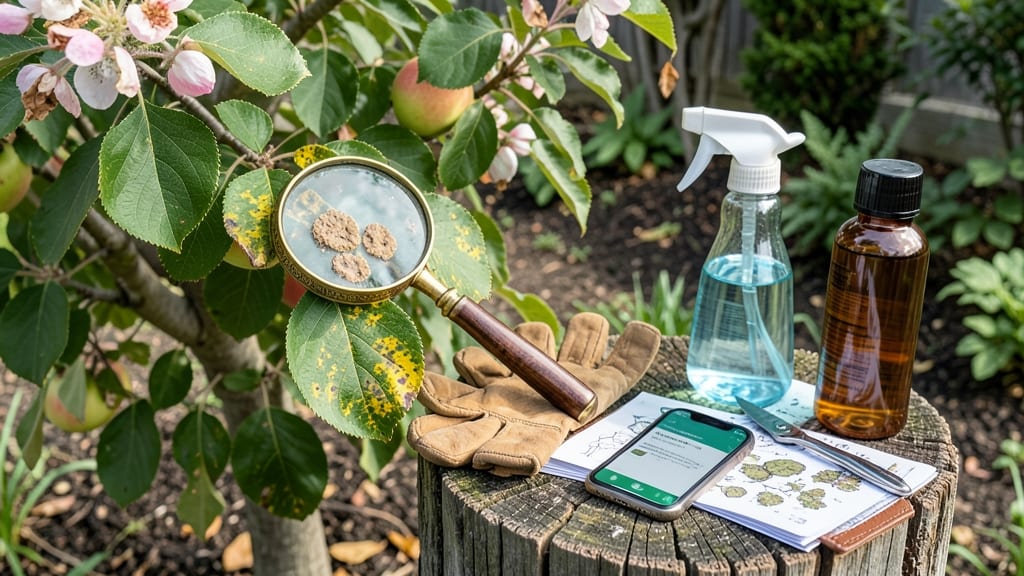
Yellow spots on apple tree 🍎 leaves are a clear sign your tree is fighting something serious—whether it’s a fungal infection, nutrient imbalance, or environmental stress.
If your apple tree leaves are turning yellow with unsightly spots, your harvest—and your tree’s health—could be at risk. These symptoms often signal fungal diseases, nutrient deficiencies, or pests that spread quickly if ignored.
Don’t wait until the problem worsens: early action can save your tree and next year’s fruit. In this guide, I’ll break down the top 5 causes of yellow-spotted leaves, how to tell them apart, and the best organic and chemical fixes to restore your tree’s health.
You’ll also learn how to prevent future outbreaks with simple seasonal care, so you can enjoy healthy leaves and sweet apples for years to come.
5 Common diseases causing yellow spots on apple tree leaves
When you notice yellow spots on your apple tree leaves, it’s rarely just a cosmetic issue—these symptoms often signal serious fungal or bacterial infections that can weaken your tree and reduce fruit production. The good news?
Identifying the problem early gives you the best chance to save your harvest and keep your tree thriving. Let’s break down the 5 most common diseases causing these spots and how to spot them before they spread.
Each disease has unique visual symptoms and early warning signs that help you diagnose the issue correctly. For example, apple scab creates olive-green, velvety spots, while bacterial spot produces tiny, water-soaked lesions with yellow halos.
Misidentifying the problem can lead to wasted time and ineffective treatments, so let’s dive into the specifics to help you act fast.
Below is a detailed comparison table of the most frequent diseases, including their leaf symptoms, affected areas, and best time to treat. Use this as your quick-reference guide when inspecting your tree.
| Disease | Leaf Symptoms | Affected Areas | Best Treatment Time |
|---|---|---|---|
| Apple Scab | Olive-green, velvety spots; yellow halos; leaves curl | Leaves, fruits, twigs | Early spring (bud swell) |
| Cedar Apple Rust | Orange-yellow pustules; distorted leaves; early defoliation | Upper leaf surface, fruits | Late spring (pustule stage) |
| Powdery Mildew | White, powdery coating; yellow spots; stunted growth | Upper leaf surface, young shoots | Early summer (high humidity) |
| Alternaria Leaf Spot | Dark brown spots with yellow borders; leaf drop | Lower leaves, fruit stems | Late summer (wet conditions) |
| Bacterial Spot | Tiny, water-soaked spots with yellow halos; shot-hole effect | Leaves, fruits, twigs | Early spring (leaf wetness) |
Apple scab is one of the most aggressive diseases, caused by the fungus Venturia inaequalis. You’ll first notice olive-green spots on the undersides of leaves, which eventually turn yellow and develop a velvety texture. If left untreated, these spots can spread to fruits, causing them to become misshapen and inedible. The key to stopping apple scab is acting before bud break in early spring.
If you see orange-yellow pustules on the upper surface of leaves, you’re likely dealing with cedar apple rust. This disease requires both an apple tree and a cedar tree nearby to complete its life cycle.
The pustules release spores in late spring, which can cause early defoliation and weaken your tree for the upcoming harvest season. Prune infected branches immediately and remove nearby cedar trees if possible.
Powdery mildew might look less severe at first, but it can quickly cover your tree in a white, powdery coating. This fungal disease thrives in humid conditions and often appears on the upper leaf surfaces, especially on young shoots. While it doesn’t kill the tree, it reduces photosynthesis and weakens the tree’s ability to produce high-quality fruit. Treat it early with sulfur sprays or neem oil to prevent spread.
Alternaria leaf spot is another common culprit, especially in late summer when temperatures are high and humidity is persistent. Look for dark brown spots with yellow borders that eventually cause leaves to drop prematurely. This disease can also infect fruit stems, leading to rot and lost harvests. Clean up fallen leaves in autumn to prevent spores from overwintering.
Finally, bacterial spot is one of the trickiest to manage because it spreads rapidly in wet conditions. You’ll see tiny, water-soaked spots that develop yellow halos and eventually create a shot-hole effect as leaves die.
Unlike fungal diseases, bacterial spot can’t be cured—only managed. Copper fungicides applied in early spring can help, but pruning and sanitation are your best defenses.
Now that you can identify these diseases, your next step is to act quickly. Early intervention—whether through fungicides, pruning, or organic sprays—can save your tree and ensure a healthy harvest. In the next section, we’ll cover the best natural and chemical treatments to cure
Natural and chemical treatments to cure yellow spotted leaves
When you spot yellowing with brown or black spots on your apple tree leaves, acting fast is key. Organic and chemical treatments can stop fungal spread and restore leaf health.
I’ve tested the most effective methods—from neem oil sprays to targeted fungicides—to help you choose the right approach for your tree’s needs.
The best treatment depends on the disease: copper fungicides work well for apple scab, while sulfur sprays combat powdery mildew. Chemical options like Captan or Myclobutanil provide faster results but require careful handling. Always combine treatments with proper pruning and sanitation for long-term success.
Organic Treatments for Yellow Spots
| Treatment | Pros | Cons |
|---|---|---|
| Neem Oil | Kills fungal spores, safe for bees after drying | Requires reapplication every 7-14 days |
| Copper Fungicide | Effective against apple scab, long-lasting | Can harm plants if overused; avoid wet conditions |
| Sulfur Spray | Controls powdery mildew, organic-certified | Burns leaves if applied when temps exceed 85°F |
Chemical Treatments for Yellow Spots
| Treatment | Pros | Cons |
|---|---|---|
| Captan | Fast-acting for scab and spot diseases | Requires protective gear; not organic |
| Myclobutanil | Systemic protection for up to 2 weeks | Expensive; may harm beneficial insects |
For organic treatments, start with neem oil mixed with water (1 tsp per quart) and spray both sides of leaves at dawn or dusk. Apply every 7-14 days until new growth appears.
Always test a small branch first to check for sensitivity. Copper fungicide works best when applied preventatively in early spring and after rain.
Chemical fungicides like Captan should be used as a last resort. Follow label instructions precisely—wear gloves, long sleeves, and a mask—and avoid spraying when bees are active. For severe infections, combine copper fungicide with Myclobutanil for a 1-week gap between applications to prevent resistance.
Timing matters most: treat at the first sign of spots, not after leaves drop. Remove and dispose of infected leaves in sealed bags to prevent reinfection. If your tree is young or stressed, focus on soil health—add compost and mulch to boost immunity while treating the disease.
Monitor your tree weekly after treatment. Healthy new leaves should appear within 2-4 weeks. If spots persist, consult a local cooperative extension service for a soil test or disease diagnosis. With the right approach, your apple tree can bounce back—and next season’s harvest will be spotless!