
Pruning
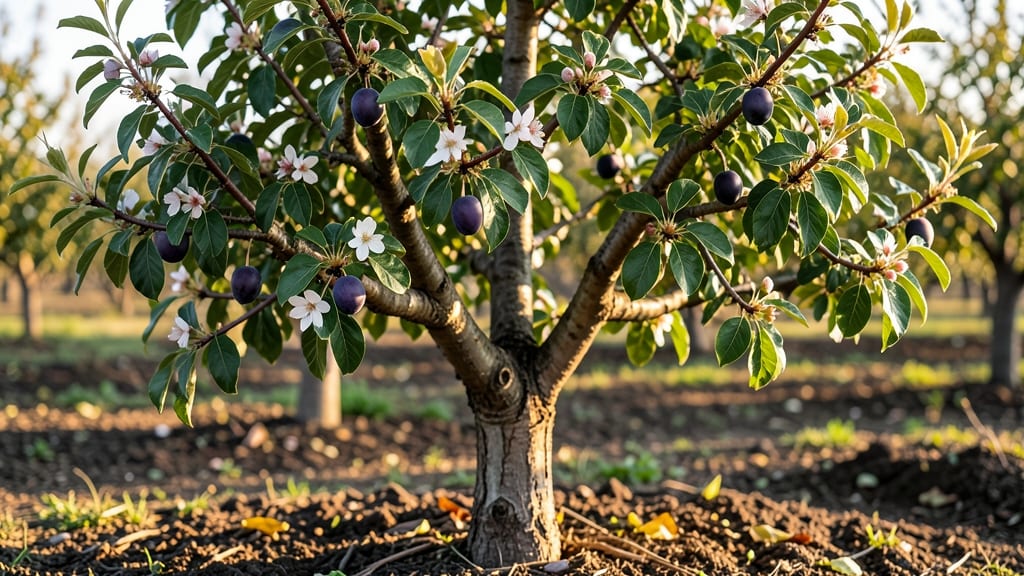
Plum trees bear fruit between 3 to 5 years after planting, but some varieties like Santa Rosa or Methley can surprise you with early harvests in just 2 years—if you give them the right care from day one. 🌱 I learned the hard way that patience and proper pruning make all the difference when waiting for those sweet, juicy plums to appear.
The real secret lies in bloom time: most plums flower in early spring, and fruit sets within 4-6 weeks after blossoms fade. But if your tree isn’t flowering, check for sunlight—plums need full sun (6+ hours daily) to trigger blooms.
Cold winters also play a role: many varieties need 200-600 chill hours below 45°F to set fruit properly. Once fruit appears, you’ll see clusters of tiny plums growing rapidly.
With proper thinning (removing extra fruit to improve size), your tree will reward you with harvest-ready plums in late summer or early fall, depending on your variety. The first year of fruiting might be light, but each season after that brings bigger, sweeter rewards.
For gardeners in warmer climates, choose low-chill varieties like Friar, while those in colder zones can grow Stanley or Larry Ann—both thrive in different conditions. The key is matching your tree to your climate and giving it consistent care from the start.
📚 In This Guide
- What you need
- Instructions
- Tips and common mistakes
- Wrapping up and next steps
What you need
- ● Plum tree sapling: Choose a variety suited to your climate (e.g., Prunus domestica for temperate zones). Age: 1–3 years old.
- ● Well-draining soil: Mix 60% native soil, 30% compost, and 10% coarse sand (or perlite) for optimal drainage.
- ● Organic fertilizer: 10-10-10 NPK ratio (e.g., balanced granular or liquid fertilizer like Miracle-Gro). Apply 2–3 times per year (spring, summer, fall).
- ● Mulch: 2–3 inches of wood chips or straw to retain moisture and regulate soil temperature.
- ● Watering can or hose: With a gentle spray nozzle to avoid damaging roots.
- ● Shovel or trowel: For digging holes (depth: 2x wider and 2x deeper than the root ball).
- ● Pruning shears: Bypass pruners (sharp, clean blades) for shaping and removing dead branches.
- ○ Grafting tools (optional): If propagating from cuttings, use a grafting knife and grafting tape.
- ● Soil pH test kit: Ideal pH range: 6.0–6.5. Adjust with lime (to raise pH) or sulfur (to lower pH) if needed.
- ○ Tree support stakes (optional): 2–3 stakes and soft tree ties for young saplings in windy areas.
- ● Sunlight: 6–8 hours of full sun daily (plum trees thrive in warm, sunny spots).
- ● Hardiness zone: Match your variety to USDA Zones 4–9 (check your local zone here).
- ● Wind protection: Avoid exposed areas; use windbreaks (e.g., fences or other trees) if needed.
- ● Water source: Access to consistent irrigation, especially during first 2 years and drought periods.
- ● Drip irrigation system: Automates watering and reduces stress on the tree.
- ● Bird netting: Protects fruit from pests like birds and squirrels during harvest season.
- ● Soil aerator: Improves root health in compacted soil.
- ● Fruit thinners (if overloaded): Use organic sprays to reduce excess fruit and improve size/quality.
How to predict when your plum tree will bear fruit
Plum trees follow predictable patterns—once you know their variety and care needs, timing fruit becomes straightforward.
🌱 Step 1: Identify Your Plum Tree Variety
Most plum trees bear fruit within 3-5 years of planting, but the exact timeline depends on the variety. Japanese plums (Prunus salicina) often fruit in 2-3 years, while European plums (Prunus domestica) may take 4-5 years. Dwarf varieties typically produce fruit sooner—sometimes as early as 1-2 years—because their smaller size directs energy toward fruiting instead of growth.
Check the tree's label or consult a local nursery if unsure. The variety determines not just when fruit appears but also its flavor, size, and cold hardiness. For example, Santa Rosa plums bear fruit in 3-4 years, while Burbank plums may wait until 5 years. If your tree hasn’t fruited by year 5, it might be a non-fruiting ornamental variety or struggling with care.
☀️ Step 2: Provide Optimal Growing Conditions
Plum trees need full sun (6-8 hours daily) and well-draining soil with a pH of 6.0-7.0 to prioritize fruiting over leafy growth. If your tree lacks these conditions, it may delay fruit production. Amend heavy clay soil with 2-3 inches of compost before planting to improve drainage, and mulch annually with 2-3 inches of organic mulch to retain moisture and regulate soil temperature.
Water deeply once a week during the first growing season, then every 10-14 days once established, allowing the top 6 inches of soil to dry between waterings. Overwatering stresses the tree, while underwatering limits energy for fruit development. You’ll know moisture is right when the soil feels damp 4-6 inches down but not soggy.
✂️ Step 3: Prune for Fruit Production
Prune your plum tree during late winter or early spring (before buds swell) to encourage fruiting. Remove dead, diseased, or crossing branches first, then thin the canopy to improve airflow. Aim for an open-centered shape with scaffold branches spaced 8-12 inches apart—this lets sunlight penetrate to lower branches where fruit forms.
Thin out excessive fruit clusters in early spring to leave 6-8 inches between plums. Overloaded branches may drop fruit prematurely or produce small, underdeveloped plums. You’ll see healthy fruit sets when clusters are evenly spaced and leaves remain vibrant green without yellowing.
🌿 Step 4: Monitor for Pollination and Pest Issues
Most plum varieties are self-pollinating, but cross-pollination from another plum or cherry tree doubles fruit set. If your tree isn’t fruiting by year 4, plant a compatible pollinator nearby. Watch for bees and other pollinators in spring—you’ll know pollination is successful when flowers drop within 2 weeks and small green fruit begins forming.
Pests like aphids, plum curculio, or borers can delay fruiting by stressing the tree. Inspect leaves and fruit weekly for holes, wilting, or sticky residue (aphid honeydew). Treat infestations early with neem oil or insecticidal soap, and remove mummified fruit (dried plums from last season) to prevent disease.
⏰ Step 5: Track Growth Milestones
Healthy plum trees show 3 key signs they’re ready to fruit:
- strong annual growth of 12+ inches,
- consistent blooms, and
- no signs of disease. If your tree meets these by year 3 but still hasn’t fruited, it may need more sunlight, better soil, or a pollinator. Keep a growth journal noting branch length, bloom count, and fruit sets—this helps pinpoint delays.
Patience is key: some trees take up to 7 years for full production, especially if planted late or in poor conditions. Once established, a mature plum tree can yield 50-100 pounds of fruit annually—but only if you’ve tended to its needs from the start. The first harvest is the sweetest reward for careful care.
Tips & tricks for predicting plum tree fruit production
Here's what nobody tells you about accelerating those plum harvests—without compromising tree health.
Variety Matters: The 3-5 year window for fruiting is a general guideline, but dwarf varieties can surprise you with fruit as early as year 1-2. I've seen Santa Rosa plums produce their first harvest in just 3 years when given ideal conditions, while Burbank varieties might need that full 5-year window. Always check your tree's label or consult a local nursery—they'll tell you exactly what to expect based on your specific variety. This is the single biggest factor in predicting fruit timing, so don't skip this step!
Sunlight Secret: That 6-8 hours of daily sunlight isn't just about light—it's about consistent energy. I've noticed plum trees in partial shade often delay fruiting by 1-2 years because they're constantly playing catch-up. If your tree isn't getting full sun, consider transplanting it or pruning nearby trees to open up the canopy. The difference between a tree that fruits in 3 years versus 5 can come down to just a few extra hours of sunlight each day.
Pruning Precision: When you're thinning those fruit clusters in Step 3 to leave 6-8 inches between plums, don't just guess—use your fingers as a guide. The space between your thumb and middle finger when spread apart is roughly 6 inches. This spacing ensures each plum gets enough energy to develop properly, rather than producing tiny, underdeveloped fruit. I've seen trees with overcrowded fruit sets produce plums no bigger than marbles—definitely not worth the effort!
Pollination Check: That 2-week window after flowers drop is your best indicator of successful pollination. If you're not seeing any fruit sets forming after this period, it might be time to introduce a compatible pollinator tree. I planted a Japanese plum near my European plum variety and saw fruit production double the following year. The key is to plant pollinators within 50 feet of your main tree for maximum effectiveness.
Pro Tips for When Does Plum Tree Bear Fruit
- Here's what nobody tells you about accelerating those plum harvests—without compromising tree health.
- Variety Matters: The 3-5 year window for fruiting is a general guideline, but dwarf varieties can surprise you with fruit as early as year 1-2.
- Sunlight Secret: That 6-8 hours of daily sunlight isn't just about light—it's about consistent energy.
Frequently asked questions
Got questions about when your plum tree will bear fruit?
You’re not alone! Here are the most common concerns—plus expert answers to help you plan ahead.
How long does it take for a plum tree to bear fruit after planting?
Most plum trees take 2–5 years to bear fruit, depending on the variety and care. Dwarf varieties may fruit sooner (1–3 years), while standard trees can take longer. Patience is key—focus on proper watering, soil health, and winter protection during these early years!
When do plums ripen, and how do I know they’re ready to pick?
Plum ripening varies by variety but typically occurs in late summer to early fall (August–October). Look for deep color, soft skin, and a slight give when gently squeezed. The fruit should detach easily from the tree—if it resists, wait a few days!
Why isn’t my plum tree producing fruit after 5+ years?
Several factors could be at play: lack of pollination (some varieties need cross-pollination), poor soil nutrients (test for nitrogen/phosphorus), or improper pruning. Check for pests/diseases too—healthy trees with open canopies and balanced pruning are more likely to fruit.
Can I force a plum tree to bear fruit faster?
While you can’t force fruit overnight, you can optimize conditions:
- Plant two compatible varieties for cross-pollination.
- Use a balanced fertilizer (high in phosphorus) in early spring.
- Prune in late winter to encourage new growth.
- Protect young trees from late frosts (plums are frost-sensitive!).
What’s the best climate for plum trees to fruit reliably?
Plum trees thrive in USDA Zones 5–9, with warm summers and cold winters (they need 200–600 chill hours annually). Avoid tropical climates—heat stress or lack of dormancy can delay or prevent fruiting. Choose low-chill varieties (like Santa Rosa) if you’re in Zone 8+.
Wrapping up and next steps
Now that you know when plum trees bear fruit—from their first blooms to full harvest—you’re well on your way to nurturing a thriving orchard! 🌱 Whether you’re growing early varieties like Santa Rosa or patiently waiting for Stanley’s late-season bounty, consistency in care is key. Prune wisely, monitor pests, and embrace the seasons—your efforts will soon reward you with juicy, homegrown plums.
Ready to take the next step? Plant your tree today or dive deeper into pruning techniques to maximize fruit production. Every season is a new chance to grow—so grab your shears and get started! 🍑✨