
Pruning
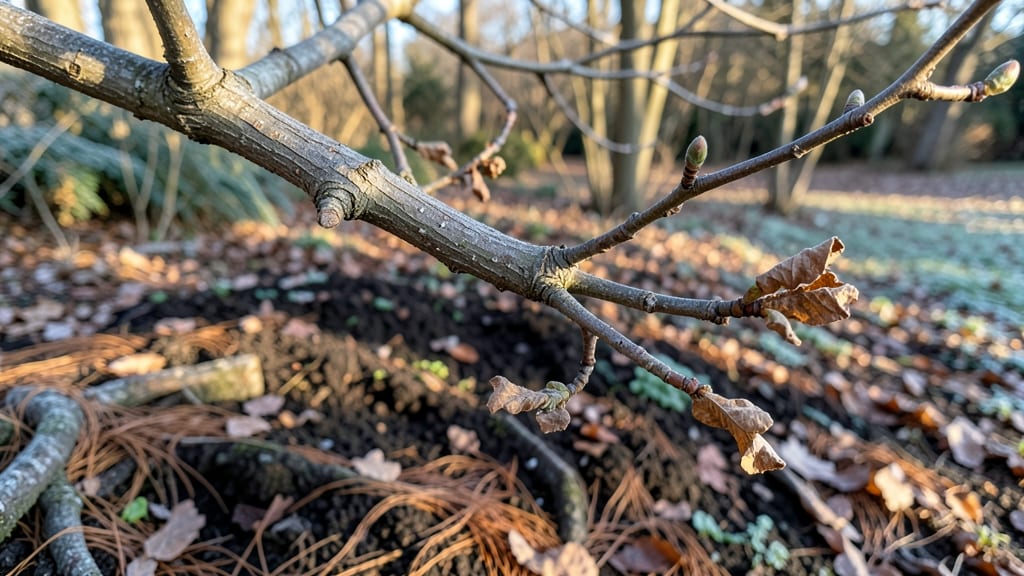
Pruning dormant tree branches isn't just about cutting—it's about giving your trees a fresh start. ✂️ I learned the hard way that timing matters: prune too early, and you risk encouraging new growth before winter's over; too late, and you miss the ideal window for healing.
The secret lies in dormant season cuts, when trees are at rest but still primed for recovery.
Start by identifying dead, diseased, or crossing branches—they're the first to go. Use sharp pruners or a saw for clean cuts, and always angle them just outside the branch collar.
My first attempt left jagged edges that took years to heal; now I make it look like the tree never had a cut at all. Safety first: wear gloves and eye protection, and never prune near power lines.
You'll see the difference in just a few months: stronger structure, fewer pests, and a canopy that lets sunlight reach the lower branches. The best part? You can prune larger branches during dormancy without stressing the tree. Think of it as a winter tune-up that pays off all season long.
Works for fruit trees, shade trees, and even young saplings—just adjust the timing based on your climate. Here's how to do it right the first time, without the guesswork.
Natural Causes of Dormant Branches
Understanding why trees develop dormant branches—those leafless, seemingly lifeless limbs—starts with recognizing the biological and environmental triggers that prompt this behavior. While it may seem like a sign of decline, dormant branches often serve a strategic purpose for the tree’s survival.
Let’s break down the key reasons behind their appearance, from seasonal adaptations to physiological stress responses.
Trees enter dormancy as a protective mechanism during harsh conditions, particularly in winter or dry seasons. Here’s how it works:
- Cold Weather Adaptation: When temperatures drop, trees conserve energy by shutting down non-essential functions. Growth slows, leaves fall (or don’t form at all), and branches appear bare. This isn’t death—it’s a metabolic pause triggered by shorter daylight and colder air.
The tree’s roots and cambium layer (growth tissue) remain active but dormant, ready to revive when conditions improve. - Pro Tip: 🌡️ Evergreens vs. Deciduous: Evergreens like pines keep needles year-round because their waxy coatings prevent water loss, but their branches may still slow growth in winter.
Deciduous trees (oaks, maples) shed leaves entirely, leaving branches that look dormant but are structurally sound.
- Drought-Induced Rest: Even in warmer climates, prolonged drought forces trees into a water-conservation mode. Branches may appear dormant because the tree redirects resources to root development or storing moisture. This is common in oak, juniper, or fruit trees during dry spells.
Sometimes, dormant branches aren’t lazy—they’re fighting for their lives. Fungal infections, bacterial diseases, or insect infestations can weaken a branch so severely that it stops producing leaves or sap as a last-ditch effort to isolate the threat.
- Fungal Foes: Diseases like anthracnose, powdery mildew, or canker (e.g., Nectria canker in dogwoods) clog a branch’s vascular system, cutting off nutrients. The tree may seal off the branch by reducing growth, making it look dormant.
Look for: - Cracked bark or oozing sap (signs of canker). - Discolored or dead leaves that cling to twigs (fungal leaf spots). - Insect Invasion: Borers (e.g., emerald ash borer) or sawflies tunnel into branches, disrupting the flow of water and nutrients.
The tree may abandon the branch entirely, leaving it bare but structurally intact—until it becomes a hazard. - Warning: ⚠️ Don’t ignore it! A branch that’s truly dead from pest damage should be pruned to prevent spread or breakage.
Just like humans need balanced nutrition, trees require macronutrients (nitrogen, phosphorus, potassium) and micronutrients (iron, zinc, magnesium) to thrive. When soil lacks these, branches may stop growing or turn dormant as the tree prioritizes survival over expansion.
- Nitrogen Shortage: The most common deficiency, nitrogen fuels leaf and branch growth. Without it, new shoots may be stunted, yellow (chlorotic), or absent, making branches look bare.
This is common in: - Young trees competing with weeds for nutrients. - Poor soil (e.g., sandy or clay-heavy soils that drain too quickly or hold excess water). - Micronutrient Imbalances: Zinc or iron deficiencies cause interveinal chlorosis (yellowing between leaf veins), but branches may also fail to develop if the tree can’t produce chlorophyll.
Evergreens like pine trees may drop older needles prematurely, leaving sparse branches. - Fix It: 💡 Soil test first! Amend soil with compost, organic matter, or targeted fertilizers (e.g., iron chelate for chlorosis).
Trauma from wind, hail, or mechanical injury can trigger dormancy-like symptoms as the tree repairs itself. Even if the branch isn’t dead, it may pause growth while diverting energy to healing.
- Sun Scorch or Frost Crack: Sudden temperature swings (e.g., warm days followed by freezing nights) can damage branch bark, disrupting the phloem (food transport system).
The tree may seal off the damaged area, causing the branch to look dormant. - Mechanical Injury: Lawnmower strikes, string trimmers, or even animal damage (e.g., deer rubbing bark) can girdle a branch, cutting off its nutrient supply.
The tree may abort growth above the injury point, leaving a bare section. - Action Step: 🔪 Inspect for girdling—if the bark is partially removed in a ring, prune above the damage to encourage new growth.
In dense forests or urban landscapes, trees compete for sunlight, water, and space. When branches can’t access enough light, they may revert to a dormant state or grow sparsely.
- Shade-Induced Dormancy: Branches on the north side of a tree (in the Northern Hemisphere) often receive less light and may grow slower or stop producing leaves entirely.
This isn’t always bad—the tree is adapting to its environment. - Root Competition: Nearby trees or structures (e.g., sidewalks, buildings) can strangle root systems, reducing nutrient uptake.
Weakened branches may appear dormant as the tree conserves energy. - Solution: ✨ Thin the canopy or prune competing branches to improve air and light circulation.
Fixing dead branches safely
Removing dormant or dead branches keeps your trees healthy, safe, and looking their best—but the approach depends on why those branches are dying. Below, we break down the most common causes and the step-by-step fixes to revive your tree (or prune it properly if revival isn’t possible).
Plus, we’ll share prevention tips to keep future problems at bay.
Some branches simply go dormant in winter or dry seasons, then regrow when conditions improve. If the branch is still alive but inactive, it may just need patience—or a little encouragement.
✂️ How to Fix It
- 🔍 Wait and Observe (Early Spring Check)
- Wait until late winter or early spring before pruning. If the branch shows green buds or soft growth, it’s likely dormant—not dead.
- Scratch the bark with your fingernail: if it’s green underneath, the branch is alive.
- 🌿 Encourage Regrowth (If Needed)
- If the tree is otherwise healthy, avoid pruning dormant branches. Instead, focus on:
- Watering deeply (1–2 inches per week) during dry spells.
- Mulching (2–4 inches of organic mulch) to retain moisture and nutrients.
- Fertilizing lightly (balanced 10-10-10 fertilizer in early spring) if growth is slow.
- If the tree is otherwise healthy, avoid pruning dormant branches. Instead, focus on:
- 💡 Pro Tip:
- Mark the branch with a ribbon or flag so you remember it’s dormant and not dead. Recheck in 3–4 months.
Branches that are truly dead (brittle, no leaves, hollow) or infected (fungus, cankers, oozing sap) need immediate removal to prevent spread or hazards.
✂️ How to Fix It
- 🔪 Prune with Precision (Tools & Technique)
- Use the right tools: A sharp pruning saw for thick branches (2"+ diameter) and bypass pruners for thinner ones. Sterilize tools with rubbing alcohol to avoid spreading disease.
- Cut at the branch collar (the swollen area where the branch meets the trunk). Avoid leaving stubs!
- Make clean cuts at a slight angle (avoid tearing the bark).
- 🚨 Remove Diseased Branches First
- If you spot fungus (powdery mildew, cankers), insect damage (sawdust-like frass), or oozing sap, cut 6–12 inches below the visible damage into healthy tissue.
- Bag and dispose of infected branches (don’t compost them).
- 🌡️ Post-Pruning Care
- Seal larger cuts (2"+) with pruning sealant (optional for most trees, but helpful for oaks, pines, and fruit trees).
- Water the base of the tree to reduce stress.
💡 Pro Tip:
- Prune on a dry day to prevent fungal spores from spreading via rain.
Broken or split branches from storms require quick action to prevent further harm to the tree or property.
✂️ How to Fix It
- 🚑 Assess Safety First
- If the branch is hanging precariously or the tree is leaning dangerously, call an arborist—especially for large trees.
- Wear gloves, safety glasses, and sturdy shoes if DIY-ing.
- 🔨 Remove the Damage
- For broken but still-attached branches, cut just outside the branch collar.
- For split trunks, remove the damaged section entirely if it’s >30% of the trunk diameter.
- If the branch is partially detached, avoid pulling—cut it cleanly to prevent tearing.
- 🌳 Support the Tree (If Needed)
- Use tree stakes or cables temporarily to stabilize the tree while it heals (consult an arborist for proper installation).
💡 Pro Tip:
- Take a photo of the damage before pruning—it helps arborists or insurance adjusters later.
Stop dead branches before they start with these low-effort habits:
- 💧 Water deeply but infrequently (1–2 times per week in dry spells) to encourage strong root growth.
- 🌱 Mulch annually with wood chips or shredded bark (keep mulch 6" away from the trunk).
- 🍄 Monitor for pests/disease—inspect branches monthly for signs like holes, sawdust, or unusual spots.
- 🌞 Prune at the right time—late winter/early spring for most trees (except oaks—prune in summer to avoid oak wilt).
- ✂️ Thin the canopy (remove crossing or rubbing branches) to improve airflow and sunlight.
Remember: When in doubt, consult a certified arborist. Some trees (like oaks or elms) have specific pruning needs, and improper cuts can harm—or even kill—them. But with the right approach, your tree will stay strong, safe, and stunning year-round! 🌳✨
Frequently asked questions
How can I tell if a dormant branch is actually dead?
Scratch the bark with your fingernail—if it’s green underneath, the branch is alive. For thicker branches, gently bend it: if it snaps easily (not flexing), it’s dead. Also check for signs of life like buds or sap when you make a small cut.
Is it safe to prune dormant branches in winter?
Yes, winter is ideal for pruning dormant branches when trees aren’t actively growing. Just avoid extreme cold (below 20°F) or frosty days. The best time is late winter before buds swell, typically January-February in most climates.
What's the best way to remove a large dormant branch?
Use a pruning saw for branches over 2 inches thick, cutting just outside the branch collar at a 45-degree angle. For very large branches, make a notch first to control the fall, then cut through the remaining wood. Always wear gloves and safety glasses!
Will pruning dormant branches encourage new growth?
Yes, but only if the tree is healthy. Pruning removes dead weight and allows energy to focus on new growth. For fruit trees, dormant pruning actually improves next year’s harvest by opening the canopy to sunlight. Just avoid over-pruning—never remove more than 25% of the canopy at once.
Can I use the same pruners for all my trees?
Not ideal! Sterilize your tools between trees with rubbing alcohol to prevent spreading disease. Use separate pruners for fruit trees and ornamental trees if possible. Also, keep your blades sharp—dull tools crush branches, creating larger wounds that heal poorly.