
Trees
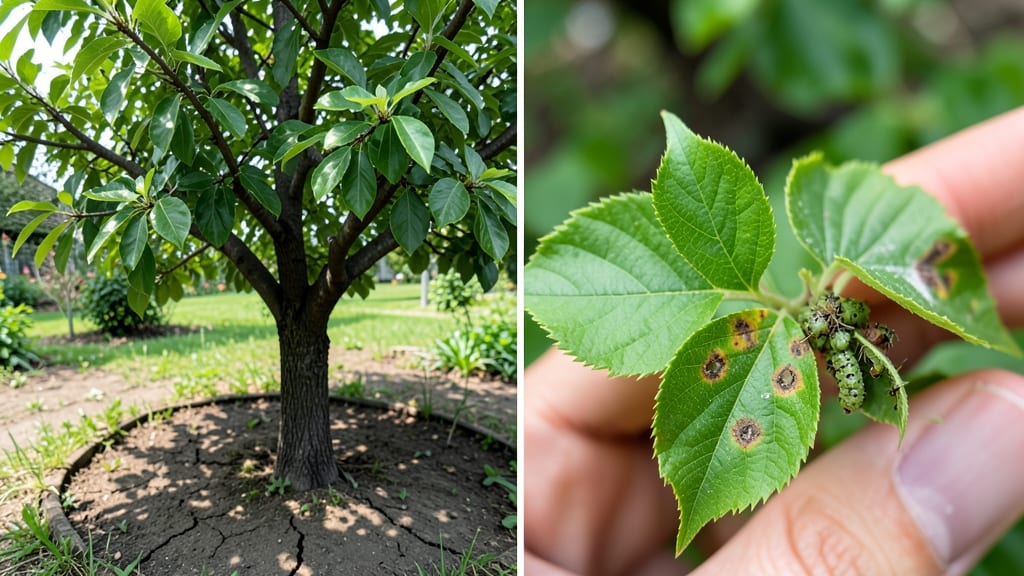
Your cherry tree’s leaves are telling you something—listen before it’s too late. 🌿 Those brown spots, curled edges, or sticky residue aren’t just cosmetic; they’re early warnings of problems that can weaken or even kill your tree if ignored.
The good news? Most issues have simple fixes once you know what to look for.
Start by identifying the culprit: fungal diseases like leaf spot or powdery mildew leave behind telltale marks (think white powder or dark splotches), while pests like aphids or spider mites often hide on the undersides of leaves, leaving behind webbing or sap trails.
The key is acting fast—prune infected branches, apply the right organic treatment, and keep an eye out for repeat offenders.
📚 In This Guide
- What you need
- Instructions
- Tips and common mistakes
- Wrapping up and next steps
What you need
- ● Diagnostic tools: Hand lens or magnifying glass (10x magnification recommended)
- ● Digital camera (for documenting symptoms)
- ● pH testing kit (soil and water)
- ● Safety gear: Nitrile gloves (2-3 pairs)
- ● Safety goggles (ANSI-rated)
- ● Respirator mask (N95 or better, for fungal spores)
- ● Cleaning supplies: Disinfectant spray (70% isopropyl alcohol or bleach solution)
- ● Scrub brush (stiff-bristle for pruning tools)
- ● Rags or paper towels (for wiping tools)
- ● Treatment essentials: Fungicide (copper-based or sulfur-based, e.g.,, Bonide Copper Fungicide)
- ● Horticultural oil (for smothering pests/diseases, e.g.,, Neem oil)
- ● Pruning shears (sterilized, sharp, and bypass-style)
- ● Soil moisture meter (to monitor hydration levels)
- ● Compost or organic mulch (for improving soil health)
- ● Labeling flags (to mark treated vs. untreated areas)
- ● Spray bottle (for targeted applications)
- ● Reference guide (e.g., University of California’s Cherry Tree Disease Guide)
How to diagnose and treat cherry tree leaf issues
Here's how I spot and stop leaf diseases before they ruin your harvest.
🌿 Step 1: Identify the Problem by Leaf Patterns
Start by examining the leaves closely. Brown spots with yellow halos? That's likely leaf spot disease, caused by fungal spores splashing from wet soil onto leaves. Look for spots on the upper surface first—they'll have a greasy texture when wet. If you see black veins or purple streaks, that's silver leaf disease, a fungal infection that spreads through wounds.
For powdery mildew, you'll notice a white, powdery coating on the undersides of leaves—it's harmless but ugly and spreads fast in humid weather. If leaves curl upward and develop sticky residue, that's aphid infestation, not a disease, but it weakens the tree and invites fungal infections. I always check the leaf undersides first—they're where most problems start.
💧 Step 2: Adjust Watering Practices Immediately
Overwatering is the #1 cause of leaf diseases in cherry trees. If you've been watering from above, switch to drip irrigation or soaker hoses to keep the foliage dry. Water deeply but infrequently—aim for 1-1.5 inches per week, delivered all at once rather than daily light sprinkles. Wet leaves stay wet for hours, giving fungal spores the perfect environment to spread.
Water in the early morning so leaves dry by afternoon. Avoid late-day watering—moisture trapped overnight encourages fungal growth. If your tree is already showing signs of disease, reduce watering temporarily to let the soil dry out between sessions. You'll see new leaves emerge healthier within 2-3 weeks if you cut back on overhead moisture.
✂️ Step 3: Prune and Clean Infected Areas
Remove all infected leaves—don't leave them on the ground or in the tree. Use sterilized pruners (wipe blades with rubbing alcohol between cuts) to avoid spreading spores. Cut back to healthy growth, about ½ inch below the infected area. For silver leaf disease, you may need to remove entire branches if the infection is severe.
Collect pruned material in a sealed bag and dispose of it in the trash (not the compost). Don't burn it—spores can survive and reinfect. After pruning, sanitize your tools again and clean up any fallen leaves from under the tree. This step is critical: one infected leaf left behind can reinfect the whole tree in a season.
☀️ Step 4: Apply Targeted Fungicides at the Right Time
For leaf spot or powdery mildew, use a copper-based fungicide (like copper sulfate) before symptoms appear—once the disease takes hold, fungicides are less effective. Apply when leaves are dry and temperatures are below 85°F. Spray both sides of leaves thoroughly, focusing on the undersides where spores hide. Repeat every 7-10 days until new leaves emerge without spots.
If you suspect silver leaf disease, prune aggressively first, then apply a sulfur-based fungicide. This disease is stubborn—you may need 2-3 applications spaced 2 weeks apart. Always follow the label instructions for application rates and safety precautions. I like to spray in the late afternoon to avoid burning leaves in direct sun.
🌱 Step 5: Strengthen the Tree for Next Season
Healthy trees resist diseases better. Start by fertilizing in early spring with a balanced 10-10-10 formula to encourage strong new growth. Mulch around the base with 2-3 inches of organic mulch (like shredded bark) to improve soil drainage and reduce fungal spores splashing onto leaves. Keep mulch 6 inches away from the trunk to prevent rot.
Thin the canopy slightly to improve airflow—crowded branches stay damp longer. Aim for 12-18 inches of space between branches to let sunlight and air circulate. You'll notice fewer disease issues next season if the tree isn't stressed. I also monitor nearby trees—cherry trees often share diseases with other fruit trees, so treat the whole orchard if possible.
Tips & tricks for diagnosing and treating cherry tree leaf diseases
These practical tips will help you catch and correct leaf problems before they spread to your entire harvest.
Leaf Inspection Strategy: When examining leaves in Step 1, use a magnifying glass for close-up inspection of undersides—this is where powdery mildew and fungal spores first appear. Check leaves from the bottom of the tree upward, as lower leaves often show symptoms first. I've found that early morning inspections after dew has evaporated give the clearest view of symptoms without moisture interference.
Watering Timing is Critical: The instructions mention watering in early morning, but I've learned that 6-9 AM is ideal for most climates. This gives leaves plenty of time to dry before afternoon humidity peaks. If you notice leaf spots appearing despite your watering changes, consider adding a 12-inch layer of mulch around the base to reduce soil moisture evaporation that can indirectly encourage fungal growth.
Pruning Precision: In Step 3, when cutting back infected areas, make your cuts at a 45-degree angle just above a leaf node or bud. This encourages healthier regrowth. For silver leaf disease, I've found that removing entire branches back to the main trunk often prevents the disease from spreading to the rest of the tree. Always dispose of infected material immediately—delaying disposal by even a day can allow spores to spread.
Fungicide Application Technique: When applying fungicides in Step 4, use a concentrated spray pattern that covers both leaf surfaces thoroughly. I recommend starting with the undersides of leaves where fungal spores hide, then moving to the tops. For stubborn infections, add a surfactant (like dish soap) to your fungicide mixture—just 1 teaspoon per gallon—to help the solution adhere better to leaf surfaces. Always apply when winds are calm to prevent drift onto other plants.
Pro Tips for Cherry Tree Problems Leaves
- These practical tips will help you catch and correct leaf problems before they spread to your entire harvest.
- Leaf Inspection Strategy: When examining leaves in Step 1, use a magnifying glass for close-up inspection of undersides—this is where powdery mildew and fungal spores first appear.
- Watering Timing is Critical: The instructions mention watering in early morning, but I've learned that 6-9 AM is ideal for most climates.
Frequently asked questions
Got questions about your cherry tree’s leaves? You’re not alone! Here are answers to the most common concerns—so you can act fast and keep your tree thriving.
Why are my cherry tree leaves turning brown and crispy?
Brown, crispy leaves are often a sign of leaf scorch, caused by drought, heat stress, or fungal diseases like leaf spot. Check the soil moisture—water deeply 1–2 times per week during dry spells. If fungal issues are suspected, apply a fungicide (like copper-based sprays) and remove affected leaves to prevent spread.
Can I save my cherry tree if the leaves are curling or spotted?
Yes! Early action is key. Prune infected branches (sterilize tools with rubbing alcohol first ), thin the canopy for better airflow, and treat with a fungicide (e.g., neem oil or potassium bicarbonate). For cherry leaf spot, repeat applications every 7–10 days until new growth appears. Avoid overhead watering to reduce humidity, which fuels fungal growth.
How long does it take to see improvement after treating leaf problems?
With proper care, you’ll notice progress in 2–4 weeks. New leaves should emerge healthier, and existing damage may slow or stop. For severe cases (like powdery mildew or canker), consistent treatment over multiple seasons is often needed. Monitor your tree weekly and adjust care as needed.
Are there natural alternatives to chemical fungicides?
Try these DIY-friendly options:
- Baking soda spray: Mix 1 tbsp baking soda + 1 tsp dish soap + 1 gallon water. Spray leaves weekly.
- Neem oil: Dilute 2 tbsp neem oil + 1 tsp soap in 1 gallon water. Apply at dusk to avoid burning leaves.
- Compost tea: Brew aerobically for 24–48 hours, then strain and spray for mild fungal prevention.
For stubborn issues, combine natural remedies with cultural fixes (pruning, watering adjustments) for best results.
When should I call a professional arborist for cherry tree leaf issues?
If you spot large cankers, severe dieback, or signs of bacterial infections (oozing sap, wilting), consult an arborist. These issues often require targeted treatments or tree removal to prevent spread to other plants. Early intervention saves time and money—don’t wait until the problem spreads!
Wrapping up and next steps
Your cherry tree’s health is in your hands—and with the right knowledge, you can tackle leaf problems like a pro! 🌿 From fungal infections to pest invasions, early action is key to keeping your tree thriving. Remember: pruning, proper care, and timely treatments make all the difference.
Ready to take charge? Start by inspecting your tree weekly and addressing issues as soon as they appear. Need extra help? Consult a local arborist or extension service for personalized advice. Your cherry tree will thank you with lush, vibrant leaves and bountiful fruit for years to come!