
Companion Plants
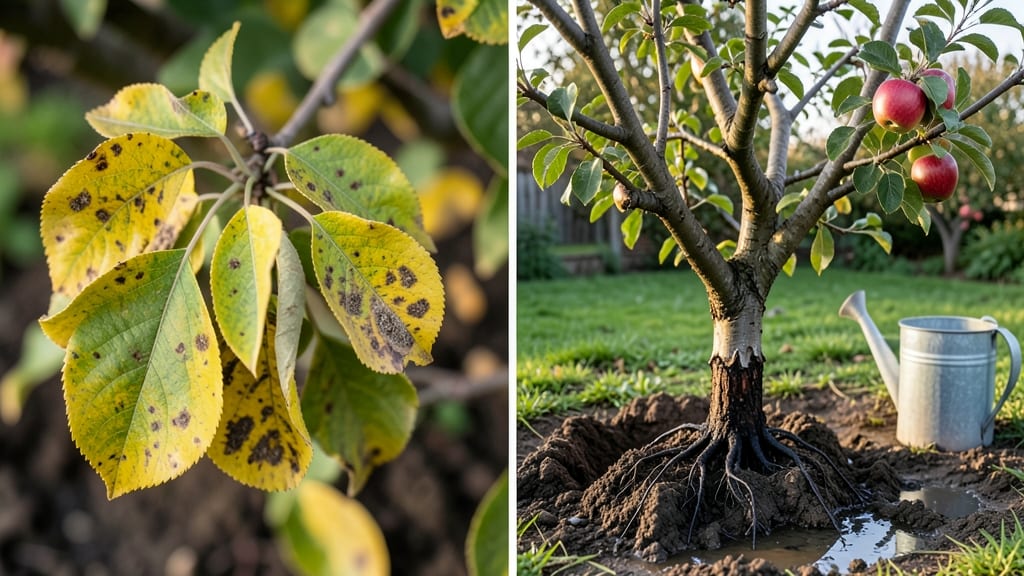
When you spot what does an overwatered apple tree look like, you’re seeing a tree in distress—and it’s worse than you might think. 🌳 The first sign isn’t just droopy branches; it’s the way the soil clings to roots like wet socks, while healthy trees have loose, crumbly dirt.
I’ve seen trees drown in their own pots because owners mistook thirst for love, and the damage starts underground before you notice the wilting.
The leaves tell the story: bright yellow between veins (not the gradual fade of nutrient deficiency), and they stay limp even when you water less. Check the bark—if it’s soft or peeling, roots are rotting.
Fungal growth (like white mold) on the soil surface is a red flag too. Healthy trees have firm bark, vibrant green leaves, and soil that smells earthy, not sour.
Fixing it starts with stopping water immediately—let the soil dry out 2-3 inches deep before watering again. Aerate compacted roots with a fork, and if the tree’s trunk feels hollow when tapped, it’s too late. Prevention? Mulch properly (3-4 inches) and water deeply but infrequently—think droughts, not sips.
Most people overcorrect by underwatering after this mistake, but apple trees still need 1-1.5 inches of water weekly—just without the soggy soil. Watch for new growth in 2-3 weeks if you catch it early. The key is balance: roots need air as much as water.
Root of the Problem
Overwatering an apple tree isn’t just a gardening mistake—it’s a silent stressor that disrupts the tree’s delicate balance. Understanding why this happens helps you prevent it before your tree’s health takes a turn for the worse. Let’s dig into the science behind the soggy soil.
Apple trees thrive in well-draining soil, but when water pools around the roots instead of draining away, oxygen can’t reach them. Here’s what’s really going on:
- Compacted Soil: Heavy clay or tightly packed soil blocks water movement, trapping moisture near the roots. This creates an anaerobic (oxygen-deprived) zone, forcing roots to struggle for air. - Low Organic Matter: Soil rich in organic material (like compost) holds water and allows excess to drain.
If your soil is mostly sand or lacks humus, water lingers like a puddle. - Improper Planting: Burying the graft union too deep or planting in a low-lying area encourages water to pool around the base.
Actionable Fix: Test your soil’s drainage by digging a 12-inch hole, filling it with water, and timing how long it takes to drain. If it takes more than 6 hours, amend with sand, perlite, or compost to improve airflow.
Even well-meaning gardeners can drown their trees. Here’s how human error turns the soil into a swamp:
- Frequency Over Need: Watering daily (or even every other day) in warm weather forces roots to sit in soggy conditions. Apple trees need deep, infrequent watering—about 1–1.5 inches per week, including rain. - Ignoring Seasonal Shifts: Spring and fall require less water than summer.
Overwatering in cooler months stresses roots unnecessarily. - Automatic Irrigation Gone Rogue: Drip systems or sprinklers left on too long (or malfunctioning) can deliver excessive moisture, especially in clay-heavy soils.
Pro Tip: Use a moisture meter to check soil dampness before watering. Aim for 60–70% moisture—not bone-dry, but not saturated either.
Not all overwatering is your fault—sometimes, Mother Nature plays a role:
- Heavy or Prolonged Rainfall: Apple trees in regions with frequent downpours (like the Pacific Northwest) may not need supplemental watering. Mulch properly (2–4 inches of wood chips) to regulate soil moisture. - Low-Lying or Flood-Prone Areas: If your tree sits in a natural depression, water runs to it instead of away. Grade the soil slightly upward around the base to encourage runoff. - High Humidity: Damp air reduces evaporation, keeping soil wet longer.
In humid climates, reduce watering frequency by 20–30%.
💡 Quick Test: After rain, stick your finger 2 inches into the soil. If it’s still damp 48 hours later, hold off on watering.
Soggy roots aren’t just a drainage issue—they’re an open invitation for pathogens:
- Phytophthora & Pythium: These water-mold fungi thrive in saturated soil, rotting roots and blocking nutrient uptake.
Infected roots turn brown, mushy, and smell foul. - Root Rot: A mix of fungal and bacterial infections (like Armillaria) spreads faster in waterlogged conditions, choking the tree’s vascular system.
Prevention: Space trees properly (15–20 feet apart) for airflow, and avoid overhead watering to keep foliage dry.
Believe it or not, what you plant near your apple tree can contribute to overwatering:
- Thirsty Neighbors: Fast-growing companions like willows, bamboo, or corn suck up moisture, but their dense root systems can also compete for oxygen, worsening drainage issues.
- Shallow-Rooted Plants: Ground covers like creeping Charlie or clover may seem harmless, but they retain moisture at the soil surface, increasing evaporation—but also risking root suffocation if overwatered.
Solution: Stick to deep-rooted, drought-tolerant companions like comfrey, thyme, or lavender, which improve soil structure without hogging water.
Soil pH affects how water behaves—and apple trees prefer a slightly acidic to neutral range (6.0–7.0). Here’s the catch:
- Alkaline Soil (pH > 7.0): Water moves too slowly, pooling around roots. Amend with sulfur or peat moss to lower pH.
- Acidic Soil (pH < 5.5): While better for drainage, it can leach nutrients faster, making roots more vulnerable to stress when overwatered.
Test & Adjust: Use a soil pH kit every 2–3 years and adjust with lime (to raise pH) or elemental sulfur (to lower it).
Catch these early warnings to reverse the damage:
- Yellowing leaves (especially lower branches) with green veins—a classic sign of nutrient leaching from waterlogged roots.
- Wilting despite wet soil—roots can’t absorb water when they’re suffocating.
- Fungal growth at the base (mushrooms, mold) or peeling bark from rot.
- Slow growth or leaf drop in spring/summer, even with plenty of water.
💡 Emergency Fix: If you suspect overwatering, stop watering immediately, loosen compacted soil around the roots with a fork, and prune any mushy or blackened roots (sterilize tools with rubbing alcohol first!).
Reviving Your Apple Tree: Step-by-Step Fixes
Overwatering can turn your thriving apple tree into a soggy, struggling mess—but don’t panic! With the right approach, you can nurse it back to health. Below, we’ll tackle the most common signs of overwatering and match them with practical, actionable fixes to save your tree.
Plus, we’ll share prevention tips to keep your apple tree happy long-term.
If your apple tree’s leaves are turning yellow, drooping, or feel mushy, waterlogged roots are likely the culprit. Here’s how to correct it:
🔥 Step 1: Stop Watering Immediately
- Why? Overwatering creates anaerobic conditions (lack of oxygen) in the soil, suffocating roots.
- How? Pause all watering for 3–5 days to let the soil dry out slightly. Avoid watering if the top 2–3 inches of soil are still damp.
🍳 Step 2: Improve Soil Drainage
Poor drainage is often the root (pun intended) of overwatering problems. Fix it with these tweaks: - Add organic matter: Mix compost or well-rotted manure into the top 6–12 inches of soil around the tree’s drip line.
This loosens compacted soil and improves aeration. - Raise the tree (if needed): If your tree sits in a low spot where water pools, consider mounding soil around the base to create a slight slope away from the trunk. - Install drainage solutions: For container-grown apple trees, ensure pots have drainage holes and use a well-draining potting mix (like a 50/50 blend of soil and perlite).
👨🍳 Step 3: Prune Damaged Leaves & Branches
- Trim yellow or brown leaves to redirect the tree’s energy toward healthy growth. Use clean, sharp pruners to avoid spreading disease.
- Remove any branches that look mushy or oozing sap—these are signs of root rot spreading.
⏰ Step 4: Water Deeply but Infrequently
Once the soil has dried out, switch to a deep-watering schedule:
- Water deeply 1–2 times per week (depending on climate) instead of frequent shallow watering.
- Use the "finger test": Stick your finger 2–3 inches into the soil—if it’s dry, it’s time to water.
If it’s still moist, wait. - Water in the morning to allow foliage to dry before evening, reducing fungal risks.
If you’ve dug around the roots and found black, mushy roots or a rotten, foul odor, your tree is in root rot danger zone. Act quickly:
🔪 Step 1: Trim Affected Roots
- Carefully dig around the root zone (avoid damaging healthy roots).
- Cut away any black, mushy, or soft roots with sterilized pruners. Healthy roots should be firm and white or light brown.
🌡️ Step 2: Apply Fungicide (If Needed)
- Hydrogen peroxide (3%) can help kill fungal pathogens.
Mix 1 part peroxide with 10 parts water and gently pour it around the root zone (avoid direct contact with leaves). - Copper-based fungicides (like copper sulfate) can also help if fungal infections are severe.
💡 Step 3: Repot or Replant (For Severe Cases)
- If your tree is in a container, repot it in fresh, well-draining soil immediately.
- For in-ground trees, create a new planting hole nearby, add sand or gravel for drainage, and transplant the tree carefully.
✨ Step 4: Mulch Properly (But Not Too Much!)
- Apply 2–4 inches of organic mulch (like wood chips or straw) around the drip line (not the trunk) to retain moisture and improve drainage.
- Keep mulch 6 inches away from the trunk to prevent rot.
Once your tree is back on track, prevent future overwatering with these habits:
- 📊 Check soil moisture regularly—stick your finger in the soil before watering. - 💪 Plant in well-draining soil—apple trees hate soggy feet! Amend clay soil with sand or compost. - 🍎 Choose the right location—avoid low spots where water pools.
A slightly elevated area with good airflow is ideal. - 🎯 Use a moisture meter for large trees—these tools take the guesswork out of watering. - 🌡️ Adjust for seasons—water less in fall and winter (unless in a drought-prone area) and more in summer heat.
If your apple tree shows no improvement after 2–3 weeks of care, or if large sections of bark are peeling or oozing, it may need expert intervention. A certified arborist can assess root health and recommend advanced treatments like root pruning or soil aeration.
By following these steps, your apple tree should bounce back with stronger roots, greener leaves, and a healthier future—no soggy disasters in sight! 🍏💦🌟
Frequently asked questions
How can I tell if my apple tree is overwatered vs. underwatered?
Overwatered trees show yellow leaves with green veins, wilting despite wet soil, and a mushy trunk when tapped. Underwatered trees have crispy, brown leaf edges and dry, cracked soil. Check the soil: if it smells sour or feels soggy, it’s overwatered. If it’s bone-dry, it’s underwatered.
Can I save an apple tree with root rot from overwatering?
Early cases can recover with immediate action: prune mushy roots, improve drainage, and apply hydrogen peroxide (3% solution) to the soil. Severe cases may require replanting in fresh soil or professional help. Act fast—root rot spreads quickly in saturated soil.
Why does my apple tree’s soil stay soggy even after days without rain?
This usually means poor drainage from compacted soil or clay. Test drainage by digging a 12-inch hole, filling it with water, and timing how long it takes to drain. If it takes more than 6 hours, amend with sand or compost to improve airflow.
Is it better to underwater than overwater an apple tree?
Neither is ideal, but apple trees are hardier with drought than with waterlogging. Overwatering causes root rot and suffocation, while underwatering leads to stress and stunted growth. Aim for 1-1.5 inches of water weekly (including rain) and let soil dry between waterings.
How long does it take to recover an overwatered apple tree?
With proper care, you’ll see new growth in 2-3 weeks. If root rot is severe, recovery may take several months. Monitor soil moisture closely and avoid watering until the top 2-3 inches are dry. Patience is key—overwatered trees need time to rebuild their root systems.