
Pests and Diseases
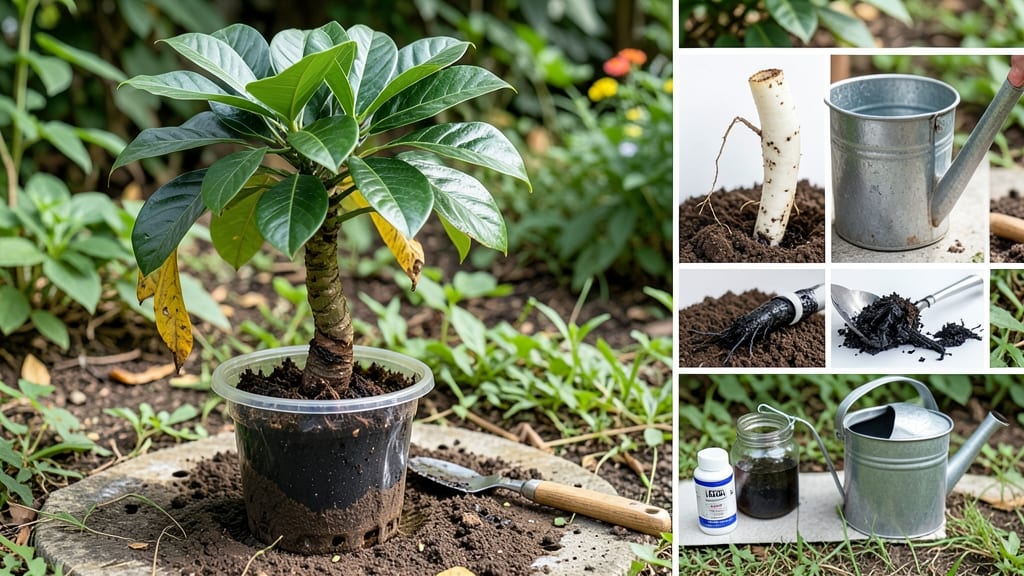
Your money tree’s drooping leaves and mushy stems scream one problem: overwatered money tree root rot—and the good news is, we’ve saved plants in this exact state before. 🌱 The key isn’t panic; it’s acting fast with the right steps to coax those roots back to life.
I’ve nursed back more than a few of these tropical survivors, and the process starts with stopping the water torture immediately.
Root rot thrives when soil stays soggy for days, cutting off oxygen and inviting fungus to feast on your plant’s roots. You’ll spot it fast: yellowing leaves, a wilted crown, or stems that feel squishy when you gently press them.
The moment you see these signs, pull your money tree from its pot and inspect the roots—healthy ones are firm and white, while rotten ones ooze or smell foul. This step alone tells you exactly how bad the damage is.
Reviving your plant takes just three focused steps: trim the rotten roots, repot in fresh, fast-draining soil, and adjust your watering to a "wait until it’s bone-dry" routine.
Within a month, you’ll see new growth pushing through, and those glossy leaves will return—proof that even a soggy mess can bounce back with the right care. The secret? Patience and precision with water.
Once you’ve rescued your money tree, keep it thriving by checking the soil’s moisture with your finger before watering again. These plants prefer to dry out between drinks, and a pot with drainage holes is non-negotiable.
Trust me, your money tree will thank you with years of lush, lucky-looking growth—no more root rot in sight.
Root Rot’s Hidden Triggers
Root rot in your money tree (Pachira aquatica) isn’t just a random tragedy—it’s a silent signal that your plant’s roots are drowning in a mix of poor drainage, excessive moisture, and environmental stress. Let’s break down the real culprits behind this common (but preventable) issue.
---
Your money tree’s roots thrive in well-draining, slightly moist soil, but when they’re submerged in water for too long, they suffocate. Here’s why overwatering spells disaster:
- Oxygen Deprivation: Roots need air to breathe.
When soil stays soggy, oxygen levels drop, forcing roots to switch to anaerobic respiration—a slow, inefficient process that produces toxic byproducts like ethanol and lactic acid. - Fungal Feast: Waterlogged soil creates the perfect breeding ground for pathogenic fungi (e.g., Phytophthora, Pythium), which invade root tissues, clogging xylem vessels and blocking nutrient flow. - Salt Buildup: Over time, dissolved minerals and fertilizers concentrate in saturated soil, creating a hyper-saline environment that burns root cells.
💡 Pro Tip: Stick your finger 2–3 inches deep into the soil before watering. If it’s damp, wait. If it’s bone-dry, your tree might already be thirsty—but if it’s muddy, you’ve got a rot problem brewing.
---
Even if you’re not a watering zealot, compacted or poorly amended soil can trap excess moisture like a sponge. Here’s how it backfires:
- Clay or Heavy Soil: These particles pack tightly, leaving no air pockets for roots to expand. Water pools instead of draining, creating anaerobic zones where roots rot. - Lack of Organic Matter: Soil without compost, perlite, or orchid bark holds water too long, slowing drainage.
Roots in such conditions can’t escape the dampness, leading to hypoxia (oxygen starvation). - No Drainage Holes: Pots without exit points act like bathtubs—water has nowhere to go. Even "self-watering" pots can become death traps if not monitored.
🔥 Fix It Fast: Repot your money tree in a chunky, fast-draining mix (e.g., 50% peat/coco coir, 30% perlite, 20% orchid bark). Add a layer of gravel at the bottom of the pot to boost drainage.
---
Your money tree might be getting the right amount of water, but if the environmental conditions are off, moisture lingers longer than it should:
- Cold Roots: Temperatures below 60°F (15°C) slow root metabolism, making them less efficient at absorbing water.
Excess moisture sits in the soil, accelerating rot. - High Humidity: While money trees love humidity, excessive ambient moisture (e.g., near a humidifier or in a closed terrarium) keeps soil damp for days.
Roots can’t dry out fast enough. - No Airflow: Stagnant air around the pot (e.g., in a corner or under a plastic cover) traps moisture, creating a greenhouse effect that smothers roots.
✨ Balance Act: Keep your tree in bright, indirect light with moderate humidity (40–60%) and gentle airflow (e.g., a small fan on low). Avoid placing it on cold drafty floors or in steamy bathrooms.
--- Even with perfect watering habits, pathogens can turn a happy money tree into a root rot victim. Here’s how they exploit weak spots:
- Fungal Invaders: Phytophthora and Pythium thrive in waterlogged soil, producing enzymes that dissolve root cell walls. Infected roots turn brown, mushy, and smell foul. - Bacterial Soft Rot: Erwinia and Pseudomonas bacteria enter through injured roots (e.g., from repotting or overzealous pruning).
They break down pectin in cell walls, causing collapsed, watery tissue. - Secondary Infections: Weakened roots from overwatering become easy targets for these microbes, turning a minor issue into a full-blown crisis.
🎯 Prevent Infection: Sterilize tools with rubbing alcohol, avoid wounding roots during repotting, and never let soil stay soggy. If you suspect rot, treat with a fungicide (e.g., copper-based) or hydrogen peroxide spray (1:10 dilution) to kill pathogens.
--- Even well-meaning care can trigger rot if roots are physically damaged during handling:
- Root Compaction: Aggressively pressing roots into new soil can crush delicate root tips, slowing recovery and making them vulnerable to rot. - Improper Pruning: Cutting healthy roots during repotting creates entry points for pathogens.
Always trim only brown, mushy roots—never green, firm ones. - Transplant Shock: Moving a money tree without adjusting watering habits can overwhelm its system. Roots need 2–4 weeks to acclimate to new soil before normal watering resumes.
👨🍳 Repotting Like a Pro: 1. Gently loosen roots in old soil (don’t force them). 2. Trim only the rotten parts with sterilized scissors. 3. Use fresh, dry potting mix—never reuse old soil. 4. Hold off on watering for 3–5 days to let roots heal.
Revive Your Money Tree Now
Root rot from overwatering can feel like a death sentence for your money tree (Pachira aquatica), but don’t panic—this plant is tougher than it looks! With the right steps, you can nurse it back to health and prevent future disasters.
Below, we’ve mapped out practical fixes based on the root cause of your plant’s distress, plus prevention tips to keep it thriving long-term.
---
If your money tree’s roots are drowning, the first order of business is cutting off the excess moisture immediately.
#### 🍳 How to Drain the Damage 1. Remove the plant from its pot and gently loosen the root ball to check for rot. Healthy roots are firm and white, while rotten roots are mushy, dark, and may smell foul.
2. Trim the affected roots with sterilized scissors or pruning shears. Focus on black, squishy, or discolored sections—never trim more than 1/3 of the root system at once. 3. Repot in fresh, well-draining soil.
Use a mix designed for tropical plants or create your own blend: - 50% peat moss or coconut coir (for moisture retention) - 30% perlite or pumice (for aeration) - 20% orchid bark or sand (for drainage) - Pro tip: Add a handful of orchid bark chips to the bottom of the pot for extra airflow.
#### ⏰ Post-Repotting Care - Skip watering for 3–5 days to let the roots adjust.
Resume only when the top 1–2 inches of soil feel completely dry. - Place the pot in bright, indirect light (no direct sun yet—this can stress the plant further). - Avoid fertilizing for 4–6 weeks—the roots need time to recover before absorbing nutrients.
---
Overwatering is the #1 culprit behind root rot, so let’s rewrite the rules for your money tree’s hydration.
#### 💡 The Right Way to Water | Sign | What It Means | Your Action | |-------------------------|--------------------------------------------|------------------------------------------| | Topsoil feels dry 1–2" in | Time to water! | Water thoroughly until it drains from the bottom. | | Pot feels light | Soil is dry | Water deeply, then let excess drain. | | Yellowing leaves | Overwatering or poor drainage | Check roots; repot if needed. | | Wilting despite wet soil| Root rot or compacted soil | Trim roots, repot, and adjust care. |
#### 🎯 Prevention Tips - Use a pot with drainage holes—no exceptions! Terracotta pots are ideal because they allow moisture to evaporate faster. - Water only when necessary.
Stick your finger in the soil—if it’s damp past the first knuckle, wait. - Bottom-watering method: Place the pot in a tray of water for 10–15 minutes, then remove excess.
This encourages roots to grow downward and reduces surface moisture. - Mist the leaves (not the soil) to increase humidity, but never let water pool in the saucer.
---
A happy money tree needs more than just the right watering schedule—it thrives in specific conditions that mimic its tropical origins.
#### 🏡 Ideal Growing Conditions - Light: Bright, indirect light (east or north-facing windows are perfect). Avoid harsh afternoon sun. - Temperature: Keep it between 65–85°F (18–29°C). Drafts and cold windowsills are a no-go. - Humidity: Aim for 50–70% humidity.
Use a humidifier, pebble tray, or group plants together to boost moisture in the air. - Soil: Always use a fast-draining mix—never heavy garden soil. Money trees hate soggy feet!
#### ✨ Extra Care for Recovery - Prune yellow or brown leaves to redirect the plant’s energy toward root recovery. - Rotate the pot weekly so all sides get even light exposure (prevents leggy growth). - Avoid stress triggers: No sudden temperature changes or drafts while the plant heals.
---
Once your money tree is back on track, keep these habits to avoid root rot for good: ✅ Repot every 2–3 years to refresh the soil and check roots. ✅ Use a moisture meter if you’re a chronic overwaterer—it takes the guesswork out! ✅ Fertilize lightly (every 2–3 months in spring/summer) with a balanced, water-soluble fertilizer. ✅ Watch for pests—aphids and spider mites can weaken the plant, making it more susceptible to rot. ✅ Winter care: Reduce watering in cooler months (growth slows down, so less moisture is needed).
--- Your money tree may have taken a hit, but with these targeted fixes, it’ll bounce back stronger than ever. Root rot is reversible—just act fast, adjust your habits, and give your plant the love it deserves! 🌿💚
Frequently asked questions about money tree root rot
How do I know if my money tree has root rot?
Check for these key signs: yellowing leaves, a wilted crown, and stems that feel mushy when pressed. Pull the plant from its pot and inspect the roots—healthy ones are firm and white, while rotten roots are brown, slimy, and may have a foul odor. If you see these symptoms, act fast to save your plant!
Can I save a money tree with severe root rot?
Yes, but only if at least 1/3 of the roots are still healthy. Trim away the rotten sections with sterilized scissors, repot in fresh, fast-draining soil, and avoid watering for 3-5 days to let the roots recover. With proper care, your money tree can bounce back!
Why does my money tree keep getting root rot even after repotting?
This usually means your soil isn't draining fast enough or you're still overwatering. Use a chunky mix with perlite or orchid bark and only water when the top 1-2 inches of soil feel completely dry. Also, ensure the pot has drainage holes!
Is it better to underwater or overwater a money tree with root rot?
Underwatering is safer during recovery—roots need time to heal without excess moisture. Water only when the soil is bone-dry, then let excess drain completely. Avoid fertilizing until new growth appears (usually in 4-6 weeks).
How long does it take for a money tree to recover from root rot?
With proper care, you'll see new growth in 4-6 weeks, but full recovery can take 2-3 months. Be patient—focus on keeping the soil dry, providing bright indirect light, and avoiding stress. Healthy roots will regenerate over time!