
Plants
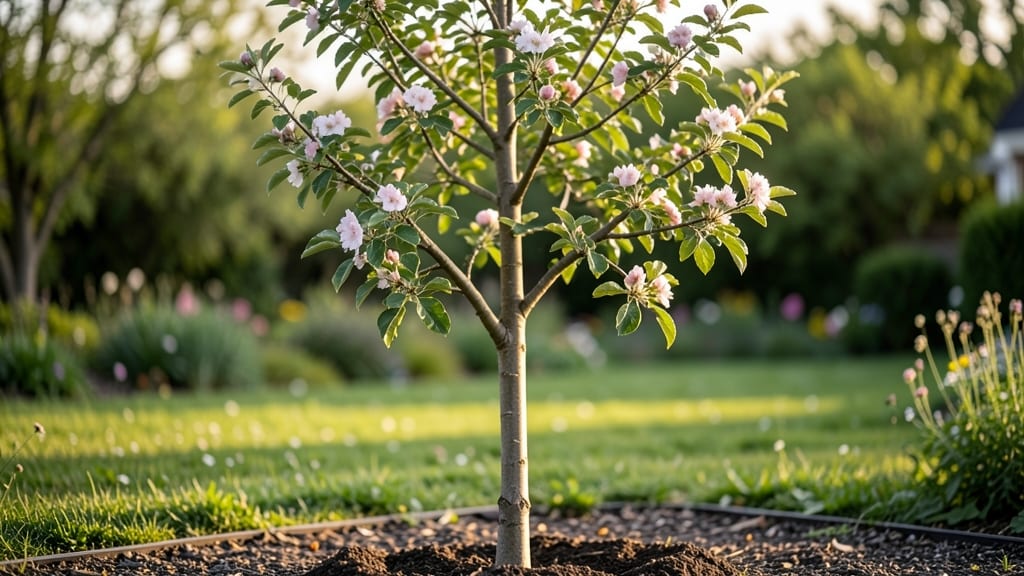
A young apple tree looks like a slender, upright shrub with smooth, light gray bark and small, oval-shaped leaves that turn reddish-green when young. Its branches grow in a vase-like shape, and it develops tiny white blossoms in its second or third year.
A young apple tree's appearance changes dramatically as it matures. 🌱 The light gray bark stays smooth for the first few years, but watch for subtle horizontal lenticels (tiny raised pores) that give it a textured look.
Those small, oval leaves start bright green in spring, then develop reddish edges before settling into a deeper green by summer—this color shift helps distinguish it from other young fruit trees.
The vase-shaped branching pattern is another key identifier, as it creates that classic "apple tree silhouette" even before the tree reaches 6 feet tall.
The white blossoms that appear in late winter or early spring are one of the most exciting signs of maturity.
These delicate clusters signal the tree's readiness to fruit, though you won't see actual apples until the third or fourth year. 🍎 What's fascinating is how these early growth patterns reflect the tree's future size and productivity—trees with more vigorous early branching often develop stronger structural frameworks as they age.
💡 In This Article
- Identifying Young Apple Tree Bark, Leaves, and Branches
- Growth Stages of a Young Apple Tree: What to Expect Year by Year
Identifying young apple tree bark, leaves, and branches
The bark of a young apple tree is one of its most distinctive features.
Unlike mature trees with rough, furrowed bark, young specimens have smooth, light gray skin that resembles elephant hide in texture. 🌿 What's fascinating is how this bark develops tiny raised pores called lenticels—these are actually breathing pores that allow gas exchange between the tree's inner tissues and the atmosphere.
You'll notice these become more prominent as the tree ages, but they start appearing as subtle horizontal lines when the tree is just 1-2 years old.
Those small, oval-shaped leaves are another key identifier. New leaves emerge bright green in spring, measuring about 1-3 inches long and ¾-1½ inches wide, with serrated edges that create a delicate sawtooth pattern.
What makes them unique is their color progression: they often start with reddish-green hues before maturing to a deeper green by summer. This color shift helps distinguish young apple trees from similar-looking fruit trees like pear or cherry, which typically maintain more uniform green foliage throughout the season.
The vase-shaped branching pattern is what gives young apple trees their signature silhouette. Primary branches grow upright from the central trunk, while secondary branches spread outward at 45-60 degree angles, creating that classic layered look.
What's interesting is how these branches develop in a spiral pattern—this growth habit helps maximize sunlight exposure for the leaves.
Unlike peach trees, which often develop more horizontal branches, apple trees maintain this vertical growth pattern even as they mature, which is crucial for supporting the weight of fruit later in life.
One of the most exciting transformations occurs when the tree reaches 2-3 years old. That's when you'll see the first signs of flowering—tiny white blossoms that appear in clusters along the branches.
These blossoms are actually compound flowers with 5 petals each, and they develop from buds that formed the previous summer. What's remarkable is how these flowers contain both male and female reproductive parts, making each blossom capable of producing fruit if properly pollinated.
Here's how to compare young apple trees to other common fruit trees:
- Leaf shape: Apple leaves are oval with serrated edges, while pear leaves are more elongated with a pointed tip
- Bark texture: Young apple bark stays smooth longer than cherry bark, which develops rough patches earlier
- Branch pattern: Apple's vase shape differs from peach's more open, horizontal branching
- Blossom color: Apple blossoms are pure white, while plum blossoms often have pinkish tones
The combination of these characteristics makes young apple trees relatively easy to identify once you know what to look for. 🌟 What most people don't realize is how these early growth patterns actually predict the tree's future fruit-bearing capacity—trees with more vigorous early branching typically develop stronger structural frameworks that can support heavier fruit loads as they mature.