
Pests and Diseases
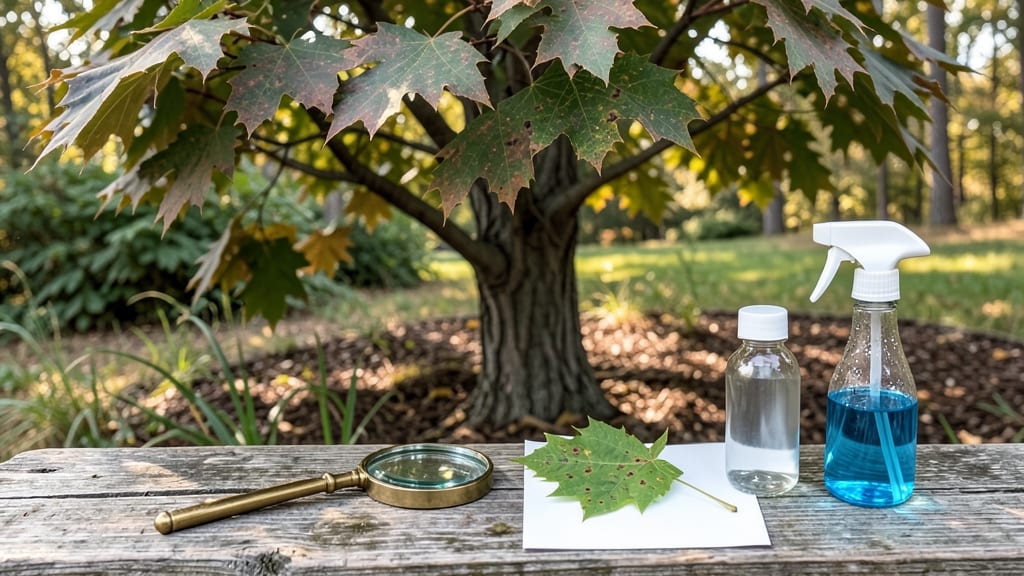
Your tree’s leaves shouldn’t look like a polka-dot art project—those spots mean trouble. 🌿 Whether it’s fungal spots, bacterial blights, or pest damage, identifying the cause fast stops the spread before your whole yard turns into a leaf litter disaster.
I’ve seen anthracnose turn a healthy oak into a skeleton in weeks, and the key to saving your trees is acting now—before the spots multiply. Start by checking the spot color (black, yellow, brown?), shape (circular? irregular?), and whether they’re dry or oozy.
Fungal spots often have concentric rings, while spider mites leave stippled yellowing. Once you know the culprit, you can treat it—whether that’s pruning infected branches, applying neem oil, or a targeted fungicide. The sooner you act, the sooner your tree bounces back to full, healthy green.
📚 In This Guide
- What you need
- Instructions
- Tips and common mistakes
- Wrapping up and next steps
What you need
- ● Hand lens or magnifying glass (10x magnification) – For closely inspecting spots, textures, and tiny details.
- ● Gloves (nitrile or rubber) – Protects your hands from sap, fungi, or pests (1 pair).
- ● Pruning shears or sharp scissors – For safely removing infected leaves or branches (1 pair, sterilized with rubbing alcohol).
- ● Spray bottle (8–16 oz) – For applying homemade treatments or water.
- ● Notebook and pen – To log observations (e.g., spot color, size, location, and tree type).
- ● Ruler or measuring tape – To document spot sizes accurately (6–12 inches).
- ● Disposable camera or smartphone – Capture close-ups of symptoms for later reference.
- ● Garden hose with adjustable nozzle – For rinsing leaves or diluting treatments.
- ● pH test kit – Checks soil acidity (affects disease susceptibility).
- ○ Fungal spore microscope slides (optional) – For advanced identification of pathogens.
- ● Neem oil or horticultural oil (16 oz) – Pre-mixed for quick treatment (if not DIY-ing).
- ● Baking soda (1 lb) + dish soap (unscented) – For homemade fungicide blends.
- ● Coppertone or copper fungicide spray – Store-bought organic option for stubborn infections.
- ● Label markers – To tag treated trees and track progress.
How to diagnose and treat spots on tree leaves
Here's how I quickly spot the issue and get your tree back to healthy growth.
🌿 Step 1: Examine the Spots Closely
Start by looking at the spots under bright light—natural or a flashlight—to see their color, size, and texture. Fungal spots often appear as yellow, brown, or black patches with fuzzy edges, while bacterial spots may look water-soaked with greasy edges. Take a close-up photo if possible—it helps later when comparing to reference guides.
Check the leaf undersides too. Some diseases, like powdery mildew, start as white spots on the undersides before spreading. Note whether the spots are isolated or clustered, and if they're spreading or staying the same size. This tells you whether the problem is new or worsening.
🌱 Step 2: Identify the Likely Cause
Look for other clues in the tree's environment. If the spots appear after heavy rain or frequent watering, fungal infections like anthracnose or leaf spot are likely culprits. These thrive in damp conditions. If you see sticky residue on leaves or branches, it could be honeydew from aphids or scale insects, which often bring fungal diseases with them.
Next, check the tree's overall health. Weak, stressed trees with yellowing leaves or sparse foliage are more vulnerable to diseases. Pests like mites or aphids can also cause spots—look for tiny webs, chewed edges, or clusters of insects on the undersides of leaves.
💧 Step 3: Apply Natural Remedies Based on Diagnosis
For fungal spots, mix 1 tablespoon baking soda with 1 quart water and a few drops of dish soap (like castile soap) to help it stick. Spray the solution on the leaves until they're fully coated, focusing on the undersides. Repeat every 7-10 days until new growth appears. This works best in the early stages before the disease spreads.
If the spots look bacterial, prune away the worst-affected leaves and branches with sterilized pruners (wipe with rubbing alcohol between cuts). Dispose of the clippings in the trash, not the compost. Then, spray the tree with a copper fungicide (like copper soap) or a neem oil solution (1 tablespoon neem oil per quart of water) to prevent further spread.
☀️ Step 4: Adjust Care to Prevent Recurrence
Improve air circulation around the tree by pruning dense branches to let sunlight and air reach the center. Avoid overhead watering—water at the base instead to keep leaves dry. If the tree is in a shady, humid spot, consider moving it to a sunnier location or adding a small fan to improve airflow during hot, humid days.
Strengthen the tree's natural defenses by fertilizing with a balanced organic fertilizer (like 10-10-10) in early spring. Avoid over-fertilizing, as this can stress the tree and make it more susceptible to diseases. Mulch around the base with 2-3 inches of organic mulch (like wood chips) to keep the soil moist and regulate temperature.
✂️ Step 5: Monitor and Maintain Long-Term Health
Check the tree weekly for new spots or signs of stress. If you notice more than 10-15% of leaves affected, consider a second round of treatment. Keep a journal of when you treat the tree, the weather conditions, and how the leaves respond—this helps track what works best for your tree.
In late fall, clean up all fallen leaves and debris from around the tree. This removes overwintering spores and reduces the risk of reinfection next season. Store your pruners and tools in a dry place or sterilize them before storing to prevent disease spread.
Tips & tricks for identifying and treating leaf spots
Here's what nobody tells you about diagnosing leaf spots faster and preventing them from coming back.
Lighting is Everything: Use a bright flashlight or natural sunlight at midday to examine spots—this reveals subtle color differences that might look uniform in shade. I've caught early powdery mildew by noticing faint white powder only visible at certain angles. For stubborn cases, take close-up photos from multiple angles and compare them with online plant disease databases.
Timing Matters for Treatments: The 7-10 day treatment schedule works best when applied just after rain or watering—this is when fungal spores are most active. I've found that treating immediately after a wet spell gives better results than waiting for dry weather. For bacterial spots, time your copper fungicide application for early morning when humidity is lower to prevent leaf burn.
Pruning Strategy: When removing infected branches, cut at least 6 inches below the visible spot to ensure you remove all infected tissue. Sterilize your pruners between cuts with rubbing alcohol to prevent spreading disease. I've saved many trees by being aggressive with pruning—don't be afraid to remove more than you think necessary, especially on young trees where growth can recover quickly.
Environmental Prevention: The 2-3 inches of mulch recommendation is perfect—it regulates soil temperature while keeping moisture levels steady. For trees in particularly humid climates, I add a layer of coarse bark mulch (rather than fine chips) to improve drainage. Also consider installing a small solar-powered fan near the tree during peak humidity months—this creates airflow without electricity costs.
Pro Tips for Spots On Tree Leaves
- Here's what nobody tells you about diagnosing leaf spots faster and preventing them from coming back.
- Lighting is Everything: Use a bright flashlight or natural sunlight at midday to examine spots—this reveals subtle color differences that might look uniform in shade.
- Timing Matters for Treatments: The 7-10 day treatment schedule works best when applied just after rain or watering—this is when fungal spores are most active.
Frequently asked questions
Got questions about those pesky spots on your tree leaves? You’re not alone—here are the answers to the most common concerns, so you can tackle the problem fast and keep your trees thriving!
Why are there spots on my tree leaves, and how do I know if it’s a disease or pests?
Spots can stem from fungal infections (like powdery mildew or anthracnose), bacterial diseases (such as leaf spot), or insect damage (e.g., mites or beetles). Check the spot’s color, texture, and leaf edges: fungal spots are often circular with fuzzy edges, while insect damage may have chewed or discolored patches. Scrape a spot—if it leaves a powdery residue, it’s likely fungal.
How long does it take for spots to spread, and can I stop them?
Spots can spread within days to weeks, depending on humidity and tree health. Act immediately—prune infected leaves, improve air circulation, and apply neem oil or copper fungicide (follow label instructions). Prevention is key! Water trees at the base (not overhead) and avoid overcrowding plants to reduce fungal growth.
Are there natural remedies to treat spotted leaves, or should I use chemicals?
Start with natural fixes like a baking soda spray (1 tsp baking soda + 1 quart water + a drop of dish soap) for fungal spots, or hydrogen peroxide (3%) as a disinfectant. For stubborn cases, organic copper fungicides work well. Chemicals (like systemic fungicides) are faster but may harm beneficial insects—use them only if needed.
Will spotted leaves fall off, and will my tree recover?
Yes, severely spotted leaves will often drop, but don’t panic—trees replace them! Focus on treating the cause (fungus, bacteria, or pests) and improving tree health with balanced fertilizer and proper watering. Most trees bounce back if acted upon early, but chronic neglect can weaken them long-term.
How can I prevent spots from coming back next season?
Adopt a year-round prevention plan:
- Clean up fallen leaves (burn or compost them far from trees to prevent reinfection).
- Space trees properly for airflow (fungi thrive in damp, crowded areas).
- Water in the morning to let leaves dry quickly.
- Apply preventive sprays (like neem oil) in early spring before spots appear.
Wrapping up and next steps
Spotting those mysterious marks on your tree leaves doesn’t have to be stressful!
Whether it’s fungal infections, pest damage, or environmental stress, understanding the cause is the first step toward revival. 🌿 With the right tools and natural remedies—like neem oil, baking soda sprays, or proper pruning—you can nurse your trees back to health in no time.
Ready to take action? Grab your supplies, inspect those leaves, and start treating your green friends today. Your trees will thank you!