
Pests and Diseases
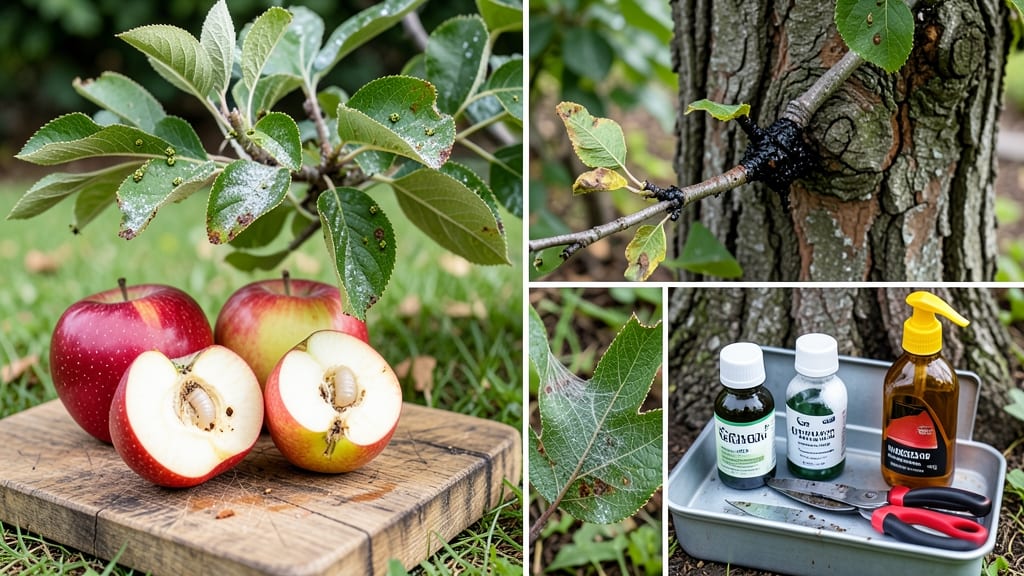
Your apple tree’s health starts with knowing the sneaky pests and diseases that can turn lush foliage into a battleground. 🌿 Apple scab, codling moths, and fire blight don’t wait for spring—they’re already plotting their attacks. The good news?
Catching them early means your tree stays productive and disease-free for decades. I’ve spent years watching my orchard trees fight back against these invaders, and the key is year-round vigilance.
That means checking bark for cankers in winter, monitoring leaves for spots in spring, and setting traps before moths emerge in summer. Most gardeners miss the early signs because they think pests only strike in summer—but 90% of damage happens when you’re not looking.
By the end of this guide, you’ll recognize the first warning signs—sticky leaves, chewed fruit, or black spots—and know exactly how to stop them before they spread. No more guessing whether that brown spot is harmless or a full-blown infection.
Your tree will thank you with juicier apples and stronger branches every season. This works for backyard orchards, urban trees, and even container-grown apples. Let’s get your tree fighting fit—before the pests show up.
Root causes of apple tree Stress
Apple trees, like any living organism, thrive when their needs are met—but when conditions shift, pests and diseases swoop in like uninvited guests at a buffet. Understanding why these problems arise is the first step to stopping them before they take root.
Below, we break down the key factors that turn your orchard into a pest and pathogen playground.
🌡️ Climate And Weather Extremes
Apple trees are resilient, but they have limits. Fluctuating temperatures, excessive moisture, or prolonged drought create the perfect storm for pests and diseases to thrive. Here’s how:
- Warm, Humid Conditions: Fungi like Venturia inaequalis (apple scab) and Neonectria ditissima (canker) love moisture. When spring showers linger and temperatures hover between 50–75°F (10–24°C), spores germinate rapidly, infecting leaves, fruit, and bark. Pro tip: 🌡️ A 3–5 day stretch of dry weather after rain can drastically reduce fungal spread.
- Freeze-Thaw Cycles: Sudden temperature swings (e.g., daytime thaw followed by nighttime frost) stress trees, weakening their defenses. This opens doors for fire blight (Erwinia amylovora), a bacterial invader that exploits injured tissue.
- Drought Stress: Prolonged dry spells force trees to divert energy from pest resistance to survival. Scale insects and borers (like the codling moth) target weakened trees, as their reduced sap flow makes them easier pickings.
🌱 Poor Soil Health And Nutrient Deficiencies
A tree’s immune system runs on nutrients. When soil lacks essential elements, your apple tree becomes a sitting duck for invaders. Key deficiencies to watch:
| Nutrient | Deficiency Signs | Pest/Disease Link |
|---|---|---|
| Nitrogen (N) | Yellowing leaves (chlorosis), stunted growth | Weakened foliage attracts aphids and leafhoppers, which spread viruses like Apple Mosaic Virus. |
| Potassium (K) | Brown leaf edges, poor fruit set | Low potassium reduces disease resistance, making trees more susceptible to apple scab and powdery mildew. |
| Calcium (Ca) | Blossom end rot, cracked fruit | Calcium-deficient trees struggle to seal wounds, inviting fire blight and Nectria canker. |
| Zinc (Zn) or Boron (B) | Small, deformed leaves or fruit | Malformed growth provides hiding spots for mites and borers, which thrive in irregular bark crevices. |
Pro tip: 💡 Test your soil every 2–3 years—aim for a pH of 6.0–7.0 for optimal nutrient uptake.
🍎 Overcrowding And Lack Of Airflow
Trees need space to breathe—literally. Poor airflow traps moisture, heat, and pests, turning your orchard into a disease incubator. Here’s how it happens:
- Dense Canopies: When branches grow too close, humidity lingers on leaves and fruit, creating ideal conditions for apple scab and powdery mildew. Solution: Prune to open the canopy and allow 50–70% sunlight penetration.
- Grass or Mulch Buildup: Thick mulch or unmanaged grass retains moisture at the base, promoting root rot and attracting sap-sucking insects like mealybugs.
- Weeds as Pest Hotels: Weeds harbor alternative hosts for pests (e.g., woolly aphids on nearby plants) and fungal spores that jump to your apple tree.
Pro tip: ✨ Mulch in a 3–4 inch ring around the trunk (not touching bark) and keep the area weed-free within 3 feet.
🐛 Weakened Tree Immunity From Past Damage
An apple tree’s ability to fight off pests and diseases relies on its overall health history. Past injuries—even if healed—can leave lasting vulnerabilities:
- Physical Trauma: Broken branches, girdling roots, or poor pruning cuts create entry points for fire blight and Nectria canker. Pro tip: 🔪 Always prune in dry weather with clean, sharp tools to minimize damage.
- Chemical Stress: Overuse of synthetic fertilizers or pesticides disrupts beneficial microbes in the soil, weakening the tree’s natural defenses. Solution: Rotate organic amendments like compost and mycorrhizal fungi.
- Dormant Season Neglect: Skipping winter pruning or dormant oil applications leaves trees vulnerable to overwintering pests like san Jose scale and apple maggot larvae.
Pro tip: 🌿 Apply a thin layer of horticultural oil in late winter to smother overwintering eggs before they hatch.
By addressing these root causes—climate, soil, spacing, and past trauma—you’re not just treating symptoms; you’re starving the problem at its source. Next up: actionable strategies to fortify your tree’s defenses year-round.
Quick Fixes for Common Apple Tree Troubles
When pests and diseases strike your apple tree, acting fast is key to saving your harvest—and your tree! Below are practical, step-by-step solutions tailored to the most common issues, from chewed leaves to fungal spots. Prevention tips are woven in to keep your tree thriving long-term.
Fix: Stop the spread with copper sprays and prune strategically.
- 🍄 Remove Infected Leaves & Fruit
- Rake up and dispose of (don’t compost!) fallen leaves and mummified apples in plastic bags—this breaks the fungus’s life cycle.
- Prune small branches with scab lesions (sterilize tools with 70% rubbing alcohol between cuts).
- 🛡️ Apply Fungicide Early - Copper fungicide (like Bordeaux mixture or copper sulfate) is organic and effective.
Spray before buds swell (pink bud stage) and every 7–10 days during wet springs. - For organic growers, try neem oil (mix 1 tbsp/quart water + dish soap as a surfactant)—reapply after rain.
- 🌿 Improve Airflow & Mulch Right
- Thin branches to reduce humidity (scab thrives in damp conditions).
- Use straw or wood chips (not grass clippings) as mulch—keep it 2–3 inches deep but 6 inches away from the trunk.
💡 Pro Tip: Plant resistant varieties like Liberty, Enterprise, or Akane—they tolerate scab better!
Fix: Disrupt their life cycle with traps, sprays, and sanitation.
- 🕵️ Set Up Pheromone Traps
- Hang codling moth traps (available at garden centers) in early spring (before moths emerge). Replace lures every 4–6 weeks.
- 🍎 Use Kaolin Clay or Spinosad
- Kaolin clay (like Surround WP) creates a barrier moths avoid—spray every 7–10 days starting at petal fall.
- For organic growers, spinosad (from Saccharopolyspora spinosa bacteria) is effective but reapply after rain.
- 🧹 Clean Up Debris Religiously
- Remove all fallen fruit (even tiny ones) and drop cloths from under the tree—moths lay eggs here!
- Bag and trash infested apples immediately (don’t leave them on the ground).
✨ Bonus: Plant thyme, mint, or lavender nearby—moths dislike these scents!
Fix: Trap them early and use protective barriers.
- 🎣 Use Yellow Sticky Traps
- Hang yellow sticky traps in the tree before flies emerge (late June–July). Check weekly and replace if saturated.
- 🍎 Cover Fruit with Netting
- Fine mesh netting (1/4-inch holes) over the tree before flies appear blocks adults from laying eggs. Secure tightly!
- 🧪 Apply Protein Hydrolysate Spray
- Aza-dirachtin or protein hydrolysate sprays (like Rogue Trapp) confuse the flies’ mating signals. Spray every 7–10 days.
🌡️ Heat Treatment (For Serious Cases):
- In commercial orchards, hot water dips (113°F for 30 seconds) kill larvae. For home growers, pick fruit early (smaller = less damage).
Fix: Blast them off with water and introduce predators.
- 💦 Spray with Soapy Water**
- Mix
- 🕷️ Encourage Natural Predators
- Release beneficial nematodes** (Steinernema feltiae) into the soil to combat mites.
- 🌿 Neem Oil for Heavy Infestations
- Mix 1 tbsp neem oil + 1 tsp soap per quart of water. Spray every 5–7 days until pests are gone.
🔥 Pro Tip: Mites thrive in dry heat—keep the tree well-watered to deter them!
Fix: Prune aggressively and sterilize tools to prevent spread.
- ✂️ Prune Below the Infection**
- Cut
- Sterilize pruners with bleach (1 part bleach:9 parts water) or rubbing alcohol between cuts.
- 🛡️ Apply Bactericide Sprays
- 🌿 Improve Tree Health
- Avoid overhead watering—water at the base to keep foliage dry.
🎯 Critical:** If fire blight hits, remove the tree if >50% is infected to save the orchard!
Keep these habits up to minimize future problems:
| Season | Task | Why It Works |
|---|---|---|
| Winter | Rake & remove debris | Eliminates overwintering pests/diseases |
| Early Spring | Prune & sterilize tools | Removes diseased wood, opens airflow |
| Bloom Time | Apply fungicide/neem oil | Protects new growth from scab/mildew |
| Summer | Monitor traps & water deeply | Catches codling moths, deters mites |
| Fall | Pick up ALL fallen fruit | Stops maggots/scab spores from spreading |
Final Thought: Most apple tree problems start with poor sanitation or neglected care. Stay proactive, and your tree will reward you with juicy, pest-free fruit for years! 🍏🌟
Frequently asked questions
What are the first signs my apple tree has apple scab?
Look for olive-brown spots with yellow halos on leaves or velvety black growth on fruit surfaces. These appear 2–4 weeks after wet springs when temperatures hit 50–75°F (10–24°C). Check undersides of leaves first—scab starts there!
Can I use the same spray for codling moths and apple scab?
No—codling moths need pheromone traps or kaolin clay, while scab requires copper fungicide or neem oil. Mixing them can reduce effectiveness. For organic growers, spinosad works for moths but won’t stop scab. Always apply at the right growth stage!
Why does my tree get pests every year even after spraying?
Pests often return due to overwintering eggs in bark or leaf litter. 90% of damage happens when you’re not looking—focus on winter cleanup (remove debris) and early spring sprays before pests emerge. Also check if your tree is nutrient-deficient (especially potassium).
Is fire blight contagious to other trees?
Yes! Fire blight (Erwinia amylovora) spreads through rain, insects, and pruning tools. If your tree shows blackened, oozing branches, remove infected wood 6 inches below the lesion and sterilize tools with bleach. Keep fire blight-prone trees 100+ feet away from other fruit trees.
How often should I inspect my apple tree for problems?
Check your tree every 2 weeks during growing season (spring-fall), with extra attention after rain. Focus on new leaves, fruit, and bark crevices—these are hotspots for pests/diseases. Keep a tree journal to track changes year-round.