
Trees
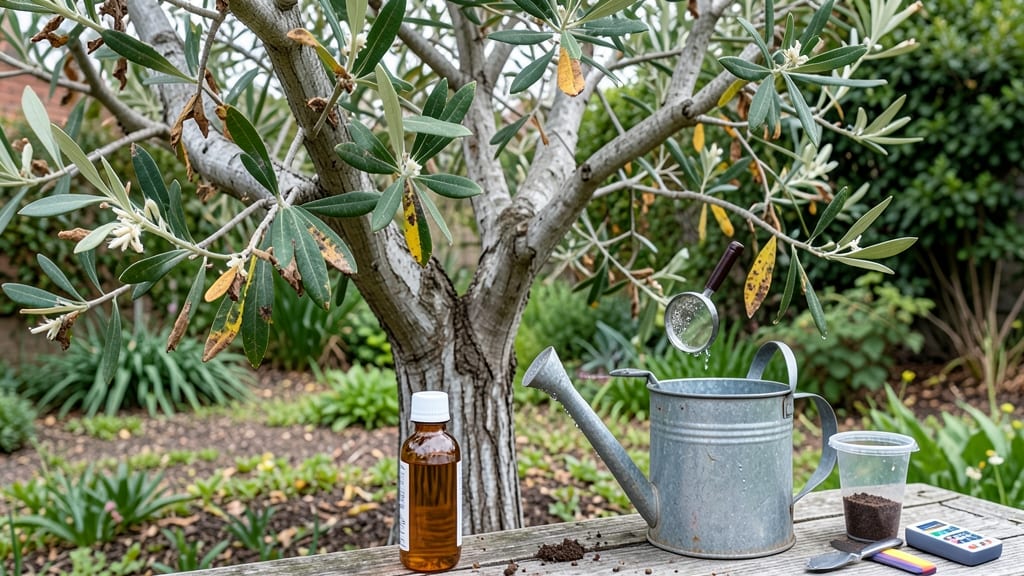
Your olive tree’s leaves going brown isn’t a death sentence—it’s a call for action. 🌿 The good news? Most causes have quick fixes that can restore your tree’s health before it’s too late.
I’ve nursed back multiple olive trees from this exact problem, and the solutions are simpler than you’d think.
First, check the soil moisture—browning often means either overwatering (yellow, mushy leaves) or underwatering (crispy, brown edges). Then look for pests like spider mites (tiny webs on undersides) or fungal spots (dark patches with yellow halos).
Nutrient deficiencies—especially iron or zinc—can also cause browning, but they’re easy to correct with the right fertilizer.
Within 2-4 weeks of adjusting care, you’ll see fresh green growth pushing out. Prune dead branches, water deeply but less often, and apply a balanced fertilizer. The key is catching it early—most olive trees bounce back completely with the right approach.
This works for both container-grown and in-ground olive trees, whether you’re in Zone 8 or a Mediterranean climate. Let’s diagnose the real issue so you can save your tree—and keep those silvery-green leaves thriving.
Root Causes Of Browning Leaves
Olive tree leaves turning brown can be alarming, but understanding the why behind it is the first step to saving your tree. Below, we break down the most common causes—from environmental stressors to pests—so you can diagnose the issue accurately and act fast.
Olives are drought-tolerant Mediterranean natives, meaning they hate soggy roots.
When soil stays too wet for too long, roots suffocate from lack of oxygen, leading to: - Yellowing leaves (chlorosis) that eventually turn brown and crispy at the edges. - Fungal infections (like Phytophthora or Verticillium wilt), which thrive in waterlogged conditions and block nutrient uptake. - Root rot, where roots decay, preventing the tree from absorbing water and minerals.
How to spot it: Check the soil 2–3 inches down—if it’s damp for days, you’re overwatering. Also, look for mushrooms or mold near the base (a red flag for fungal issues).
While olives love dry conditions, severe drought can cause leaves to brown and drop.
Here’s how: - Leaf scorch: Edges turn brown and papery as cells lose moisture and die (common in hot, dry summers). - Premature leaf drop: The tree sheds leaves to conserve water, leaving branches bare. - Stunted growth: New leaves may appear small, curled, or brown from lack of hydration.
How to spot it: Pull back the bark on small branches—if it’s dry and snaps easily, your tree is thirsty. Also, check if the soil is bone-dry 4–6 inches down.
Olive trees thrive in full sun, but intense heat waves (especially with dry soil) can scorch leaves:
- Sunburnt patches: Leaves develop brown, dead spots (often on the top or exposed sides).
- Bleached or white tips: A sign of oxidative stress from too much UV exposure.
- Wilting: Even drought-resistant olives may droop in 100°F+ temperatures without adequate moisture.
How to spot it: Look for sudden browning after a heatwave, especially on young, tender leaves. Mature leaves may show crispy, brittle edges.
Olives need specific nutrients to stay green and healthy.
Deficiencies cause browning in distinct patterns: - Iron (Fe) deficiency: Leaves turn yellow between veins (chlorosis) before browning (common in alkaline or calcareous soil). - Magnesium (Mg) deficiency: Older leaves develop brown patches along the edges (a classic sign of interveinal necrosis). - Nitrogen (N) deficiency: Leaves turn pale green to brown and may drop prematurely.
How to spot it:
- Iron/Magnesium: Test soil pH (olives prefer 6.0–8.0; iron locks up in alkaline soil).
- Nitrogen: Check for slow growth or small, sparse leaves.
Brown leaves can signal an invasion of pests or pathogens:
- Olive scale insects 🐛: Sap-sucking pests leave sticky honeydew (attracts sooty mold, turning leaves black/brown).
- Spider mites 🕷️: Tiny pests cause stippling (tiny brown dots) and webbing on undersides.
- Olive knot disease (bacterial): Causes wart-like galls that ooze and spread brown, dead tissue.
- Leaf spot fungi (e.g., Cycloconium oleaginum): Creates dark brown spots with yellow halos in humid conditions.
How to spot it: Inspect leaves undersides and stems for:
- Sticky residue (scale/honeydew).
- Fine webbing (mites).
- Raised, oozing bumps (knot disease).
- Fungal spores (powdery or slimy patches).
Even if your care routine is perfect, sudden changes can stress olives:
- Salt buildup (from tap water or coastal winds): Causes brown leaf tips and poor growth.
- Windburn: Young trees in exposed areas get scorched, brown edges on leaves.
- Cold damage: Frosts below 20°F can kill leaves, turning them black or brown overnight.
How to spot it:
- Salt: White crust on soil surface or crispy leaf edges.
- Windburn: One-sided browning on exposed branches.
- Frost: Sudden, uniform browning after a freeze.
Over-fertilizing or incorrect sprays can burn olive leaves:
- Fertilizer burn: Too much salt-based fertilizer (like synthetic nitrogen) causes brown, curled leaves.
- Herbicide drift: Glyphosate or other chemicals can bleach or brown leaves if sprayed nearby.
- Pesticide overuse: Harsh chemicals (like copper sprays) may cause browning or leaf drop if misapplied.
How to spot it:
- Burnt edges (like a fried look).
- Yellowing followed by browning (classic fertilizer burn).
- Uneven damage (herbicide drift often affects one side of the tree).
Revive Your Olive Tree Leaves
Now that you know the root causes behind those unsightly brown olive tree leaves, it’s time to take action! With the right approach, you can restore your tree’s health and prevent future damage. Below are practical, step-by-step solutions tailored to each issue—plus tips to keep your olive tree thriving long-term.
Signs: Yellowing or brown leaves, soggy soil, root rot (mushy, foul-smelling roots). Solution: 🔥 Step 1: Stop Watering Immediately
- Let the soil dry out completely before watering again. Olive trees hate wet feet—overwatering is their #1 enemy.
🍳 Step 2: Improve Soil Drainage
- Mix coarse sand, perlite, or gravel into the soil (20-30%) to aerate it. If planting in containers, ensure pots have drainage holes and use a well-draining potting mix.
👨🍳 Step 3: Prune Damaged Roots (If Severe)
- Gently dig around the base (carefully!) and trim any black, mushy roots with sterilized pruners. Replant in fresh, dry soil.
🥘 Step 4: Adjust Your Watering Routine
- Water deeply but infrequently—only when the top 2-3 inches of soil are bone-dry. In summer, this might mean once every 1-2 weeks; in winter, every 3-4 weeks.
💡 Prevention Tip: Mulch with gravel or crushed stone (not organic mulch) to keep roots dry and regulate soil temperature.
Signs: Crispy, brown edges on leaves, wilting, or leaf drop during hot spells. Solution: 🔥 Step 1: Provide Afternoon Shade
- If your olive tree is in a hot, exposed location, install shade cloth (30-50%) or move potted trees to a spot with morning sun + afternoon shade.
🍳 Step 2: Water Deeply in Heatwaves
- Water early in the morning (before 10 AM) to reduce evaporation. Use drip irrigation or soaker hoses to deliver moisture directly to roots.
👨🍳 Step 3: Mulch to Retain Moisture
- Apply a 2-3 inch layer of gravel or straw mulch (keep it 6 inches away from the trunk to prevent rot).
🥘 Step 4: Trim Overly Exposed Branches
- Prune back any branches that are baking in direct sun to reduce stress.
🌡️ Prevention Tip: Olive trees love full sun but hate intense afternoon heat. If you’re in a Zone 8+, consider drought-resistant varieties like ‘Arbequina’ or ‘Manzanillo.’
Signs: Brown spots with yellow halos, black sooty mold, or tiny insects (aphids, scale, spider mites). Solution: 🔥 Step 1: Identify the Culprit
- Fungus? Look for powdery white or black spots. Pests? Check undersides of leaves for sticky residue (honeydew) or webs.
🍳 Step 2: Prune and Dispose of Infected Leaves
- Cut off brown or spotted leaves with clean pruners. Bag and discard them (don’t compost!) to stop the spread.
👨🍳 Step 3: Treat Fungus with Baking Soda Spray
- Mix 1 tsp baking soda + 1 tbsp neem oil + 1 tsp mild soap in 1 quart of water. Spray every 7-10 days until new growth appears.
🥘 Step 4: Combat Pests with Horticultural Oil
- Use neem oil or insecticidal soap (follow label instructions). For scale insects, gently scrape them off with a soft brush dipped in rubbing alcohol.
🎯 Prevention Tip: Space trees properly (10-15 ft apart) for good airflow, which prevents fungal growth. Avoid overhead watering—water at the base instead.
Signs: Uniform brown leaves, stunted growth, or yellowing between veins (iron deficiency). Solution: 🔥 Step 1: Test Your Soil
- Grab a soil test kit (or send a sample to a local extension office) to check pH (6.0-8.0 is ideal for olives) and nutrient levels.
🍳 Step 2: Fertilize Properly
- Use a balanced, slow-release fertilizer (10-10-10 or 8-3-9) in early spring. Avoid high-nitrogen fertilizers—they encourage leafy growth at the expense of fruit.
- For iron deficiency, apply chelated iron or sprinkle iron sulfate around the base.
👨🍳 Step 3: Boost Organic Matter
- Work compost or well-rotted manure into the soil to improve nutrient retention.
✨ Prevention Tip: Olive trees are light feeders—over-fertilizing causes leaf burn. Stick to 2-3 feedings per year (spring, summer, and early fall).
Signs: General browning, leaf drop, or slow growth despite no obvious pests/disease. Solution: 🔥 Step 1: Check Transplant Shock
- If recently planted, water deeply daily for 2 weeks, then taper off. Use root stimulator (like Mycorrhizal fungi) to help roots establish.
🍳 Step 2: Adjust to Climate Changes
- Drought? Water more deeply but less often.
- Cold snaps? Protect young trees with burlap wraps or frost cloth in Zones 7 and below.
👨🍳 Step 3: Prune for Better Airflow
- Thin out crowded branches to reduce stress and improve light penetration.
💡 Prevention Tip: Olive trees are drought-tolerant once established—don’t overwater just because they look thirsty!
Final Pro Tip: 🌿 Monitor your tree weekly—catching issues early (like a few brown leaves) is way easier to fix than waiting until half the canopy is affected. With these fixes, your olive tree should bounce back in 4-8 weeks! 🌱
Frequently asked questions
Why do olive tree leaves turn brown in the middle of summer?
Hot, dry conditions can cause leaf scorch, where edges turn brown and papery from moisture loss. This is common when temperatures exceed 90°F without enough water. Try watering deeply in the morning and providing afternoon shade to prevent further damage.
Can I save my olive tree if half the leaves are already brown?
Yes! Prune the dead or severely brown leaves immediately to redirect energy to healthy growth. Focus on fixing watering habits (deep but infrequent) and check for pests like spider mites. With proper care, new green leaves should appear in 4-6 weeks.
What’s the difference between brown leaves from overwatering vs. underwatering?
Overwatering causes yellowing leaves with brown, mushy edges and may include root rot smells. Underwatering leads to crispy, brown leaf edges and dry, snapping branches. Stick your finger 2-3 inches deep—if damp, you’re overwatering; if dry, it’s time to hydrate.
Will olive tree leaves regrow if I fix the problem?
Olive trees are resilient. Once you correct the issue (watering, pests, or nutrients), new growth will push out from the tips of branches. Prune only the dead leaves—healthy buds are already there, waiting to sprout green again.
How often should I fertilize an olive tree with brown leaves?
Olive trees are light feeders—over-fertilizing burns roots. Use a balanced fertilizer (10-10-10) only in early spring. If you suspect a deficiency (like iron), apply chelated iron instead. Avoid fertilizing if leaves are already stressed from other issues.