
Transplanting
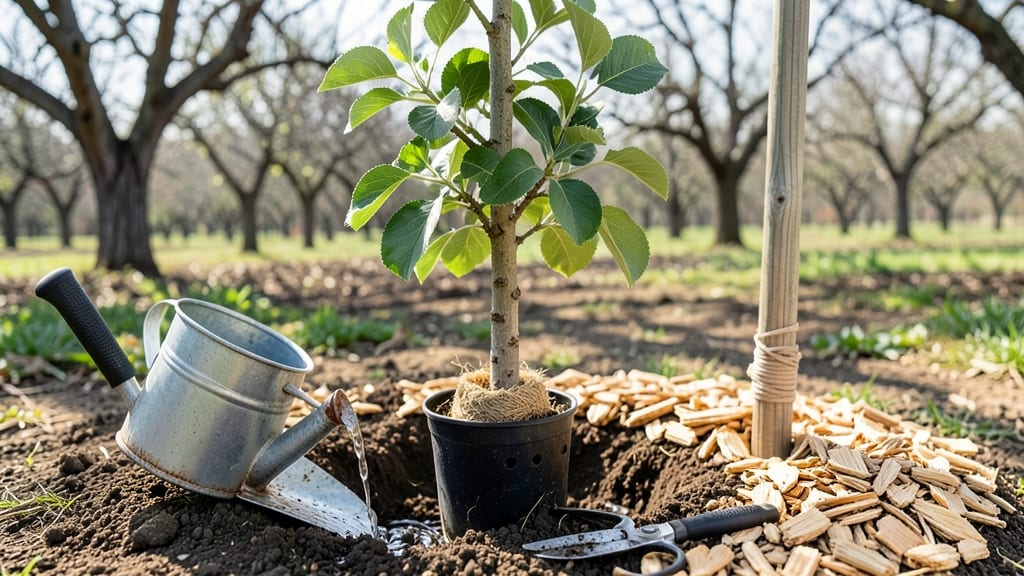
Your apple tree’s sudden wilting after transplanting isn’t a death sentence—it’s a cry for help. 🌳 I’ve nursed back more struggling trees than I’d like to admit, and the key is understanding why transplant shock happens (hint: it’s not just about the roots).
The real culprits are root disturbance, sudden environmental changes, and improper aftercare. Most gardeners overlook the slow acclimatization period, which is where recovery begins. A deep watering schedule, proper mulching, and strategic pruning make all the difference.
Within 4-6 weeks, you’ll see new growth signaling the tree is back on track. The leaves will regain their vibrant green, and the branches will start filling out again. Trust me, this works—even for trees that looked hopeless at first.
Prevention starts before you dig: root pruning and gradual acclimatization cut recovery time in half. Let’s bring your tree back to life.
Root Stress Triggers Explained
When you move an apple tree, it’s not just the branches that feel the strain—it’s the roots, too. Apple tree transplant shock often kicks in because the delicate root system gets disrupted, and the tree’s survival mechanisms go into overdrive.
Understanding the why behind this stress helps you take the right steps to revive your tree. Let’s break down the key culprits:
Most transplant shock starts with physical trauma to the roots. When you dig up an apple tree, even careful excavation can sever fine feeder roots—the tiny, hair-like structures responsible for absorbing water and nutrients. These roots regenerate slowly, leaving the tree temporarily starved.
Why it happens:
- Mechanical injury: Shovels, forks, or even rough handling can slice through roots, exposing them to air and pathogens.
- Root pruning: If too much of the root ball is trimmed (or none at all), the tree loses its ability to anchor itself and uptake moisture efficiently.
- Soil compaction: Tightening the soil around roots during replanting restricts oxygen flow, suffocating the roots before they can recover.
Actionable fix: Use a root-pruning saw (not a shovel) to minimize damage, and keep the root ball intact with burlap or a container if moving long distances.
Roots rely on a balance of moisture and oxygen. After transplanting, the tree’s root zone may dry out too quickly or become waterlogged—both scenarios shock the system.
Why it happens:
- Transpiration imbalance: Leaves continue evaporating water (via transpiration) while damaged roots struggle to replenish it, leading to wilting.
- Poor soil contact: Air pockets in the replanted hole trap roots in dry zones, cutting off hydration.
- Overwatering risks: Excess water drowns roots by displacing oxygen, causing anaerobic stress (a silent killer for trees).
Actionable fix: Water deeply before transplanting to hydrate roots, then mulch heavily to retain moisture. Use a soil probe to check moisture levels—aim for damp (not soggy) soil.
Apple trees are sensitive to sudden changes in temperature and light exposure. A tree moved from shade to full sun (or vice versa) without acclimation can experience photoinhibition (light stress) or cold damage.
Why it happens:
- Rapid light exposure: Leaves adapted to shade burn in intense sunlight, reducing photosynthesis and weakening the tree.
- Temperature swings: Moving a tree from a sheltered microclimate to an exposed site can cause chilling injury or heat stress.
- Evaporative stress: Hot, windy conditions increase water loss, compounding root recovery challenges.
Actionable fix: Gradually acclimate the tree to new light conditions over 1–2 weeks. Avoid transplanting during extreme heat or cold—aim for spring or early fall when temperatures are mild.
Exposed roots and bark are like open doors for fungi, bacteria, and pests. Transplant shock weakens the tree’s defenses, making it vulnerable to infections like Phytophthora (root rot) or Agrobacterium (crown gall).
Why it happens:
- Bare root exposure: Roots left uncovered during transport dry out and become entry points for pathogens.
- Contaminated soil: Replanting in infected soil or using unsterilized tools spreads disease.
- Weakened immunity: Stress hormones (like ethylene) surge, suppressing the tree’s natural defenses.
Actionable fix: Disinfect tools with rubbing alcohol, use fresh potting mix for container-grown trees, and apply a mycorrhizal fungus (like Glomus species) to boost root health.
Each of these stressors compounds the others—damaged roots can’t hydrate properly, leading to wilting, which then invites pests. But the good news? With the right care, apple trees are resilient. The key is minimizing disruption and giving roots the time to rebound.
Stay tuned for our next section on signs of transplant shock and how to nurse your tree back to health!
Revive Your Apple Tree After Stress
Transplant shock in apple trees doesn’t have to be a death sentence—with the right care, your tree can bounce back stronger than ever. The key is understanding the root causes of stress and applying targeted fixes.
Below, we break down practical solutions for each common issue, plus prevention tips to keep your tree thriving long-term.
If your apple tree’s roots were disturbed or cut during transplanting, they need immediate attention to recover.
How to Fix It:
- Prune damaged roots 🔪—Use clean, sharp shears to trim any broken, blackened, or mushy roots. Focus on removing only the affected sections to avoid over-pruning.
- Apply rooting hormone 🧴—Dip healthy root tips in a high-quality rooting hormone (like Mycorrhizal fungi or powdered cinnamon) before replanting to encourage regrowth.
- Mulch heavily 🍂—Spread 3–4 inches of organic mulch (wood chips, straw, or compost) around the base but keep it 6 inches away from the trunk to prevent rot. Mulch retains moisture and insulates roots from temperature swings.
- Water deeply but infrequently 💧—Soak the soil once a week (more in extreme heat) to encourage deep root growth. Avoid shallow watering, which stresses roots further.
Prevention Tip: 💡 Before transplanting, prune roots only when necessary—never remove more than 20–30% of the root ball. If you must dig up a mature tree, do it in early spring or late fall when the tree is dormant.
Apple trees moved to sunnier spots or transplanted in hot weather often suffer from leaf scorch or wilting.
How to Fix It:
- Provide afternoon shade ☀️—Use shade cloth (30–50% coverage) for the first 2–4 weeks after transplanting, especially if temperatures exceed 90°F (32°C).
- Mist leaves lightly 💦—Early morning misting (not soaking) can help reduce water loss. Avoid evening misting to prevent fungal growth.
- Adjust watering times ⏰—Water early in the morning (before 9 AM) to let foliage dry before heat sets in. Never water at night.
- Apply anti-transpirant spray 🛡️—Products like Wilt-Pruf create a protective film on leaves to lock in moisture.
Prevention Tip: 🌡️ Transplant apple trees in early spring or fall when temperatures are mild (50–70°F / 10–21°C). Avoid summer moves unless you’re prepared for extra shade and hydration.
Overwatering or underwatering can both trigger transplant shock by suffocating roots or causing dehydration.
How to Fix It:
| Problem | Solution | Signs to Watch For |
|---|---|---|
| Underwatering | Water deeply 2–3 times per week (1–2 inches per session). Use a soaker hose to avoid runoff. | Wilting leaves, dry soil 1–2 inches down, crispy leaf edges. |
| Overwatering | Let soil dry 1–2 inches deep between waterings. Improve drainage with sand or perlite if soil is clay-heavy. | Yellowing leaves, mushroom growth, soggy soil, root rot smell. |
| Poor Drainage | Amend soil with compost or peat moss and consider raising the tree on a small mound if in a low spot. | Puddling water, slow growth, blackened roots. |
Prevention Tip: ✨ Test your soil’s drainage before transplanting—dig a hole, fill it with water, and time how long it takes to drain. If it holds water for >2 hours, amend the soil.
Stressed trees are vulnerable to diseases like powdery mildew or root rot, which worsen transplant shock.
How to Fix It:
- Remove infected leaves 🌿—Prune and dispose of (don’t compost) any yellowing, spotted, or moldy foliage.
- Apply copper fungicide 🛡️—Spray with copper-based fungicide (like Bordeaux mixture) every 2 weeks for the first month post-transplant.
- Aerate the soil 🌬️—Loosen compacted soil around the root zone with a garden fork to improve airflow and reduce moisture buildup.
- Avoid overhead watering 🚫💦—Use drip irrigation or a watering wand to keep leaves dry.
Prevention Tip: 💡 Sterilize pruning tools with rubbing alcohol before and after cuts to prevent spreading pathogens.
Transplanted trees often lack energy to recover without proper nutrition.
How to Fix It:
- Use a balanced fertilizer 📊—Apply a 10-10-10 or 20-20-20 fertilizer (low nitrogen) 4–6 weeks after transplanting. Follow label instructions—too much can burn roots!
- Add compost tea 🍲—Mix compost tea (homemade or store-bought) into the watering can to provide beneficial microbes that aid root recovery.
- Avoid high-nitrogen fertilizers 🚫💥—These encourage leafy growth at the expense of root strength. Stick to low-nitrogen, high-phosphorus (like 5-10-10) for root development.
Prevention Tip: 🌱 Before transplanting, amend the planting hole with compost or well-rotted manure to give roots a nutrient boost from day one.
Once your apple tree shows signs of recovery (new leaves, firm stems), shift to maintenance mode to prevent future shock.
How to Fix It:
- Prune strategically 🌿—Remove dead, crossing, or weak branches in late winter to improve airflow and reduce stress.
- Monitor soil moisture 📉—Check soil moisture weekly by sticking your finger 2 inches deep. Adjust watering as seasons change.
- Mulch annually 🍂—Replenish mulch in early spring to maintain root insulation and moisture.
- Watch for pests 🐜—Stressed trees attract borers or aphids. Treat early with neem oil or insecticidal soap.
Prevention Tip: 🎯 Plant mycorrhizal fungi with your apple tree at transplanting—these beneficial microbes boost root health and reduce shock by up to 50%!
Frequently asked questions
How long does it take for an apple tree to recover from transplant shock?
Most apple trees show signs of recovery within 4-6 weeks with proper care, though full recovery can take up to 2-3 months. Watch for new leaf growth and firmer stems as key indicators. Younger trees bounce back faster than mature specimens.
Can I transplant an apple tree in summer?
Transplanting in summer is risky because extreme heat accelerates moisture loss and stress. If you must move your tree, do it on an overcast day, provide afternoon shade, and water twice daily for the first 2 weeks. Early spring or fall are ideal.
What's the best way to tell if my apple tree is suffering from transplant shock?
Look for these red flags: wilting leaves that don't perk up after watering, yellowing or curling foliage, and stunted new growth. Check the soil—if it's bone dry or waterlogged, that's another clue. Root damage often shows as blackened or mushy roots when inspected.
Should I fertilize my apple tree right after transplanting?
Wait 4-6 weeks before applying fertilizer to let roots establish first. Use a low-nitrogen, high-phosphorus fertilizer (like 5-10-10) to encourage root growth. Avoid high-nitrogen formulas—they stress already compromised roots.
How much root pruning is safe before transplanting?
Never remove more than 20-30% of the root ball—this gives the tree enough root system to sustain itself during recovery. Use a root-pruning saw for clean cuts, and avoid using shovels that can tear roots. The goal is minimal disruption while maintaining stability.