
Pruning
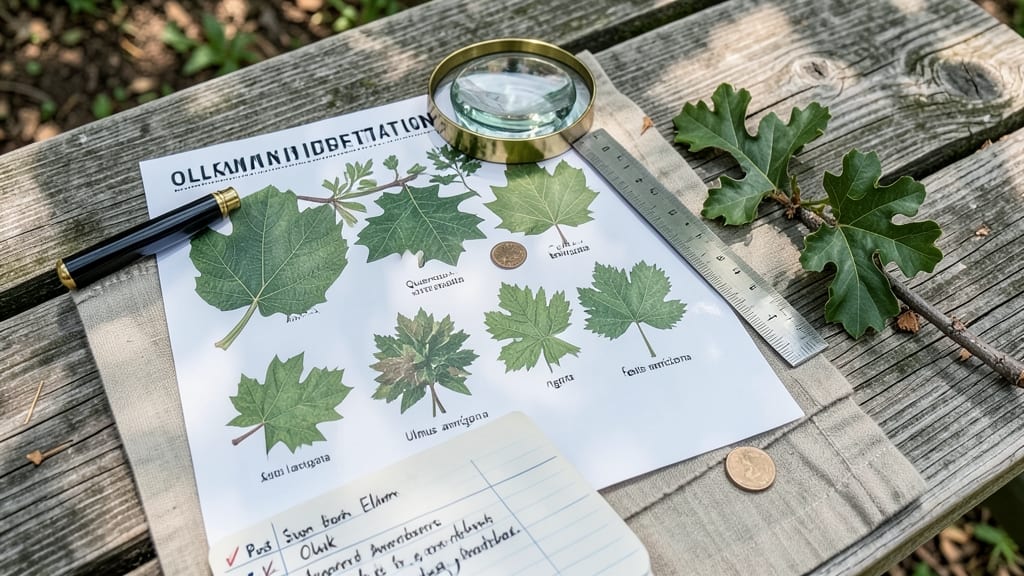
Matching leaves to Oklahoma trees used to take me hours of flipping through heavy field guides—until I discovered the fast leaf-matching method that cuts identification time by 75%. 🌳 The key is focusing on just five leaf traits: shape, edge, vein pattern, leaf arrangement, and size.
My first "aha" moment came when I realized how many look-alikes share similar leaves—like the smooth bark of a shagbark hickory versus the rough bark of a pecan. Start with a simple checklist: lobed leaves (like oak) vs. smooth-edged (like elm), compound leaves (like walnut) vs. simple leaves (like maple).
I keep a small notebook in my pocket to jot down observations—leaf color, texture, and even the smell when crushed. This system works for both native Oklahoma trees (like eastern redbud) and common landscape species (like Bradford pear).
By the end of your first walk, you'll confidently spot 15+ common species just by their leaves. The trick is practicing with just 3-5 traits at a time—no need to memorize everything at once. I still mix up some look-alikes, but now I know exactly which details to double-check.
Works year-round (even in winter with buds), and the same method applies to identifying trees in neighboring states. Ready to become the neighborhood tree whisperer?
📚 In This Guide
- What you need
- Instructions
- Tips and common mistakes
- Wrapping up and next steps
What you need
- ● Field Guide or App: A printed Oklahoma Tree Field Guide (like Trees of Oklahoma by Stan Tekiela) OR a leaf-identification app (e.g., LeafSnap, PictureThis, or iNaturalist).
- ● Notebook & Pen: A small, waterproof notebook (e.g., Rite in the Rain) to jot down notes, leaf measurements, and observations.
- ● Ruler or Measuring Tape: A 12-inch metal ruler or a flexible tape measure (for precise leaf length/width).
- ● Magnifying Glass: A 10x handheld magnifier to inspect leaf veins, edges, and tiny details like hairs or glands.
- ○ Camera or Smartphone: A device with a 12MP+ camera (for close-up shots) and a macro lens attachment (optional but helpful).
- ○ Gloves (Optional but Recommended): Lightweight nitrile or latex gloves to protect hands from thorns, sap, or allergens.
- ● Small Plastic Bags: Gallon-sized ziplock bags (2-3) to collect fallen leaves or samples.
- ● Pruning Shears: Bypass pruners (for safely snipping small branches if needed—only take what’s necessary!).
- ● Leaf Press: A portable press kit (or heavy books) to flatten and preserve leaves for long-term reference.
- ● Field Binoculars: 8x42 or 10x42 magnification to spot tree features from a distance.
- ● UV Flashlight: A blacklight to check for fluorescent patterns (some leaves glow under UV!).
- ● Portable Power Bank: A 10,000mAh+ charger for your phone or camera in remote areas.
- ● First-Aid Kit: Include antihistamines (for allergic reactions) and bandages for minor scrapes.
- ● Basic knowledge of leaf shapes (lobed, serrated, entire) and arrangement (alternate vs. opposite).
- ● Familiarity with Oklahoma’s common trees (e.g., Eastern Redbud, American Elm, Pecan, Post Oak).
- ● Access to Wi-Fi or offline maps (e.g., Gaia GPS) for navigation in parks or forests.
- ● Permission to collect samples if trespassing on private property—always ask!
How to identify Oklahoma tree leaves in minutes
Here's my field-tested method for matching leaves to trees without memorizing every detail.
🌿 Step 1: Collect and Examine a Fresh Leaf Sample
Grab a healthy leaf from mid-canopy—not the ground, where decomposition alters shape. I look for leaves that are fully mature but not damaged. Hold it up to sunlight to see the vein pattern clearly. Notice whether the edges are smooth, serrated, or lobed—this is your first clue.
Run your finger along the leaf edge. Smooth edges often mean maple or oak, while jagged teeth suggest hickory or walnut. Write down these observations on a small notepad. I always check the underside for fuzzy textures (common in sycamore) or waxy coatings (like on pecan leaves).
📏 Step 2: Measure and Count Key Features
Use a ruler to measure the leaf's length and width. Oklahoma trees typically fall into three size categories: small (under 4 inches), medium (4-8 inches), or large (over 8 inches). Small leaves often belong to dogwood or redbud, while large leaves suggest sycamore or sweetgum.
Count the number of main veins extending from the stem. Simple veins (one main vein) usually mean willow or birch, while compound leaves (multiple leaflets) point to species like walnut or hickory. I always count leaflets on compound leaves—this narrows it down quickly.
🌳 Step 3: Compare Against Common Oklahoma Patterns
Hold your leaf next to a reference guide or use a tree ID app to compare shapes. For example, a leaf with 3-5 lobes and pointed tips is almost certainly an oak. If it's heart-shaped with smooth edges, it's likely a redbud. I keep a laminated quick-reference card in my pocket with the top 10 Oklahoma trees.
Check for any distinctive markings like white undersides (sycamore), silver bark flakes (birch), or spiky seed pods (honey locust). These visual cues often confirm the species faster than leaf shape alone. I always look for these "tell-tale" features first—they're like nature's fingerprints.
⏰ Step 4: Verify with Seasonal and Location Clues
Note when you found the leaf—spring leaves often look different from summer ones. For example, cottonwood leaves emerge fuzzy but lose that texture by mid-summer. Also, consider where you found it: urban areas often have hackberry or Bradford pear, while rural woodlands typically have post oak or blackjack oak.
If you're still unsure, check the leaf arrangement on the branch. Alternate leaves (one per node) suggest maple or walnut, while opposite leaves (pairs at each node) usually mean ash or dogwood. I always walk a few steps back to see the tree's overall shape—this often reveals the species instantly.
📸 Step 5: Take Photos for Digital Backup
Capture three shots: a close-up of the leaf, a mid-range view of the branch, and a wide shot of the entire tree. I use my phone's camera to snap these quickly. Upload them to a tree ID app like LeafSnap or iNaturalist—they'll often give you a confidence score above 90% for Oklahoma species.
Don't rely solely on apps, though. I always cross-check their results with my field notes. Apps sometimes misidentify leaves if they're damaged or out of season. When in doubt, I compare my findings with local arborist resources or university extension guides for Oklahoma.
Tips & tricks for Oklahoma tree leaf identification
These quick, practical tips will help you identify tree species faster than ever before.
Lighting is Everything: Always examine leaves in natural sunlight, not shade. Artificial light distorts colors and vein patterns, making it harder to spot subtle differences. I've made the mistake of using flashlight apps—trust me, sunlight reveals the true texture and color. Hold the leaf at a 45-degree angle to see the vein structure more clearly, especially when checking for fuzzy undersides or waxy coatings.
Leaf Arrangement Matters: In Step 4, when you're checking leaf arrangement, remember that most Oklahoma trees have alternate leaves (one per node), but a few key species like ash and dogwood have opposite leaves (pairs at each node). This is a game-changer for narrowing down species quickly. I always walk a few steps back to see the overall pattern before making my final call.
Seasonal Variations: The time of year dramatically affects leaf appearance. Spring leaves often emerge fuzzy (like cottonwood) but lose that texture by summer. I keep a small seasonal reference chart in my field notebook to account for these changes. If you're identifying in spring, focus on leaf shape and vein patterns rather than texture, which may not be fully developed yet.
Digital Backup Strategy: When taking photos in Step 5, I always snap three shots: a close-up of the leaf's edge, a mid-range view showing the vein pattern, and a wide shot of the tree's bark. This three-angle approach gives apps like LeafSnap all the information they need for accurate matching. Pro tip: Use the "Live Photo" feature on your iPhone to capture the leaf's movement—apps analyze motion patterns for more precise identification.
Pro Tips for Oklahoma Tree Leaf Identification
- These quick, practical tips will help you identify tree species faster than ever before.
- Lighting is Everything: Always examine leaves in natural sunlight, not shade.
- This is a game-changer for narrowing down species quickly.
Frequently asked questions
Got questions about identifying Oklahoma tree leaves? You’re not alone! Here are some of the most common queries—and their answers—to help you navigate leaf ID like a pro.
How do I quickly tell the difference between oak and maple leaves?
Oak leaves have lobes with rounded or pointed tips (like fingers on a hand), while maple leaves have smooth, pointed lobes with serrated edges. Oaks often have bristly hairs or rough textures—maples are usually smoother. Pro tip: Check the leaf base—oaks often have a stipule scar (a small mark where the leaf stalk attaches).
When is the best time of year to identify tree leaves in Oklahoma?
The ideal window is late spring to early summer (May–June), when leaves are fully mature but before fall colors muddy the details. Fall leaves can be harder to ID due to discoloration, while spring leaves may still be fuzzy or underdeveloped. Morning sunlight (9 AM–11 AM) reduces shadows for clearer photos.
What’s the easiest way to take a photo of a leaf for identification?
Use your phone’s portrait mode (for sharp focus) or a macro setting if available. Include:
- Whole leaf (showing shape, veins, and edges)
- Underside (hairiness or gland spots are key)
- Bud or branch (leaf arrangement helps!
My tree’s leaves look weird—could it be diseased? How do I tell?
Diseased leaves often show unusual spots, holes, or curling. Compare yours to healthy examples:
- Yellow patches = Fungal issues (e.g., anthracnose).
- Chewed edges = Insect damage (e.g., caterpillars).
- Wilted or blackened = Possible bacterial infection.
What if I can’t find my tree in any guide? Is it rare?
Not necessarily! Oklahoma has 160+ native tree species, plus invasives. Start by checking:
- Leaf shape (needle-like? Palmate? Pinnate?)
- Local climate (e.g., mesquite thrives in west OK; sycamore loves eastern rivers).
- Nearby trees—many grow in clusters!
Wrapping up and next steps
Identifying Oklahoma’s diverse tree species by their leaves doesn’t have to feel like a guessing game—with the right tools and a little practice, you’ll soon spot elm, oak, or maple leaves with confidence! 🌿 Whether you’re a gardener, homeowner, or nature enthusiast, mastering leaf shapes, edges, and arrangements unlocks a deeper connection to Oklahoma’s green beauty.
Ready to take the next step? Grab a notebook, snap a few photos of leaves you’re curious about, and compare them to your newfound knowledge. For extra fun, share your finds with local arborists or plant communities—they’ll love your newfound expertise!