
Pruning
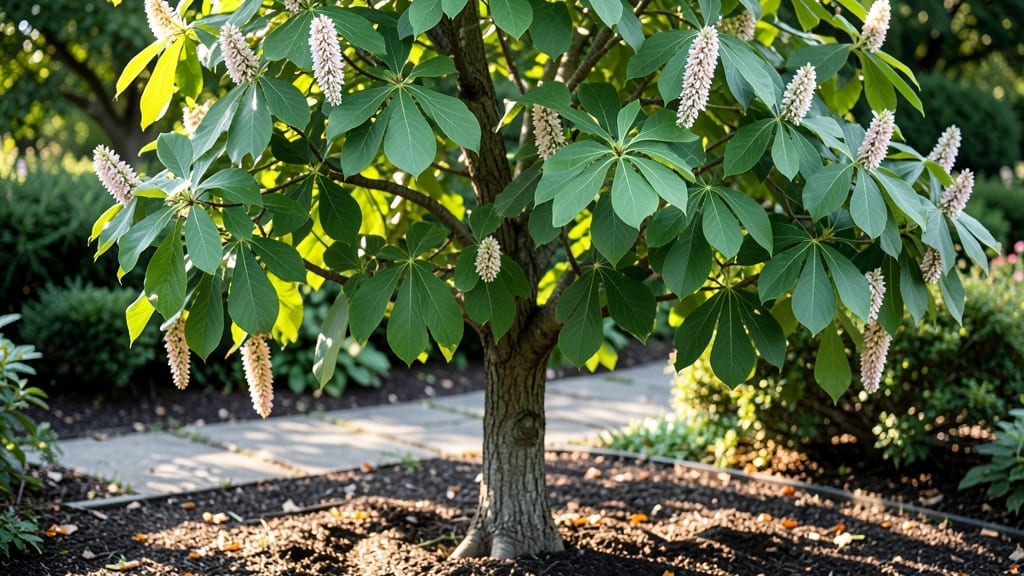
Mastering five-leaf tree identification can save you from painful rashes or invasive spread. 🌿 I’ve spent years untangling these leaf patterns, and the key is in the arrangement—whether they’re clustered like poison ivy’s "leaves of three, let it be" cousin or spread like Virginia creeper’s starburst.
Start with the leaflets: poison ivy’s are smooth-edged and shiny, while Virginia creeper’s have jagged teeth. Check the stems too—poison ivy’s bark is smooth and greenish, while Virginia creeper’s turns rusty-red in fall. A magnifying glass helps spot the tiny hairs on poison ivy’s stems, a dead giveaway.
Mistaking these can mean itchy misery or a garden takeover. Poison ivy thrives in disturbed soil, while Virginia creeper clings to fences and trees. Knowing the difference helps you decide whether to cultivate, contain, or remove. For gardeners, correct ID means choosing the right plants for your space.
Virginia creeper makes a stunning ground cover, while poison ivy has no place in a safe, thriving yard. Here’s how to tell them apart for good.
Behind The Leaf Patterns
Understanding why certain trees—like those with five distinct leaves—develop their unique foliage patterns requires a dive into botany, genetics, and environmental influences. Here’s why these trees stand out:
The most fundamental reason for five-leaf patterns lies in genetic inheritance. Many trees, such as the **horse chestnut (Aesculus hippocastanum) or sweetgum (Liquidambar styraciflua), have evolved to produce compound leaves with palmate arrangements (five leaflets radiating from a single point).
This trait is hardwired into their DNA, passed down through generations.
- Why it matters: These leaf structures optimize photosynthesis and reduce water loss, giving the tree a competitive edge in its native habitat.
- Actionable tip: If you’re identifying a tree, check for consistency—if most leaves on the branch have five leaflets, genetics are likely the cause.
Some trees develop five-leaf patterns as an adaptation to environmental stress.
For example: - Drought resistance: A five-leaf structure can increase surface area for sunlight capture while minimizing water loss through fewer, thicker leaflets. - Shade tolerance: In dense forests, trees with compound leaves (like the maple) can adjust leaflet angles to maximize light absorption without overcrowding.
💡 Pro tip: If the tree is in a dry or shaded area, its leaf pattern may be an evolutionary response rather than a random mutation.
Soil composition plays a surprising role. Trees in nutrient-poor soils may develop simpler leaf structures (fewer leaflets) to conserve energy, while those in richer soils might grow more complex foliage.
- Iron deficiency: Can cause yellowing between leaf veins (chlorosis), but won’t change the five-leaf pattern—just its health.
- Nitrogen surplus: May lead to larger, bushier leaves, but the five-leaf structure remains genetically determined.
✨ Key insight: If the tree’s leaves are smaller or discolored, the issue is likely nutritional, not structural.
While rare, pathogens or insects can alter leaf development. For example:
- Bacterial leaf scorch may cause leaflet drop, leaving a skeleton of the five-leaf structure.
- Aphids or mites can distort new growth, making leaflets curl or fuse unnaturally.
🔥 Red flag: If the pattern is inconsistent (some leaves have 3, others 5), pests or disease may be the culprit.
Young trees often have simpler leaf structures that evolve as they mature. For instance:
- A sweetgum sapling might start with three leaflets, gradually developing the classic five-star shape as it ages.
- Horse chestnuts may show asymmetrical leaflets in early years before stabilizing.
📊 Data point: If you’re identifying a tree, compare young vs. mature leaves—age can explain discrepancies.
Crossbreeding or rare mutations can produce unexpected leaf patterns.
For example: - A grafted tree (like a cultivated Japanese maple) might display hybrid traits, including five leaflets where the parent species had three. - Chimera mutations (genetic mosaics) can cause sectors of the tree to grow differently, leading to mixed leaf counts.
🎯 Identification hack: If the tree has both three- and five-leaf patterns, it may be a hybrid or sport (a naturally occurring mutation).
Most five-leaf patterns are genetically programmed, but environmental factors, pests, and age can tweak the appearance. When identifying a tree, start with genetics, then check for external influences** like soil, pests, or maturity. 🌿🔍
Quick Fixes for Leafy Confusion
Identifying a five-leaf tree can feel like solving a botanical puzzle—especially when leaves, bark, and growth patterns seem to contradict your guess. But don’t stress! With the right approach, you can turn uncertainty into clarity.
Below are practical, step-by-step solutions tailored to common challenges, from leaf shape mysteries to bark misreads, plus prevention tips to keep your green thumb sharp.
If your tree’s leaves almost match a five-leaf pattern but leave you guessing, start by comparing these key traits:
🍃 Step 1: Count and Compare Leaflets
Not all five-leaf trees have exactly five leaflets—some have three, seven, or even nine!
Use this quick checklist: - Odd-numbered leaflets? Likely a maple (e.g., Acer species like the Norway or Sugar Maple). - Palmate arrangement (leaflets spread from one point)? Could be a horse chestnut (Aesculus) or soapberry (Sapindus). - Pinnate arrangement (leaflets along a central stem)? Check for ash trees (Fraxinus) or cottonwood (Populus).
> 💡 Pro Tip: Snap a photo and overlay it on a leaf identification app (like PictureThis or PlantNet) for instant matches.
🌿 Step 2: Examine Leaf Texture and Edges
- Serrated (toothed) edges? Common in maples or elms.
- Smooth, lobed leaves? Likely a sycamore or beech.
- Fuzzy or hairy undersides? Could signal a willow or birch (though these rarely have five leaflets).
🌳 Step 3: Check the Stem and Buds
- Bud shape: Maple buds are pointy and opposite; ash buds are small and clustered.
- Stem attachment: Leaflets in pairs (pinnate) vs. all from one point (palmate).
Bark can be deceiving—especially if your tree is young or damaged. Here’s how to decode it:
🔨 Step 1: Scratch Test for Hidden Clues
- Smooth bark that peels? Likely a sycamore or birch (though birch leaves are rarely five-leaf).
- Deep furrows or ridges? Could be an oak (but oaks usually have lobed leaves).
- Shaggy, exfoliating bark? Paper birch or aspen (though aspen leaves are more triangular).
> ✨ Prevention Tip: Take year-round photos of your tree’s bark, leaves, and flowers. Seasonal changes (like fall colors or winter buds) can reveal hidden traits!
🌟 Step 2: Look for Secondary Signs
- Seed pods or samaras? Maples produce helicopter seeds; horse chestnuts have spiky seed cases.
- Flowers or fruit? Buckeyes (Aesculus) have showy flower clusters; ash trees have small, greenish flowers.
If your tree’s structure defies expectations (e.g., a five-leaf pattern but a weeping habit), consider these fixes:
🌿 Step 1: Assess the Tree’s Age
- Young trees may not have developed their full leaf shape. Wait a season or two.
- Mature trees with irregular growth might be hybrids (e.g., Acer × freemanii, a maple hybrid).
🪓 Step 2: Prune for Clarity
If overgrowth is obscuring leaf patterns:
- 🔪 Trim dead or crossing branches to improve light penetration.
- 🌿 Focus on the canopy’s outer leaves—these often show the most distinct traits.
- 📅 Prune in late winter/early spring to avoid stressing the tree.
> 🎯 Prevention Tip: Label young trees with species tags at planting. A simple wooden stake with the name saves future headaches!
If DIY methods leave you stumped:
- 📖 Consult a local arborist—they’ve seen it all!
- 🌍 Visit a botanical garden—many have labeled specimens.
- 🔍 Join a gardening forum (like Gardeners.com or Reddit’s r/whatsthisplant) for crowdsourced help.
Before giving up, run through this quick verification: ✅ Leaf count: 3, 5, 7, or 9 leaflets? ✅ Arrangement: Palmate (spread) or pinnate (line)? ✅ Bark texture: Smooth, ridged, or peeling? ✅ Seed/fruit type: Wings, pods, or clusters? ✅ Growth habit: Upright, weeping, or sprawling?
With these tools, even the trickiest five-leaf tree will reveal its secrets—no botanist degree required! 🌿🔍
Frequently asked questions
What’s the most common five-leaf tree people mistake for poison ivy?
Virginia creeper is the top culprit! Both have three leaflets, but Virginia creeper’s leaves are five-leaf clusters with jagged edges, while poison ivy’s are smooth and shiny. Virginia creeper also has reddish stems and turns vibrant purple in fall—key differences that save you from rashes.
Can a tree have five leaflets but not be poison ivy?
Trees like the horse chestnut or sweetgum have five leaflets arranged palmately (spreading from one point). Check the leaf edges: sweetgum leaves are lobed with serrated edges, while horse chestnut leaves are smooth and opposite on the stem.
Why do some five-leaf trees change their leaf pattern as they age?
Young trees often start with fewer leaflets (like three or five) and develop more as they mature. For example, a sweetgum sapling might have three leaflets, but as it grows, it adds two more, creating the classic five-leaf star shape. Patience is key—wait a season before ruling out a species!
How can I tell if a five-leaf tree is toxic or safe for my yard?
Poison ivy is the only toxic five-leaf tree, and it has hairy stems and smooth, shiny leaves. Safe alternatives like Virginia creeper or horse chestnut have distinct bark, flowers, or fruit. If you’re unsure, avoid touching the leaves—use gloves or a camera to identify it first!
What’s the best time of year to identify a five-leaf tree?
Spring and summer are ideal because leaves are fully formed and easy to examine. In fall, Virginia creeper’s purple leaves stand out, while winter buds can reveal species-specific shapes. Avoid identifying in late fall when leaves may be damaged or fallen.