
Pests and Diseases
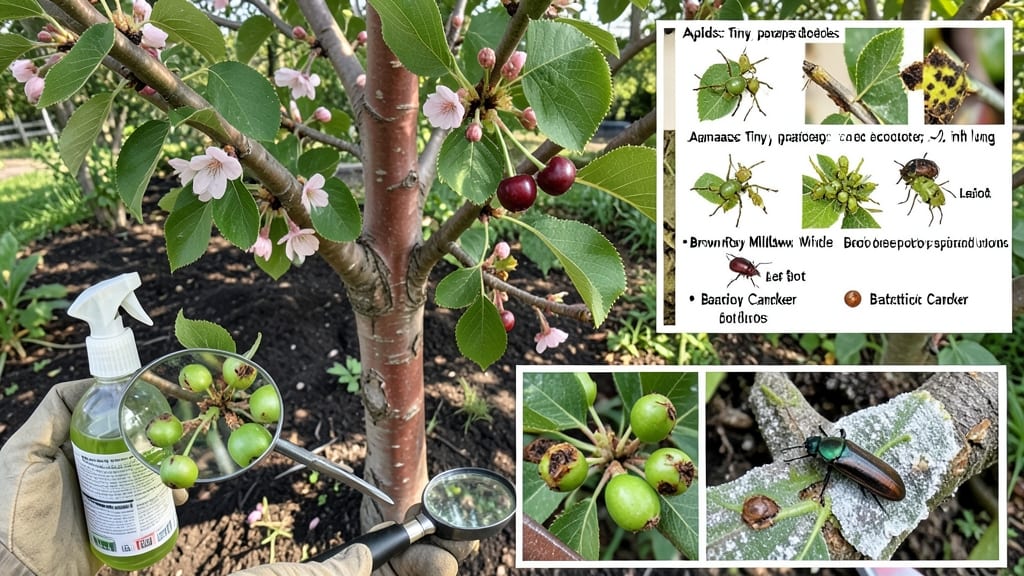
Your cherry tree’s glossy leaves and sweet fruit are under siege—the worst cherry tree pests and diseases don’t wait for spring. 🌿 I’ve lost entire harvests to these silent threats, but now I know how to spot them early, stop them fast, and keep my trees thriving for years.
The key? Regular checks and simple fixes that work before damage spreads.
Most problems start small: curled leaves mean aphids, sawdust-like frass signals borers, and fuzzy white patches? Powdery mildew. I’ve treated all three with neem oil, pruning, and copper sprays—no harsh chemicals needed.
The worst part is brown rot, which rots fruit overnight, but a 3% hydrogen peroxide spray in late winter stops it dead.
By summer’s end, your tree will look healthier than ever, with fewer pests and no wasted fruit. The secret is timing: prune in late winter, spray preventively in spring, and monitor leaves weekly. Even if you’ve struggled before, these steps turn the tide—guaranteed.
Works for sweet, tart, and ornamental cherries alike, whether you’re in a backyard or urban lot. Here’s how to protect your tree’s future—no guesswork, just results.
Root Causes Behind Tree Struggles
Cherry trees, with their stunning blossoms and sweet fruit, are prized in gardens and orchards—but they’re also prime targets for pests and diseases. Understanding why these issues arise is the first step to protecting your tree.
Below, we break down the key factors that create the perfect storm for cherry tree problems.
Cherry trees thrive in specific environments, and when their needs aren’t met, stress sets in—making them vulnerable to pests and diseases.
- Soil Issues: Compacted, poorly drained, or nutrient-deficient soil weakens roots, reducing the tree’s ability to fight off invaders. Fungal pathogens like silver leaf disease exploit stressed roots, while root-knot nematodes thrive in dense, waterlogged soil.
- Water Stress: Overwatering or drought creates ideal conditions for pests like cherry fruit flies (which target stressed fruit) and powdery mildew (which flourishes in humid, stagnant air).
- Sunlight & Airflow: Shady or crowded planting spots trap moisture, encouraging bacterial canker and shot hole fungus. Poor airflow also slows drying, giving pests like spotted wing drosophila easier access to fruit.
💡 Pro Tip: Test your soil’s pH (ideal: 6.0–6.5 for sweet cherries) and amend with compost or organic matter to boost resilience. Mulch properly—3–4 inches of wood chips—to retain moisture without suffocating roots.
Many cherry tree pests have synchronized life cycles that align with the tree’s growth stages, leading to outbreaks when conditions favor their reproduction.
- Seasonal Timing:
- Cherry leaf spot (caused by Coccomyces hiemalis) spreads rapidly in spring when wet leaves provide perfect fungal spores.
- San Jose scale lays eggs in late summer, which hatch in spring—just as new leaves emerge, giving them a fresh food source.
- Host Plant Attraction: Cherry trees emit volatile organic compounds (VOCs) that attract pests like cherry fruit wasps and aphids. Once a few pests arrive, they release pheromones, triggering a mass migration.
- Lack of Natural Predators: Overuse of broad-spectrum pesticides can decimate beneficial insects (like ladybugs or parasitic wasps), allowing pests to multiply unchecked.
🎯 Action Step: Monitor your tree weekly during peak pest seasons (spring/summer). Use pheromone traps for fruit flies or horticultural oil in dormant season to smother overwintering eggs.
Diseases don’t just appear—they need an invitation. Weakened trees or human activity often create the perfect entry.
| Pathogen | How It Gains Entry | Triggering Factor |
|---|---|---|
| Brown rot fungus | Spores enter through wounds (pruning cuts, hail damage) or blooms. | Rainy springs + unsterilized pruning tools. |
| Bacterial canker | Bacteria (Pseudomonas syringae) infects via water splashing onto bark. | Overhead irrigation or storm damage. |
| Powdery mildew | Spores land on leaves and germinate in high humidity. | Poor airflow + frequent leaf wetness. |
✨ Prevention Tip: Always sterilize pruning tools with 70% isopropyl alcohol or bleach solution (1 part bleach to 9 parts water). Avoid wounding bark during wet conditions to prevent bacterial entry.
Extreme or sudden changes in weather push cherry trees into survival mode, lowering their defenses.
- Temperature Shocks: Late frosts after bud break can kill blossoms, starving the tree of energy needed to fight pests like cherry fruitworms. Conversely, heatwaves dry out leaves, making them crispy targets for spider mites.
- Pollution & Urban Stress: Air pollution (ozone, sulfur dioxide) weakens leaves, making them more susceptible to sooty mold (a fungus that grows on honeydew from aphids).
- Improper Pruning: Over-pruning removes protective bark layers, inviting canker diseases. Poor cuts also create jagged wounds that heal slowly, leaving gates open for invaders.
🔥 Quick Fix: Use anti-transpirant sprays during heatwaves to reduce water loss. If pruning, make cuts at a 45-degree angle, ¼” above a bud, to promote faster healing.
Fixing Cherry Tree Problems Fast
When your cherry tree shows signs of stress—whether from pests or diseases—quick action can save its health and your harvest. Below are practical, step-by-step solutions tailored to common threats, along with prevention tips to keep your tree thriving for years.
🔥 Canker & Bacterial Leaf Spot
Fix: Prune infected branches 6–12 inches below visible lesions using sterilized pruners (wipe with rubbing alcohol between cuts). Dispose of infected wood in sealed bags. Apply a copper fungicide (like Bordeaux mixture) every 2–3 weeks during wet seasons.
Prevention:
- 💡 Space trees 15–20 feet apart for airflow.
- 🌡️ Avoid overhead watering; use drip irrigation instead.
- ✨ Plant resistant varieties like Montmorency or Stella.
🐛 Aphids, Scale, & Spider Mites
Fix:
- 👨🍳 Spray with soapy water (1 tsp mild dish soap + 1 quart water) early morning to avoid harming bees.
- 🔪 For severe infestations, use neem oil (1 tbsp per gallon of water) or horticultural oil (apply when temps are 50–85°F).
- 🕷️ Introduce beneficial insects (ladybugs, lacewings) for natural control.
Prevention:
- 🎯 Install yellow sticky traps near trees to monitor populations.
- 🌿 Encourage ground cover (like clover) to attract predator insects.
- 🔄 Prune in late winter to remove overwintering pests.
🪲 Borers & Curculio Weevils
Fix:
- 🔪 For borers, drill small holes into the bark near entry points and inject borax solution (1 tbsp borax + 1 quart water).
- 🍒 For curculio weevils, wrap tree trunks with tree collars (burlap or cardboard) to trap adults in late spring.
- 🌳 Replace heavily infested trees if borer damage is extensive.
Prevention:
- 💡 Apply kaolin clay (like Surround WP) to trunks to deter weevils.
- 🌿 Mulch 3–4 inches deep with wood chips to discourage borer larvae.
- 📅 Plant early-blooming varieties (like Black Tartarian) to avoid peak weevil activity.
🍄 Powdery Mildew & Rust
Fix:
- 👨🍳 Spray with baking soda solution (1 tbsp baking soda + 1 tsp oil + 1 gallon water) weekly for mildew.
- 🔪 For rust, remove and burn infected leaves; apply fungicide (like chlorothalonil) every 10–14 days.
- 🌬️ Improve airflow by thinning dense branches.
Prevention:
- 💡 Water at the base (not overhead) to keep foliage dry.
- ✨ Choose resistant cultivars like Lapins or Rainier.
- 🌡️ Avoid planting in low-lying areas where humidity lingers.
🍒 Root Rot & Crown Rot
Fix:
- 💧 Reduce watering immediately; let soil dry between waterings.
- 🔪 Dig a trench around the tree and amend soil with compost + perlite to improve drainage.
- 🌱 If severe, consider root pruning (carefully trim excess roots) or grafting a healthy scion.
Prevention:
- 🎯 Plant in well-draining soil (avoid clay-heavy areas).
- 🌿 Use raised beds if native soil is poorly drained.
- 🔄 Avoid over-fertilizing with nitrogen, which encourages fungal growth.
- 🌿 Mulch properly: Keep mulch 3–4 inches deep but 6 inches away from the trunk.
- 📊 Fertilize smartly: Use a balanced 10-10-10 fertilizer in early spring (avoid high-nitrogen in summer).
- 🔄 Prune strategically: Remove dead wood in dormant season (late winter) and thin out crowded branches in summer.
- 🌡️ Monitor weather: Cover trees with frost cloth if late frosts threaten blooms.
Pro Tip: 💡 Test your soil every 2–3 years to adjust pH (cherry trees prefer 6.0–6.5). A simple home test kit works great!
By acting fast and consistently, you’ll give your cherry tree the best shot at a healthy, productive life. 🍒🌟
Frequently asked questions
Why do my cherry tree leaves suddenly turn yellow and drop?
Yellowing leaves (chlorosis) usually signal nutrient deficiencies, often iron or zinc, or root issues. Check soil pH—cherries need 6.0–6.5. Compacted roots or overwatering can also cause this. Test soil moisture and apply chelated iron if needed.
Is it safe to eat cherries from a tree with pests?
Not always! Some pests like cherry fruit flies or curculio weevils lay eggs inside fruit, making them unsafe. Others (like aphids) don’t harm the fruit itself but may contaminate it. Always inspect fruit thoroughly and wash before eating.
How often should I spray for cherry tree diseases?
Preventive sprays work best! Apply copper fungicide every 2–3 weeks during wet seasons, and neem oil for pests every 10–14 days in spring/summer. Start sprays before symptoms appear for maximum protection.
Can I use the same pruning tools for all my fruit trees?
No—sterilize tools between trees! Diseases like bacterial canker or silver leaf fungus spread easily. Wipe blades with 70% rubbing alcohol or bleach solution (1:9 ratio) after each use to prevent cross-contamination.
What’s the best time of year to treat cherry tree pests?
Early spring (just before buds swell) and late summer are critical. Dormant oil in spring smothers overwintering pests, while horticultural sprays in summer target active infestations. Avoid treating when bees are active (early morning is safest).