
Pruning
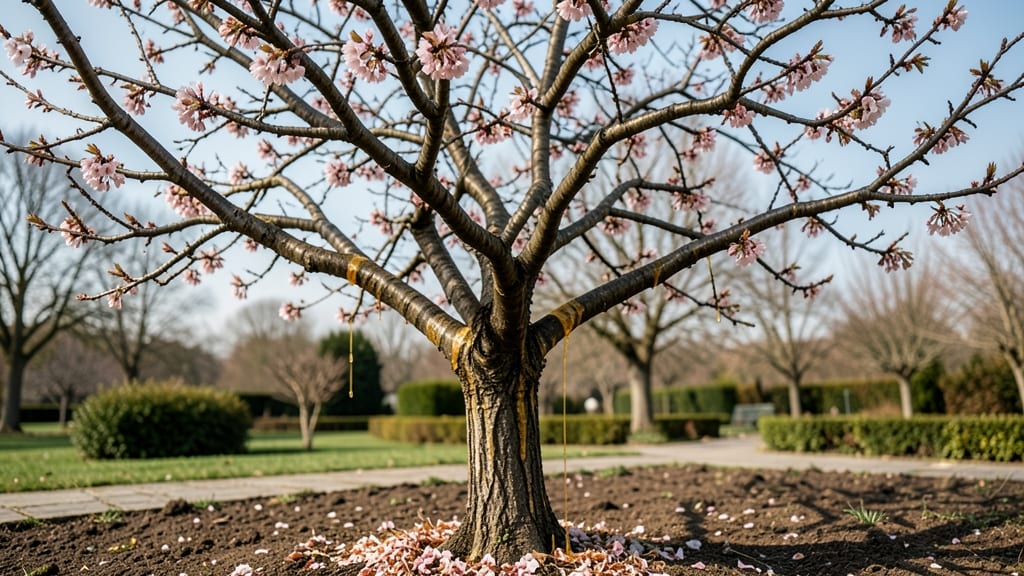
Your cherry tree dripping sap isn’t just messy—it’s a cry for help from your tree. 🌳 The sticky mess on your driveway or patio isn’t just an annoyance; it’s a sign of stress, damage, or even pests that could weaken your tree’s health if ignored.
What starts as a small problem can turn into a bigger issue if you don’t address it early.
Sap dripping often means your tree is under attack—whether from boring insects, fungal infections, or even physical damage from storms or tools. I’ve seen sap ooze from trees that needed pruning too aggressively, or from bark that split in winter’s freeze.
The good news? Most causes have simple fixes, from proper pruning cuts to targeted pest control.
By the end of this guide, you’ll know exactly how to inspect your tree, identify the root cause, and take action—whether that’s sealing wounds, treating pests, or adjusting your care routine. A healthy tree means fewer sticky surprises and more sweet, juicy cherries in the coming seasons.
We’ll also cover when to call in a pro, because some issues (like deep borer infestations) need expert hands. Let’s get your tree back to its best—before the sap turns into a bigger problem.
Root Causes Of Sap Leaks
If your cherry tree is leaking sap like a sticky syrup factory, don’t panic—it’s usually a sign of natural (or fixable) processes at work. Understanding the why behind the drips helps you address the issue before it becomes a mess—or worse, a threat to your tree’s health.
Below, we break down the most common triggers, from seasonal quirks to stress signals, with science-backed explanations and actionable insights.
Cherry trees (especially Prunus avium and Prunus serrulata) are sap oozers during late winter and early spring—think of it as their version of a detox. Here’s why:
- Pressure Buildup: As temperatures rise, the tree’s xylem (water-conducting vessels) warms up, causing water and dissolved sugars to expand. This creates root pressure, forcing sap upward—sometimes so forcefully it escapes through cracks or pruning wounds. Pro tip: This is normal in dormant-to-active transition phases (Feb–April in most climates).
- Bud Break Stress: New leaves and flowers demand energy, and the tree prioritizes nutrient transport. Excess sap may leak from lenticels (porous bark spots) or weak branches as the tree “reboots” its vascular system.
- Frost Damage: Late frosts after bud swell can rupture cells, causing bleeding sap (a watery, often pinkish ooze). This is your tree’s way of sealing wounds—like a scab, but sticky.
What to do:
- 🌡️ Monitor temps: If nights dip below 28°F after buds swell, cover young trees with frost cloth to prevent cell damage.
- ✂️ Avoid pruning: Never trim in late winter—wait until after leaf drop to minimize sap loss.
Sap dripping from pruning cuts, broken branches, or animal damage is your tree’s emergency repair mode. Here’s the science:
- Callus Formation: When bark is damaged, the tree seals the wound with callus tissue—a mix of sap, resins, and new cells. The sticky drips are phenolic compounds (natural antiseptics) that harden into a protective barrier. Fun fact: This is why pruning wounds “weep” for days before scabbing over.
- Improper Cuts: Jagged or flush cuts (removing bark collars) expose raw cambium (growth layer), triggering excessive sap flow. The tree “bleeds” until it can wall off the injury.
- Boring Pests: Insects like sap-sucking beetles or emerald ash borers (even if not ash trees, they mimic damage) create entry points. The tree responds by flooding the area with resin to trap intruders.
What to do:
- ✂️ Prune right: Use clean, sharp tools and make cuts 1/4” above a bud, slanting away from the branch collar. See our pruning cheat sheet for diagrams.
- 🚫 Avoid sealing wounds: Pruning paste or paint suffocates the tree’s natural healing. Let it callus naturally!
- 🐜 Inspect for pests: Look for D-shaped exit holes or sawdust-like frass. Treat with neem oil or contact your local extension office.
Too much water doesn’t just drown roots—it disrupts the tree’s vascular system, causing sap to back up and leak. Here’s how:
- Root Suffocation: Waterlogged soil starves roots of oxygen, forcing the tree to overcompensate by pushing excess fluids upward. This creates hydraulic pressure in the trunk, leading to leaks.
- Fungal Invaders: Soggy conditions breed pathogens like Armillaria root rot, which clog xylem vessels. The tree’s emergency response? Flooding the area with sticky resin to starve the fungus of nutrients.
- Compacted Soil: Heavy or clay soils prevent water absorption, causing root pressure to spike. The tree “vents” excess sap through weak bark spots.
What to do:
- 💧 Adjust watering: Cherry trees hate “wet feet.” Water deeply 1–2x/week (depending on climate) and ensure soil drains within 6 hours.
- 🏗️ Amend soil: Mix in compost or perlite to improve aeration. For clay soil, create a raised bed for the root zone.
- 🌿 Mulch properly: Use 3–4” of wood chips, keeping it 6” away from the trunk to prevent rot.
Cherry trees are sensitive to thermal shock, and rapid temperature changes can trigger sap leaks. Here’s the physics:
- Thermal Expansion: Warm days followed by freezing nights cause cell walls to expand and contract, creating microscopic cracks. Sap escapes through these fractures like a burst pipe.
- Transpiration Stress: Sudden heat waves increase leaf transpiration (water loss), but cold nights slow root uptake. The tree’s system gets out of sync, causing sap to “backflow” and leak.
- Sun Scald: Direct afternoon sun on south-facing bark can raise temperatures 20°F+ above ambient air. This “cooks” the cambium, triggering resin leaks as a protective measure.
What to do:
- 🌞 Provide shade cloth: Use 30–50% shade fabric on young trees during heatwaves to stabilize bark temps.
- 🎯 Water deeply before storms: Moist soil acts as a thermal buffer, reducing stress from temp swings.
- 🔥 Avoid winter sunscald: Wrap the trunk with tree wrap (remove in early spring) to protect from freeze-thaw cycles.
💡 Key Takeaway: Most sap leaks are manageable with a little prevention. Start by identifying the trigger—is it seasonal, wound-related, or environmental? Once you pinpoint the cause, you can minimize messes and maximize tree health
Fixing Sap Loss in Your Cherry Tree
A weeping cherry tree isn’t just a pretty sight—it’s a sign your tree is under stress or overworked. The good news? Most causes of excessive sap have simple, effective fixes.
Below, we’ll break down the most common reasons your tree is dripping sap and how to stop it, plus tips to keep your cherry tree healthy and productive for years to come.
If you’ve been aggressive with pruning—or worse, using dull tools—your tree may be bleeding sap like a paper cut. Every snip sends a shockwave through the tree, forcing it to seal wounds with sticky resin.
How to Fix It: 🔥 Wait for the Right Time – Prune late winter or early spring (before buds swell) to minimize stress. Avoid heavy cuts in summer or fall when the tree is already vulnerable. 🍳 Use Sharp, Clean Tools – A dull saw or shears crushes bark, worsening sap flow. Sharpen your pruners and disinfect them with rubbing alcohol to prevent disease spread. 👨🍳 Make Clean Cuts – Cut just outside the branch collar (the swollen area where the branch meets the trunk) at a 45-degree angle. Avoid leaving stubs or tearing the bark. 🥘 Seal Large Wounds (If Necessary) – For cuts bigger than ½ inch, apply pruning sealant (like Tanglefoot Tree Wound Pruning Sealer) to protect against pests and rot. Skip this for small cuts—air drying is better!
💡 Pro Tip: If you must prune in summer, do it on a cool, cloudy day to reduce stress. Water the tree deeply afterward to help it recover.
Sap oozing from holes, tunnels, or discolored bark? Pests like borers, aphids, or scale insects or diseases like bacterial canker or silver leaf fungus can turn your tree into a sap factory.
How to Fix It: 🔥 Identify the Culprit – Check for:
- Holes or sawdust-like frass (borer larvae)
- Sticky residue (honeydew) (aphids/scale)
- Cracked, oozing bark (bacterial canker)
- Silvery sheen on leaves (silver leaf fungus)
🍳 Treat Infestations Immediately
- Borers: Inject beneficial nematodes (like Heterorhabditis bacteriophora) into holes or use borer-specific sprays (e.g., Bt spray).
- Aphids/Scale: Blast off with a strong hose spray or apply neem oil or insecticidal soap.
- Bacterial Canker: Prune infected branches 6 inches below the damage, sterilize tools, and avoid overhead watering. No cure—remove severely infected trees.
👨🍳 Boost Tree Health – A strong tree fights pests better. Fertilize in early spring with a balanced 10-10-10 formula and mulch 3 inches deep (keep mulch away from the trunk).
🥘 Prevent Fungal Spread – If you spot silver leaf fungus, remove and burn infected leaves. Avoid wounding the tree further.
🌡️ Pro Tip: If your tree is young, wrap the trunk with tree guard (like Tanglefoot Tree Collar Guard) to deter pests from climbing.
Extreme heat, drought, or sudden exposure to harsh sunlight can cause sap bleeding as the tree struggles to regulate moisture.
How to Fix It: 🔥 Water Deeply and Slowly – Drip irrigation or soaker hoses (1–2 inches per week) keep roots hydrated without shocking the tree. Avoid overhead sprinklers—they can spread disease. 🍳 Mulch Like a Pro – Spread 3–4 inches of organic mulch (wood chips, straw) around the base (but not touching the trunk). This locks in moisture and cools roots. 👨🍳 Shade Young Trees – If your cherry tree is in a hot, sunny spot, provide temporary shade cloth (30–50% coverage) during the first year after planting. 🥘 Avoid Fertilizer Burn – Too much nitrogen in summer can stress the tree. Switch to a slow-release, low-nitrogen fertilizer (like 5-5-5) in spring.
✨ Pro Tip: Mist the leaves on extremely hot days to reduce transpiration stress. Use a fine spray at dawn or dusk.
If the roots are suffocating or drowning, your tree will leak sap as it fights for survival.
How to Fix It: 🔥 Test Your Soil – Use a DIY soil test kit to check pH (ideal: 6.0–7.0 for cherries) and drainage. Amend with compost or peat moss if soil is too clay-heavy. 🍳 Aerate Compacted Soil – Rent a manual aerator or use a garden fork to poke holes in the root zone. Mix in sand or perlite for better drainage. 👨🍳 Fix Drainage Problems – If water pools around the base, raise the planting area with a small mound of soil or install a French drain. 🥘 Avoid Root Damage – Keep lawnmowers and trimmers 12+ inches from the trunk. If roots are exposed, cover with mulch (not soil).
🎯 Pro Tip: Plant cherries in well-draining soil—they hate soggy feet. If your yard is clay-heavy, consider raising the tree in a berm or planting in a mound.
Stop sap loss before it starts with these year-round habits: ✅ Prune in late winter (avoid summer cuts). ✅ Inspect for pests every 2 weeks during growing season. ✅ Water deeply but infrequently (1–2x per week in dry spells). ✅ Mulch annually to protect roots and retain moisture. ✅ Fertilize in early spring (avoid summer feeding). ✅ Protect young trees from sunburn and extreme heat.
With the right care, your cherry tree will stop its sap leaks and focus on growing sweet, juicy fruit instead. Try one or two fixes this season and watch the difference! 🍒🌿
Frequently asked questions
Is it normal for cherry trees to drip sap in spring?
Yes, this is completely normal during late winter to early spring! As temperatures rise, root pressure builds up, causing sap to flow—especially through pruning wounds or bark cracks. Think of it as your tree's natural "spring cleanup." If the sap is clear or pale yellow, it's just seasonal movement. Watch for excessive oozing or dark, foul-smelling sap, which could signal problems.
How can I tell if my tree's sap is from pests or natural causes?
Look for these clues: Sap from pests often comes with holes in the bark (like tiny exit tunnels) or sawdust-like frass (insect droppings). Natural sap usually appears at pruning cuts or along the trunk without other damage. If you see sticky honeydew on leaves, aphids or scale insects are likely the culprits. Always inspect both the bark and undersides of leaves.
Will sealing pruning wounds stop sap dripping?
Not necessarily—and it might even harm your tree! While pruning sealants can reduce sap flow temporarily, they prevent the tree's natural healing process. The best approach is to make clean cuts at the right time (late winter/early spring) and let the tree form its own protective callus. For wounds larger than ½ inch, a thin layer of pruning sealant can help, but air-drying is always better for small cuts.
Can excessive sap dripping harm my cherry tree?
While some sap flow is normal, chronic heavy dripping can weaken your tree by losing vital nutrients and water. Prolonged sap loss may also attract pests or fungi that exploit the open wounds. If you notice large amounts of sap (especially dark or smelly), investigate potential causes like borer infestations, disease, or environmental stress—these need prompt attention to prevent long-term damage.
What's the best time of year to prune cherry trees to minimize sap?
The ideal window is late winter to early spring, just before buds swell but while the tree is still dormant. Pruning at this time causes the least stress and sap loss. Avoid summer pruning, as the tree is already vulnerable to heat stress and disease. If you must prune in summer, do it on a cool, cloudy day and water thoroughly afterward to help the tree recover faster.