
Propagation
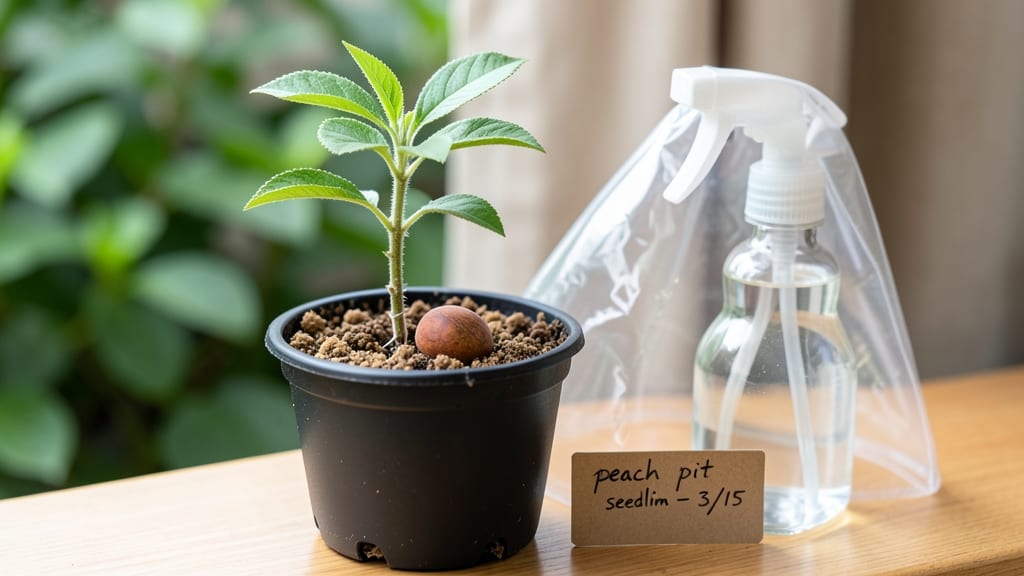
You can start a peach tree from a peach pit, but the process is difficult with only a 1-10% chance of success due to strict dormancy needs and genetic differences. Proper cold treatment for 3-6 months and correct planting depth are essential for any growth.
Peach pits contain a hard outer shell that protects the seed, but this same shell creates a natural barrier that nature rarely overcomes without help. 🌱 The seed inside requires a specific period of cold dormancy—mimicking winter conditions—to break dormancy and trigger germination.
Even with ideal conditions, the genetic variability between wild peach seeds (often from grocery store fruit) and cultivated varieties means most won't produce true-to-type trees. Patience is key: successful growers often plant dozens of pits to get even one viable sprout.
Once you've identified a viable pit—typically one that sinks in water (indicating no air pockets)—you'll need to mimic natural conditions through stratification. This involves chilling the pit in a moist medium for months before planting.
After sprouting, seedlings require careful nurturing: bright indirect light, consistent moisture, and protection from temperature swings. The journey from pit to tree can take years, but the reward of growing a fruit-bearing tree from a single seed makes it worthwhile for dedicated gardeners.
💡 In This Article
- Peach Pit Germination Science: Why Success Rates Are Low
- Step-by-Step Guide to Growing a Peach Tree from a Pit
Peach pit germination science: why success rates are low
The peach pit's low germination rate—typically between 1-10%—stems from its complex biological requirements. Unlike many seeds, peach pits have double dormancy: a hard seed coat that blocks water absorption and internal chemical inhibitors that prevent sprouting.
The outer shell, made of lignified stone cells, can take 2-3 years to naturally degrade enough for water penetration, a process that cold stratification accelerates to just 3-6 months in controlled conditions. 🌱
Temperature plays a critical role in breaking dormancy. Peach seeds require a period of cold stratification (32-40°F or 0-4°C)—mimicking winter conditions—to trigger gibberellin production, a plant hormone that signals the seed to grow. Without this cold treatment, most pits remain dormant indefinitely.
Even with proper stratification, humidity levels must stay between 40-60% to prevent desiccation while maintaining moisture without rot. Wild peach seeds (like those from grocery store fruit) often have even lower success rates because they're adapted to harsh environments and may not respond well to cultivated conditions.
Genetic variability is another major hurdle. The peach tree you grow from a grocery store pit will likely produce wild-type fruit—small, tart, and inedible—rather than the sweet, juicy varieties we're familiar with.
This happens because commercial peaches are grafted onto rootstocks, and the seed inside carries only the parent tree's genetic material, not the cultivated traits.
For example, a pit from a 'Elberta' peach might sprout a tree bearing fruit resembling its wild ancestor, the Prunus persica, rather than the original variety. 🍑
Light exposure during germination also affects success. Peach seeds are photoblastic, meaning they need specific light conditions to sprout. Too much light during stratification can trigger premature germination, while complete darkness for the first 4-6 weeks—**after cold treatment weakens the seed coat—helps ensure synchronized growth.
The delicate balance between light, temperature, and moisture creates a narrow window where conditions must align perfectly for germination to occur.
Even when all factors are ideal, the peach pit's journey from seed to sapling is a marathon, not a sprint. The first signs of life—a tiny root breaking through the shell—can take 4-8 weeks—**after stratification begins, with full emergence of the shoot taking another 2-4 weeks.
During this time, the seedling is extremely vulnerable to fungal infections, temperature fluctuations, and improper moisture levels. This is why professional growers often use sterile growing mediums and controlled environments to maximize their chances of success. 💫
Consider the natural lifecycle: wild peach trees rely on animals to disperse seeds, often after they've passed through digestive systems—a process that mimics both mechanical scarification (breaking the seed coat) and natural stratification.
Replicating this in a home garden requires precise timing, patience, and an understanding of the seed's biological quirks. Without these, even the most well-intentioned gardener may find themselves waiting years for a single viable sprout to emerge.