
How To
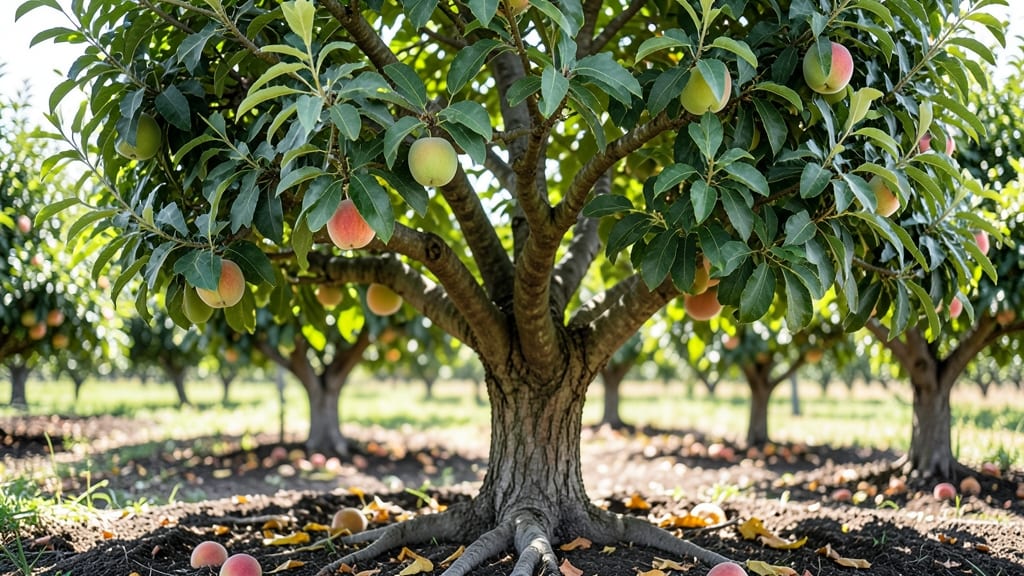
How tall will a peach tree grow? A peach tree will grow anywhere from 8 feet to towering 25 feet, depending on the variety, pruning, and your growing zone.
Picture this: a dwarf peach tree 🍑 tucked into a corner of your patio, while a standard variety stretches toward your roof. The difference isn’t just about space—it’s about how much fruit you’ll harvest, how easy it is to pick, and whether your neighbors will complain about shade.
If you’re working with limited yard space, you’ll want to focus on compact varieties like 'Bonanza' or 'Redhaven,' which max out around 12 feet. But if you’ve got room to spare—and maybe a ladder—standard trees like 'Elberta' or 'J.H.
Hale' can reach 20+ feet, producing bushels of fruit for years.
Below, I’ll break down the height ranges by variety, how to control growth with pruning, and which types are best for small gardens versus large orchards. You’ll leave here knowing exactly how much space to plan for—and how to keep your tree at the perfect height for your needs.


Peach tree height by variety: dwarf to standard to giant sizes
Choosing the right peach tree variety depends on your space and harvest goals. Some varieties stay compact at 6-12 feet, while others grow into towering 25+ foot giants. Understanding these differences helps you plan for proper spacing, sunlight access, and long-term maintenance before planting.
Your backyard's size and layout will determine which peach tree height category suits you best. Dwarf varieties thrive in containers or small urban yards, while standard and giant trees need spacious rural properties. Let's explore the mature heights of popular varieties and their space requirements.
Dwarf peach tree varieties like Bonanza reach only 6-10 feet tall, making them perfect for containers or small urban spaces. These compact trees require minimal pruning and fit easily in 10x10 foot areas, producing abundant fruit despite their size.
Semi-dwarf varieties such as Redhaven grow to 12-16 feet, offering a balance between manageable size and high yields. They need slightly more space (15x15 feet) but remain accessible for homeowners with medium-sized yards.
Standard varieties like Elberta and J.H. Hale grow 18-25 feet tall, requiring ample space (20-25 feet in diameter). These trees suit rural properties where their full height and spread can be accommodated without crowding other plants.
Giant varieties like Relenta reach 25-30 feet or taller, demanding expansive 30x30 foot areas. These are typically found in commercial orchards where their massive size supports high-volume fruit production.
When selecting a peach tree variety, consider not just height but also canopy spread and root depth. Dwarf trees may have wider canopies than their height suggests, while standard trees develop deep root systems requiring well-draining soil.
For small gardens, opt for dwarf varieties trained against a fence or trellis. Semi-dwarf trees work well in medium yards with proper pruning. Standard and giant trees need wide-open spaces and professional pruning to maintain health and productivity.
Always check your local climate zone when choosing varieties, as some dwarf trees thrive in USDA Zone 6 but struggle in colder regions. Matching the right variety to your space and climate ensures healthy growth and bountiful harvests.
How to control peach tree height: pruning & training techniques
Peach trees can grow wildly if left unchecked, reaching heights of 20-25 feet in just a few years. But with the right pruning techniques and training methods, you can keep your tree at an ideal height—whether you want a compact 8-foot dwarf or a manageable 12-foot standard.
The key lies in understanding when and how to prune, plus creative training like espalier for small spaces.
Most peach trees grow using one of two structural forms: the central leader (single trunk) or the open-center (multiple branches). Your choice affects both height and fruit production. For example, open-center trees are easier to prune into smaller shapes, while central leader trees naturally grow taller.
I’ll show you how to shape yours for your space and goals.
Step-by-Step Pruning & Training Guide
- Step 1 Choose your form: Decide between central leader (taller) or open-center (shorter). Open-center is ideal for small yards.
- Step 2 Prune in late winter: Remove dead or crossing branches first. Then, cut back 1/3 of last year’s growth to control height.
- Step 3 Train young trees: Use stakes and ties to guide branches into your desired shape. For espalier, attach branches to a trellis or fence at 3-4 foot intervals.
- Step 4 Summer pruning: Lightly trim suckers and water sprouts to redirect energy to fruit production. Avoid heavy cuts in summer.
- Step 5 Maintain height: Every year, remove the longest upward-growing branches to prevent vertical growth. Aim for a balanced canopy.
For espalier training, attach branches horizontally to a fence or wall using soft ties. This method can reduce a peach tree’s footprint by up to 70% while keeping it productive.
Just be sure to space branches 12-18 inches apart for airflow and sunlight penetration. I’ve seen espaliered peach trees thrive in 6-foot-wide spaces along patios!
Seasonal timing matters too. Winter pruning (dormant season) is best for shaping, while summer pruning focuses on cleanup. Avoid heavy cuts in late summer—they can stimulate new growth that won’t harden off before frost. Always use sterilized pruners to prevent disease spread between cuts.
If your tree is already too tall, don’t panic. You can gradually reduce height over 2-3 years by focusing on horizontal branching and removing vertical leaders. Pair this with regular thinning of fruit to reduce weight stress on branches.
With patience, even a 20-foot giant can be tamed into a manageable 12-foot beauty.
Remember, the goal isn’t just height control—it’s fruit quality and tree health. A well-pruned peach tree produces larger, sweeter fruit and resists disease better. Start small, observe how your tree responds, and adjust your approach each year. Your backyard orchard will thank you! 🍑✂️🌳