
Trees
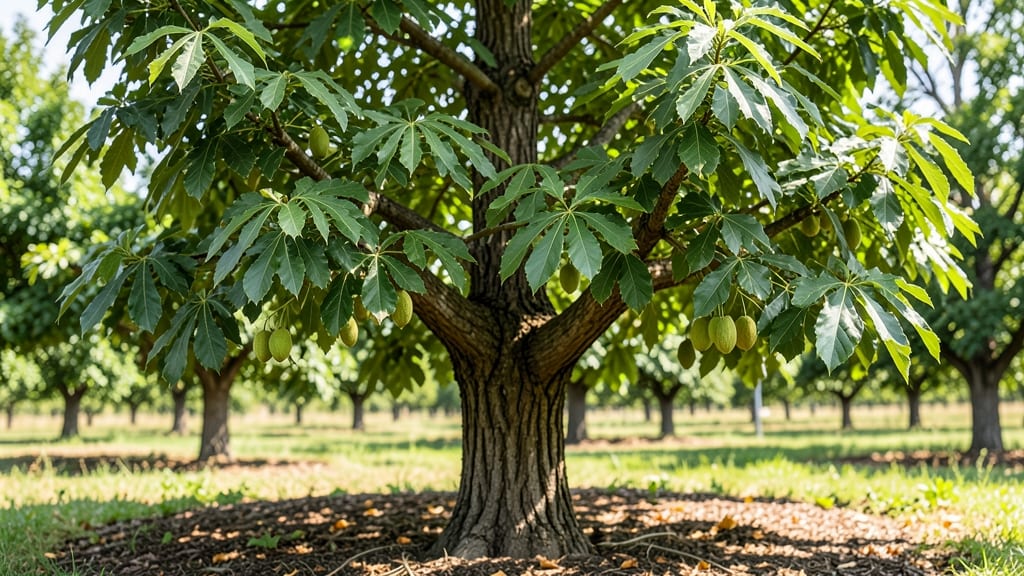
Big green tree nuts—such as hickory or pecan nuts—develop inside large woody husks that turn green before reaching maturity. You can identify them by examining the nut's size, leaf structure, and pod shape, then harvest when the husks crack open naturally during late summer or early fall.
These striking green pods are nature's way of protecting the nuts until they're fully developed. 🌿 Hickory nuts, for example, grow in elongated, four-sided husks that can reach up to 12 inches long, while pecan trees produce rounded, oblong shells.
The key to accurate identification lies in observing the tree's leaves—hickory leaves have seven to nine leaflets, while pecan leaves feature 9 to 17. Harvesting at the right time ensures maximum yield and quality, as immature nuts won't develop their characteristic rich flavor.
Once you've confirmed the species, timing becomes critical. The nuts are ready when the husks split open naturally, typically between September and October, depending on your climate zone. This natural process signals that the nuts have reached full maturity and are at their peak flavor potential.
A gentle shake of the tree branches will often dislodge ripe nuts, though wearing gloves is recommended to protect your hands from the sharp husks.
💡 In This Article
- Identifying Big Green Tree Nuts by Species and Growth Patterns
- Step-by-Step Guide to Harvesting and Processing Tree Nuts
Identifying big green tree nuts by species and growth patterns
The most reliable way to distinguish nut-producing trees is by examining their leaf structure and bark texture. Hickory trees, for example, have compound leaves with 7 to 9 leaflets arranged alternately along the stem, while pecan trees feature 9 to 17 leaflets with a more elongated shape.
The bark of hickory trees develops deep grooves as they mature, creating a rugged, diamond-patterned texture, whereas young pecan trees have smoother bark that develops more pronounced ridges with age.
Nut morphology also varies significantly. Hickory nuts grow in 4-sided, elongated husks that can reach 12 inches long, while pecan husks are more rounded and oblong, typically measuring 6 to 12 inches. The green husks start firm but soften as the nuts mature, eventually splitting open when ready.
Walnut trees, another common producer, have 5 to 9 leaflets per leaf and produce round, spiky husks that encase single nuts. The key difference is that walnut husks remain green longer and split only when the nuts are fully mature.
Seasonal color changes provide additional clues. Early spring brings fresh green foliage, but by summer, hickory leaves develop a slightly yellowish tint at the edges, while pecan leaves maintain a deeper green.
The nuts themselves start green but gradually turn brown as they mature, a process accelerated by late summer sunlight. Regional variations also matter—southern pecan trees often produce larger nuts than northern varieties, while hickory nuts in cooler climates may take longer to mature.
Another identifying feature is the tree's growth habit. Pecan trees grow more upright with a rounded canopy, while hickory trees have a more irregular, spreading shape. Walnut trees typically grow taller and straighter.
These differences help even novice foragers distinguish between species without needing to examine the nuts directly. 🌳 For best results, observe trees in late summer when leaves are fully developed and husks are visible.
If you're still unsure, examine the nut's shell pattern. Hickory nuts have a shaggy, textured shell with deep grooves, while pecans have a smoother, more rounded shell.
Walnuts have a distinctive ribbed, spiky husk that's immediately recognizable. These shell characteristics, combined with leaf structure, provide a foolproof identification method for most common nut-producing trees.
One pro tip: Look for trees with multiple husks still attached—this indicates a healthy, productive tree. Avoid trees with signs of disease (yellowing leaves, spots, or mold) as their nuts may not be safe to eat.
Always harvest from property you have permission to access, and when in doubt, consult a local forager or extension service for confirmation.