
Container Gardens
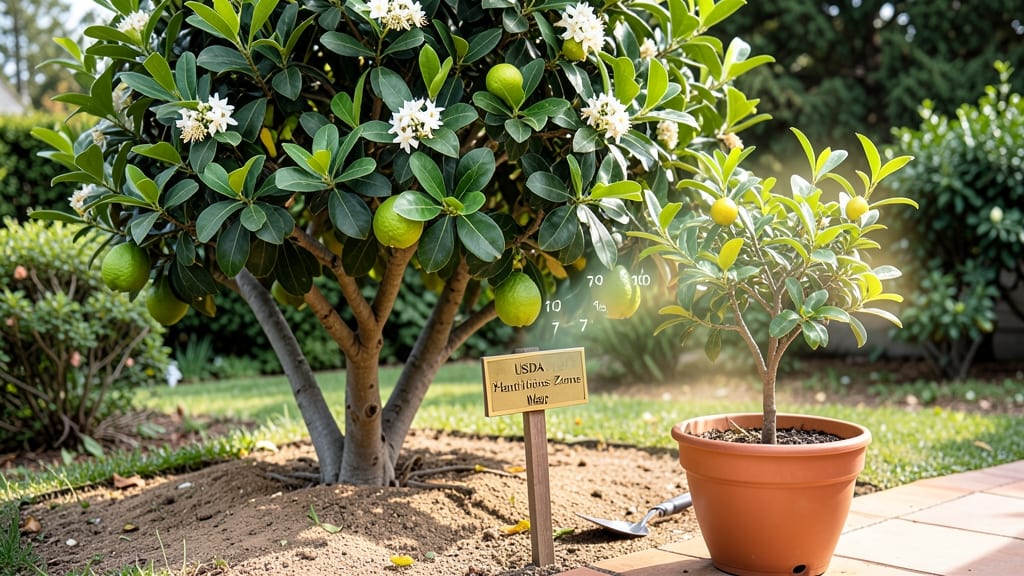
Yuzu trees grow best in USDA hardiness zones 8 through 11, where they enjoy frost-free conditions and well-draining soil. In cooler regions, container growing with winter protection is essential.
Yuzu trees originate from Japan's subtropical climate, where they naturally thrive in warm, humid conditions without freezing temperatures. 🌿 The USDA 8-11 range reflects this need for consistent warmth—any exposure to below 20°F risks severe damage.
Even in zone 8, gardeners often use microclimates or containers to extend the growing season, while zone 11's high heat requires afternoon shade to prevent leaf scorch. The soil's drainage is equally critical, as soggy roots lead to root rot—a common issue in heavy clay soils.
For container growing, 15-gallon pots work well for young trees, with a mix of 60% potting soil, 30% perlite, and 10% compost. In winter, move pots to unheated garages or wrap them in bubble wrap to shield from cold drafts.
Indoor growers should place trees near south-facing windows or use grow lights for 12+ hours of light daily to mimic their natural habitat.
💡 In This Article
- USDA Zones 8-11: Ideal Climate for Yuzu Tree Cultivation
- Container Growing Guide for Cold-Climate Yuzu Trees
USDA zones 8-11: ideal climate for yuzu tree cultivation
The yuzu tree's native habitat in Japan's subtropical regions explains why it thrives in USDA zones 8-11. These zones provide the consistent warmth (average winter temps between 10-40°F) and high humidity (60-80%) that mimic its original environment.
Yuzu trees are evergreen, but their leaves can suffer irreversible damage when exposed to below 20°F for extended periods, as the plant's cellular membranes rupture from ice crystal formation.
In zone 8, gardeners often create microclimates near south-facing walls or use row covers during cold snaps. Zone 11's challenge isn't cold but intense heat—temperatures above 95°F can cause leaf scorch, so afternoon shade becomes essential.
The tree's roots also prefer soil temperatures between 60-75°F, which is why mulching with 2-3 inches of organic matter helps maintain root zone warmth during cooler months.
Humidity plays a crucial role too—yuzu trees originate from regions with year-round moisture in the air. In drier zones (like parts of zone 9), misting leaves daily or using a humidifier near potted trees can prevent leaf edges from turning brown and crispy.
The tree's natural defense mechanism against dry air is to close its stomata (pores), which reduces photosynthesis and slows growth.
What most growers overlook is the tree's sensitivity to temperature fluctuations. Rapid shifts between hot and cold (like 10°F changes in 24 hours) stress the plant more than steady cold.
This is why container growing in colder zones works better—the pots can be moved to sheltered spots or indoors when nighttime temps drop below 35°F. The tree's native adaptability to coastal climates also means it tolerates salt spray better than many citrus varieties.
For those pushing the limits in zone 7, consider the 'Ichang Papeda' variety—a close relative that tolerates slightly cooler temps (down to 15°F with protection). This hybrid demonstrates how selective breeding can extend growing zones, though it won't produce true yuzu fruit.
The key takeaway is that while yuzu trees love warmth, they're not as cold-hardy as their citrus cousins like kumquats (zone 7 tolerance).
Understanding these climate nuances helps explain why yuzu trees often struggle in zone 7 and below—it's not just about the cold, but the combination of low humidity, temperature swings, and poor drainage in many northern soils.
The solution lies in replicating its native conditions as closely as possible, whether through containers, microclimates, or careful winter care.