
Plants
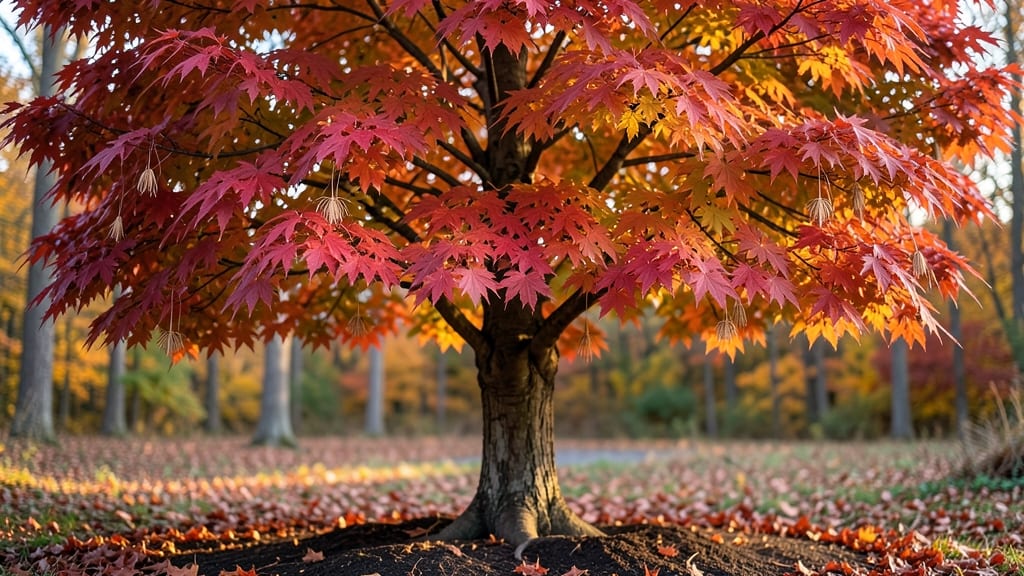
A maple tree looks like a tall, sturdy tree with distinctive lobed leaves featuring 3-7 sharp points, smooth gray bark that develops deep ridges as it ages, and striking fall colors from bright red to golden orange. Most varieties grow between 60-80 feet tall with an upright growth habit.
A maple tree's most recognizable feature is its palmate leaves—those hand-shaped leaves with 3-7 sharp lobes that create a star-like silhouette. 🌳 The bark starts smooth and silvery-gray but develops dramatic ridges and furrows as the tree matures, especially in species like sugar maple.
What makes them stand out in autumn is their vibrant foliage, which can shift from deep red to fiery orange depending on the variety and weather conditions.
One interesting detail is how different maple species vary in appearance. For example, silver maple leaves have more pointed lobes and a silvery underside, while red maple leaves often turn brilliant red before dropping.
The tree's upright branching structure also creates a distinctive canopy shape that's easy to spot in forests or urban landscapes. These visual traits make maples one of the most recognizable trees in North America.
💡 In This Article
- Maple Tree Leaf and Bark Identification Guide
- How to Spot a Maple Tree in Every Season
Maple tree leaf and bark identification guide
The most defining characteristic of maple leaves is their palmate shape, where lobes radiate from a single point like fingers on a hand. Sugar maple leaves, the most iconic variety, typically have 5 lobes with sharp, serrated edges that create a star-like pattern.
These leaves measure 4-6 inches wide and have a deep green color in summer that transforms into fiery reds and oranges in autumn. The leaf veins are particularly noticeable, forming a web-like pattern that adds to their distinct appearance.
Bark texture varies dramatically between young and mature maples. Young trees feature smooth, silvery-gray bark that resembles elephant skin, while mature specimens develop deep ridges and furrows that create a textured, almost blocky appearance.
Sugar maples, for instance, develop these ridges at around 30-40 years old, while red maples may show signs of aging bark slightly earlier.
The contrast between the smooth bark of younger trees and the rugged bark of mature ones is one of the most striking visual changes in maple identification.
Leaf shape alone can distinguish between common maple species. Silver maple leaves, for example, have 7-9 lobes with more pointed tips and a silvery underside, while red maple leaves often have 3-5 lobes with a more rounded appearance.
The leaf edges also vary—some maples have serrated edges, while others are more smooth or slightly wavy. These subtle differences become especially noticeable when comparing fresh spring foliage to autumn leaves, where color intensity can vary dramatically between species.
What most people don't realize is how maple leaves change throughout the growing season. New spring leaves emerge bright red or purple before turning green, a protective mechanism against frost damage.
By summer, they reach their full size and vibrant green color, only to begin their spectacular transformation in autumn when chlorophyll breaks down, revealing the underlying red and orange pigments. This seasonal color shift is what makes maples so beloved in fall landscapes.
Bark isn't just about texture—it also tells a story about the tree's age and health. The ridges in mature maple bark create natural crevices that can trap moisture, sometimes leading to lichen growth or even small insect habitats.
These bark patterns become more pronounced with each decade of growth, with the most mature specimens developing bark that looks almost like a puzzle piece pattern.
The contrast between the smooth, silvery-gray bark of younger trees and the deeply ridged bark of older ones is one of nature's most striking examples of growth progression.
For identification purposes, pay attention to these key features: leaf lobe count and shape, bark texture (smooth vs ridged), and seasonal color changes. These visual cues make maples one of the easiest trees to identify, even from a distance.
The combination of their distinctive leaves, evolving bark, and seasonal color shifts creates a visual signature that's unmistakable once you know what to look for.