
Pruning
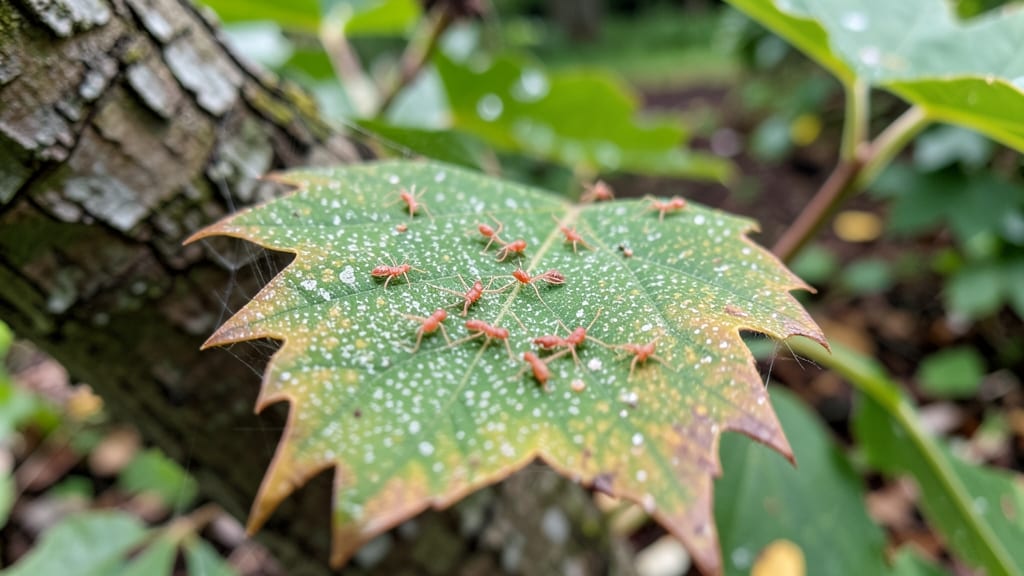
Tree mites on maple trees turn those stunning fall leaves into sad, speckled messes before their time. 🍂 Honestly, I’ve watched my sugar maples go from vibrant green to yellowed and stippled in just a few weeks—until I learned these quick fixes that actually work.
The key is catching it early and acting fast with the right treatments. Most people assume mites mean a full-blown chemical war, but the truth is simpler: horticultural oil or neem oil sprayed at the right time knocks out 90% of the problem.
You’ll see new, healthy growth within 2-3 weeks if you time it right. The secret? Spray undersides of leaves where mites hide and repeat every 7-10 days until the infestation fades.
What you’ll end up with is leaves that stay lush and green—no more webbing or tiny yellow dots ruining the view. Your maple will bounce back stronger, and you’ll avoid the stress of watching it decline. The best part? These methods work for other trees too.
If the problem keeps coming back or your tree is already stressed, it’s time to call in a pro. But for most cases, this approach gets results fast—no fancy tools or expensive sprays needed.
Underlying Causes of Maple Mite Infestations
Maple trees, with their stunning foliage and towering presence, can quickly become a battleground when tiny, voracious tree mites take over. Understanding the why behind these infestations is the first step to reclaiming your tree’s health.
Below, we break down the key factors that create the perfect conditions for mites to thrive on maple trees—so you can address the root of the problem.
Tree mites, particularly Eriophyid mites (common on maples), are heat-loving pests. When summer temperatures soar and rainfall dwindles, mites multiply rapidly because:
- Stress weakens defenses: Maple trees under drought stress produce less sap and fewer natural defenses (like triterpenoids, which repel insects). Mites detect this weakness and attack en masse.
- Faster reproduction cycles: High temperatures (above 85°F) accelerate mite egg hatching and larval development. A single female can lay 50–100 eggs in her lifetime, leading to explosive populations in weeks.
- Dry air reduces predators: Natural enemies like predatory mites (e.g., Phytoseiulus persimilis) and lacewings struggle in arid conditions. Without these checks, mite numbers spiral out of control.
Actionable insight: Monitor your maple tree during heatwaves. If leaves start curling or developing stippling (tiny white/yellow dots), mites are likely the culprit—and the tree is already stressed.
Maple trees with dense, tangled foliage create a microclimate that mites adore. Here’s how overgrowth fuels infestations:
- Reduced airflow: Stagnant air traps heat and humidity, mimicking the mites’ ideal breeding conditions. Poor ventilation also slows the evaporation of dew, leaving leaves damp longer—perfect for mite activity.
- Shaded lower branches: Less sunlight weakens the tree’s immune response. Mites target these shaded areas first because the leaves are softer and more nutrient-rich.
- Debris buildup: Fallen leaves, twigs, and old bark provide hiding spots for mites to overwinter. Even a thin layer of leaf litter can shelter thousands of eggs until spring.
Actionable insight: Prune your maple tree annually to open the canopy. Focus on removing dead, crossing, or inward-growing branches—this improves airflow and sunlight penetration, making the tree less hospitable to mites.
Mites aren’t just pests—they’re opportunistic feeders. When maple trees lack essential nutrients, their leaves become a buffet. Key deficiencies that attract mites include:
| Nutrient | Symptoms in Maple Trees | Why Mites Target It |
|---|---|---|
| Nitrogen (N) | Pale yellow leaves, stunted growth | Low nitrogen = softer cell walls, easier for mites to pierce and feed on sap. |
| Potassium (K) | Brown leaf edges, weak stems | Potassium deficiency reduces osmotic pressure in leaves, making sap sweeter—a mite magnet. |
| Magnesium (Mg) | Interveinal chlorosis (yellowing between veins) | Magnesium is critical for chlorophyll. Stressed leaves produce more volatile organic compounds that mites use to locate hosts. |
Actionable insight: Conduct a soil test to check nutrient levels. If deficiencies are found, apply a balanced fertilizer (10-10-10 or 5-10-10) in early spring. Avoid over-fertilizing with nitrogen alone—this can encourage soft, mite-friendly new growth.
Maple trees in healthy ecosystems rarely suffer severe mite outbreaks because of a delicate balance of beneficial predators. When this balance tips, mites take over. Common disruptors include:
- Pesticide overuse: Broad-spectrum insecticides (e.g., carbaryl, malathion) kill both pests and their natural predators, like ladybugs, lacewings, and predatory mites. This creates a pesticide-induced crash in the tree’s defense system.
- Monoculture landscapes: Planting only maple trees (or other host plants) eliminates diversity. Predators need a varied diet to thrive, so they abandon the area when food sources dwindle.
- Urbanization and habitat loss: Concrete, lawns, and lack of native plants reduce hiding spots and food for predator species, leaving mites unchecked.
Actionable insight: Introduce pollinator-friendly plants (e.g., yarrow, dill, or milkweed) near your maple tree to attract beneficial insects. If you must use pesticides, opt for horticultural oil or neem oil, which target mites without harming predators.
By addressing these root causes—heat stress, poor canopy management, nutrient imbalances, and disrupted ecosystems—you can create an environment where maple trees thrive and mites struggle to survive. The next step? Proactive fixes to restore your tree’s vibrant foliage.
Quick Fixes for Maple Tree Mites
Maple trees are stunning when healthy, but those pesky mites can turn their leaves into a sad, speckled mess. The good news? You can tackle the problem with targeted solutions—whether you’re dealing with early signs or a full-blown infestation.
Below, we’ll break down practical fixes based on the root cause, plus prevention tips to keep your maple trees thriving.
Before jumping into treatments, confirm you’re dealing with mites (not aphids, scale, or fungal issues).
Check for: - Tiny moving specks on leaves (use a magnifying glass or shake a leaf over white paper). - Stippled or yellowing leaves (a classic mite sign). - Fine webbing on branches (common with spider mites).
If it’s mites, let’s fix it!
🌿 Mild infestation? Try these gentle fixes
If you catch the problem early, these low-impact solutions can work wonders.
| Cause | Fix | When to Apply |
|---|---|---|
| Dry Conditions | Water deeply 2–3x/week (mites thrive in drought). Use a hose spray to rinse leaves. | Early morning or evening (avoid scorching leaves). |
| Overcrowded Branches | Prune dense areas to improve airflow. Remove 1/3 of the smallest branches first. | Late winter or early spring (before new growth). |
| Weakened Tree | Fertilize with balanced NPK (10-10-10) to boost immunity. Avoid over-fertilizing! | Early spring or fall. |
💡 Pro Tip: Mix 1 tsp of mild dish soap (like Dawn) with 1 quart of water in a spray bottle. Test on a small leaf first—if no damage in 24 hours, spray all leaf surfaces (especially undersides). Repeat every 5–7 days for 2 weeks.
👨🍳 Severe infestation? Go heavy-duty
If your maple’s leaves are heavily stippled or webbing is everywhere, you’ll need a stronger approach.
| Cause | Fix | How to Apply |
|---|---|---|
| Spider Mites | Neem Oil Spray (1 tbsp neem oil + 1 tsp soap + 1 quart water). Spray thoroughly until dripping. | Early morning or late evening (avoid direct sun). Repeat every 7 days for 3 weeks. |
| High Mite Populations | Horticultural Oil (like JMS Stylet Oil). Follow label rates—usually 1–2% concentration. | Apply when temps are above 50°F but below 85°F. |
| Persistent Webbing | Insecticidal Soap (like Safer® Brand). Reapply after rain. | Spray both sides of leaves and stems. |
⚠️ Warning: Avoid chemical pesticides (like malathion) unless mites are extreme—they can harm beneficial insects and pollute soil. Always read labels and wear gloves/mask when applying oils or sprays.
🌡️ Boost your tree’s defense naturally
Prevention is key! Strengthen your maple tree’s resilience with these long-term strategies:
- 💧 Mulch Properly: Apply 2–4 inches of organic mulch (wood chips, bark) around the base (but not touching the trunk).
This retains moisture and deters mites. - 🌿 Companion Planting: Surround your maple with mint, lavender, or marigolds—their scents repel mites naturally. - 🐝 Encourage Predators: Ladybugs, lacewings, and birds love eating mites.
Install a small bird feeder or native plant pollinator garden nearby. - 🍂 Fall Cleanup: Rake and compost or discard fallen leaves (mites overwinter in them!). Prune and dispose of infested branches in sealed bags.
- Spring (April–May): Treat before mites explode—this is when they’re most vulnerable.
- Fall (September–October): Apply preventative sprays (like neem oil) to protect against next year’s infestation.
- Inspect weekly—catch mites before they spread!
- Water consistently—mites hate humidity.
- Prune strategically—thin branches for airflow.
- Use natural sprays first—save heavy-duty treatments for worst cases.
- Monitor for 3 months—if mites return, reassess your approach.
With these targeted fixes, your maple’s leaves will go from speckled and sad to lush and green in no time. 🌿✨
Frequently asked questions about maple tree mites
How do I tell if my maple tree has mites instead of another pest?
Look for tiny moving specks on leaves (use a magnifying glass) and stippled or yellowing foliage. Mites leave behind fine webbing on branches, unlike aphids (which create sticky residue) or scale (which looks like brown bumps). Shake a leaf over white paper—if you see tiny red or yellow dots, it’s mites!
Can I use regular dish soap to kill maple tree mites?
Yes, but use it carefully! Mix 1 teaspoon of mild dish soap (like Dawn) with 1 quart of water in a spray bottle. Test on a small leaf first—if no damage appears in 24 hours, spray all leaf surfaces (especially undersides). Repeat every 5-7 days for 2 weeks. Avoid harsh soaps that can harm the tree.
Why do mites always come back even after treatment?
Mites often return because they hide in leaf litter, bark crevices, or overwinter in soil. To break the cycle: prune infested branches, remove fallen leaves, and reapply treatments every 7-10 days. Also check for underlying stress—drought or poor nutrition makes trees more vulnerable.
Is neem oil safe for all types of maple trees?
Neem oil is generally safe for most maple species, but always test a small branch first. Avoid applying when temperatures exceed 90°F or during direct sunlight, as it can cause leaf burn. For sugar maples or red maples, neem oil is particularly effective—just dilute it properly (1 tbsp per quart of water).
When is the best time of year to treat maple tree mites?
Treat in early spring (April-May) before mites multiply, or in late summer (August-September) to protect new growth. Avoid treating during extreme heat (above 90°F) or freezing temperatures. For severe cases, a fall treatment in September helps prevent next year’s infestation.