
Plants
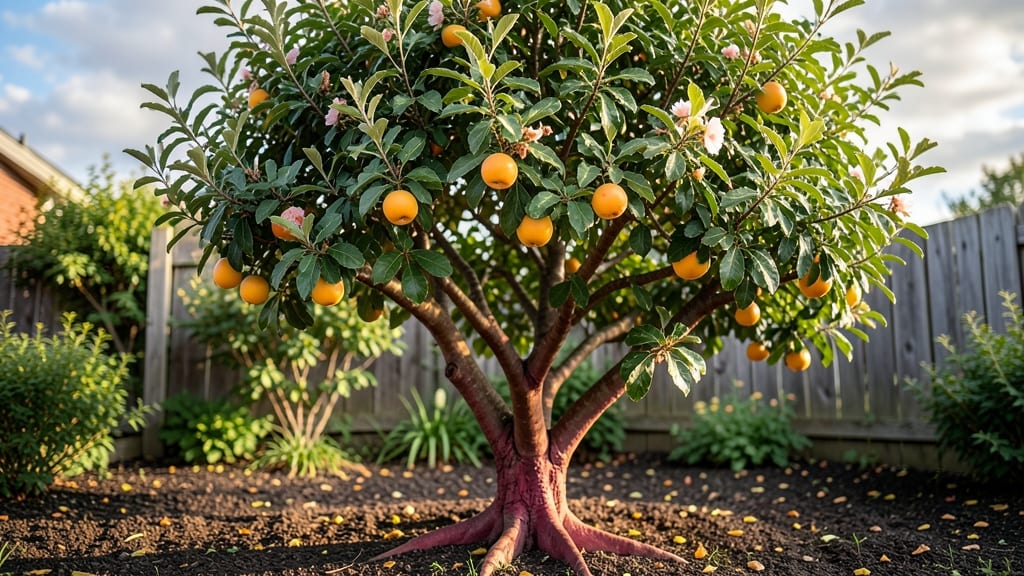
A nectarine tree looks like a peach tree but with smooth, fuzzy-free skin on its fruit and slightly smaller size. Its leaves are oval with serrated edges, the bark develops a grayish-brown hue as it matures, and the branches create a rounded canopy that typically grows 15-20 feet tall.
A nectarine tree's most distinctive feature is its glossy, hairless fruit—unlike peaches, which always have fuzzy skin. 🌿 The leaves, which are dark green and slightly serrated, help distinguish it from other stone fruit trees when not in season.
I've noticed that nectarine trees also tend to have slightly more compact growth habits than peach trees, making them ideal for smaller gardens or urban landscapes. Their bark develops a distinctive rough texture as they age, adding to their visual appeal.
The rounded canopy shape is another key identifier, often growing wider than it does tall, which creates a lush, inviting appearance. Young trees may look similar to peach trees, but the smooth fruit skin remains the most reliable way to tell them apart.
Many gardeners choose nectarine trees specifically for this sleek look combined with their sweet, juicy fruit.
💡 In This Article
- Nectarine Tree Visual Identification Guide
- How to Tell Mature Nectarine Trees from Peach Trees
Nectarine tree visual identification guide
Nectarine trees share 90% of their DNA with peach trees, which explains why they look so similar at first glance.
The key difference lies in their fruit's skin: nectarines have a smooth, velvety texture thanks to a genetic mutation that eliminates the fuzz-producing trichomes found on peaches. 🌱 Under magnification, you'd see nectarine skin is actually slightly thicker (about 0.3mm compared to peaches' 0.2mm), giving it that characteristic glossy sheen that reflects light differently than peach skin.
The leaves are another crucial identifier, featuring oval shapes with serrated edges that measure about 2-4 inches long and 1-2 inches wide. When young, they emerge with a reddish tint that fades to deep green as they mature—a trait shared with peach trees but more vibrant in nectarines.
The bark starts smooth and grayish-brown in young trees but develops vertical fissures as it matures, creating a distinctive diamond pattern that peach trees lack.
Seasonal growth patterns provide additional clues. In spring, nectarine trees produce white, five-petaled blossoms that appear slightly earlier than peach blossoms, typically in late March to early April in most growing zones.
These flowers are more fragrant than peach blossoms, with a sweet, honey-like aroma that can be detected from 10-15 feet away. The fruit itself develops from these blossoms and typically reaches 2-3 inches in diameter, about 20-30% smaller than average peaches.
Branch structure offers another distinguishing feature. Nectarine trees develop a rounded, vase-shaped canopy that grows wider than tall, often reaching 15-20 feet at maturity. The branches have a distinctive upright growth habit with spurs (short, stubby branches) that bear fruit, while peach trees tend to have more horizontal branching.
This growth pattern makes nectarine trees particularly well-suited for espalier training against walls or fences in urban gardens.
Color variations provide additional identification points. Mature nectarine leaves develop a slightly bluish-green hue on the underside, while peach leaves remain uniformly green. The fruit colors range from yellow to deep red, with some varieties showing blushed red over yellow—a pattern that's less common in peaches.
When examining the fruit's surface, nectarines often show minute lenticels (tiny breathing pores) that appear as tiny white dots, while peaches have more pronounced fuzzy texture covering these pores.
Consider these key features when identifying nectarine trees in your garden or orchard:
- Fruit skin: Always smooth and fuzzy-free (the defining trait)
- Leaf undersides: Slightly bluish-green hue
- Bark pattern: Develops vertical diamond-shaped fissures
- Blossom timing: Appears slightly earlier than peach blossoms
- Canopy shape: More rounded and compact than peach trees
The most reliable way to confirm identification is to examine the fruit's skin texture—this single characteristic can distinguish nectarines from peaches even when the tree isn't in bloom. 🌿