
Pruning
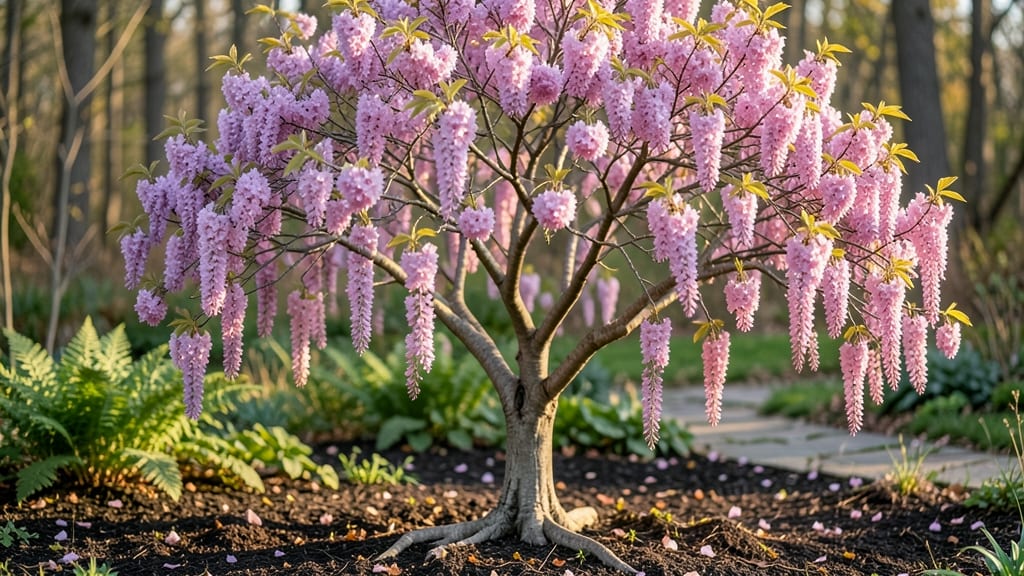
Pink flower clusters transform any garden into a dreamy springtime scene. 🌸 The tree with pink flower clusters, the Eastern Redbud (Cercis canadensis), steals the show with its heart-shaped leaves and vibrant pink blooms that appear before the foliage—like nature’s own confetti.
I planted mine near the patio, and now it’s the first thing guests notice every spring.
This small tree thrives in partial shade and grows just 20-30 feet tall, making it perfect for small yards or mixed borders. Its late-winter bloom (February-March) gives pollinators an early feast, while its golden fall foliage extends the show.
Pair it with dwarf daffodils or ferns to highlight its delicate branches.
The real magic? Season-long interest—even when not in bloom, its peeling bark and arching branches add texture. Prune lightly after flowering to shape it, but avoid heavy cuts that reduce next year’s blooms.
For bolder color, try Sargent Cherry or Crape Myrtle—both offer pink clusters in different shades and sizes.
Whether you want a romantic focal point or a low-maintenance statement, these trees deliver year-round charm with minimal effort. Let’s find the perfect one for your space!
📚 In This Guide
- What you need
- Instructions
- Tips and common mistakes
- Wrapping up and next steps
What you need
- ● Pink-flowering tree sapling: 1–3 Cercis canadensis (Eastern Redbud) or Lagerstroemia (Crape Myrtle) saplings (choose based on your climate zone)
- ● Size: 1–3 feet tall (container-grown for easier planting)
- ● High-quality potting soil: 1–2 bags (50 lbs each) of well-draining, organic-rich soil (e.g., Miracle-Gro Garden Soil or compost-amended native soil)
- ● Mulch: 2–3 cubic feet of wood chips or shredded bark (to retain moisture and suppress weeds)
- ● Slow-release fertilizer: 1 bag (e.g., Osmocote Smart-Release Plant Food for seasonal blooms)
- ● Pruning shears: 1 pair of bypass pruners (for small branches, sharp and clean-cut)
- ● Loppers: 1 pair (for thicker branches, 20–24 inches)
- ● Hand pruners: 1 pair (for precision trimming of new growth)
- ● Gloves: 1 pair of cut-resistant, breathable garden gloves
- ● Disinfectant: 1 bottle of rubbing alcohol (70%+) or pruning sealant (to prevent disease spread)
- ● Tree stake: 1–2 biodegradable stakes (if planting in windy areas)
- ● Tree tie: 1 roll of soft fabric ties (to secure saplings temporarily)
- ● Watering can or hose: With a gentle spray nozzle (for post-planting hydration)
- ● Plant food spray: 1 bottle of liquid fertilizer (e.g., Fish Emulsion for a nutrient boost)
- ● Bird netting: 1 roll (to protect blooms from pests if needed)
Step-by-step guide to planting a stunning pink flowering tree
Here's how to transform your garden with a breathtaking pink-blooming tree that draws pollinators all season.
🌱 Step 1: Select the Perfect Tree for Your Climate and Space
Choose a pink-flowering tree suited to your USDA hardiness zone and available space. Popular selections include Bradford pear ( zones 5-9), Japanese cherry (zones 5-8), or crabapple (zones 3-8). I always verify the mature height—some varieties like Bradford pear reach 30-40 feet, while dwarf flowering cherries stay under 15 feet for smaller gardens.
Check the bloom season too. Some trees like Bradford pear flower in early spring, while Japanese cherry offers prolonged blooms from late spring through summer. Plant near a seating area where you can enjoy the fragrance—some varieties like double-flowering cherries have intoxicating scents that transform evenings.
🪴 Step 2: Prepare the Planting Site for Optimal Growth
Select a location with full sun (at least 6 hours daily) and well-draining soil. Avoid low spots where water pools after rain—root rot is the silent killer of young trees. If your soil is heavy clay, amend with 2-3 inches of compost mixed into the top 12 inches of soil before planting.
Dig a hole twice as wide as the tree's root ball but only as deep. The top of the root ball should sit 2-3 inches above ground level—this prevents water from pooling at the base. Loosen the roots slightly if they're circling tightly in the container, then place the tree in the hole and backfill with native soil.
☀️ Step 3: Plant and Water for Immediate Establishment
Fill the hole with soil while gently tamping down to remove air pockets. Create a 2-3 inch deep watering basin around the perimeter of the hole to direct irrigation. Water immediately with 10 gallons to settle the soil and eliminate air gaps.
Mulch with 3 inches of organic mulch (like shredded bark) extending 2-3 feet outward from the trunk. Keep mulch 6 inches away from the tree's base to prevent rot. This layer conserves moisture and regulates soil temperature—critical during summer heatwaves when young roots are establishing.
✂️ Step 4: Prune and Support for Strong Structure
Prune any broken or crossing branches immediately after planting. Use clean, sharp pruners to make cuts at a 45-degree angle just above a bud facing outward. Remove no more than 25% of the foliage—this prevents stress while still encouraging an open, airy structure.
Install a tree stake only if needed for support in windy areas. Attach it loosely with soft tree ties (never wire) to allow some trunk movement—this strengthens the stem naturally. Avoid pruning lower branches completely; they provide shade for roots and reduce water loss during establishment.
💧 Step 5: Maintain Through the First Critical Year
Water deeply once weekly during the first growing season, providing 15-20 gallons per watering. Check soil moisture by inserting your finger 2 inches deep—water when dry. Overhead watering encourages fungal diseases, so use a soaker hose at the base instead.
Fertilize lightly in early spring with balanced 10-10-10 fertilizer (follow package rates). Avoid high-nitrogen fertilizers—they promote leafy growth at the expense of flowers. Monitor for pests like aphids or scale, which thrive on new growth. A strong spray of water often dislodges them before they become established.
Tips & tricks for planting a stunning pink flowering tree
Here’s what I’ve learned from years of planting these showstopping trees—details that make all the difference between a pretty addition and a garden centerpiece.
Location is Everything: While the instructions highlight full sun, I can’t stress enough how critical this is for vibrant blooms. Test your spot for at least 6 hours of direct sunlight during the tree’s peak bloom season—morning sun with afternoon shade works best in hotter climates. If your yard has partial shade, choose a crabapple variety like ‘Adirondack’ which tolerates more shade than Bradford pears or Japanese cherries.
Root Ball Prep Makes or Breaks Establishment: Before planting, soak the root ball for 15-20 minutes in a bucket of water to hydrate the roots. This single step reduces transplant shock dramatically. I’ve seen trees with soggy roots struggle for months, while pre-soaked ones establish within weeks. After planting, keep the soil consistently moist (not soggy) for the first 30 days—this is when roots are most vulnerable.
Mulching Strategy for Year-Round Health: The 3-inch layer of organic mulch isn’t just decoration—it’s a moisture regulator and temperature stabilizer. I recommend applying a second 1-inch layer in late winter before spring growth begins. This prevents soil temperature swings that can shock roots when spring arrives. Just remember to keep mulch 6 inches away from the trunk to prevent rot.
Pruning for Maximum Blooms: When pruning those crossing branches in Step 4, look for outward-facing buds when making your cuts. These buds will grow into branches that catch sunlight and encourage more blooms. I also recommend saving the lower branches—even if they’re not the prettiest—because they provide shade for roots during summer heatwaves, which actually preserves more energy for next year’s flowers.
Pro Tips for Tree With Pink Flower Clusters
- Here’s what I’ve learned from years of planting these showstopping trees—details that make all the difference between a pretty addition and a garden centerpiece.
- Location is Everything: While the instructions highlight full sun, I can’t stress enough how critical this is for vibrant blooms.
- Root Ball Prep Makes or Breaks Establishment: Before planting, soak the root ball for 15-20 minutes in a bucket of water to hydrate the roots.
Frequently asked questions
Got questions about those dreamy trees with pink flower clusters? You’re not alone—these stunning plants spark curiosity! Here are answers to the most common queries to help you grow and enjoy them with confidence.
What’s the best time to plant a tree with pink flower clusters?
For most varieties like Cornus florida (flowering dogwood) or Lagerstroemia (crape myrtle), late fall or early spring (before buds swell) is ideal. Avoid extreme heat or frost—roots need time to establish without stress. Pro tip: Water deeply after planting to settle soil and reduce transplant shock!
How do I encourage bigger, brighter pink blooms?
Bloom size depends on sunlight, pruning, and nutrition. Ensure your tree gets 6+ hours of sun daily (adjust for shade-tolerant types like Hydrangea paniculata). Prune in late winter to remove dead wood and open the canopy. Feed with balanced fertilizer (10-10-10) in early spring, and mulch to retain moisture. Bonus: Deadhead spent blooms to redirect energy to new flowers!
Are these trees cold-hardy? What zones do they thrive in?
Most pink-flowering trees are resilient! For example:
- Cornus florida: Zones 5–9 (loves mild winters).
- Lagerstroemia: Zones 6–9 (drought-tolerant once established).
- Hydrangea paniculata: Zones 4–8 (great for colder climates).
Do these trees attract bees or other pests? Should I worry?
Pink flower clusters are bee magnets—great for pollinators! However, some trees (like Lagerstroemia) may draw aphids or Japanese beetles. Monitor leaves for damage and spray with neem oil if needed. Avoid pesticides during bloom to protect pollinators. Fun fact: Bees love them, but deer usually avoid mature specimens!
What’s a great alternative if my yard has poor soil or drainage?
If your soil is clay-heavy, sandy, or waterlogged, opt for:
- Hydrangea paniculata: Tolerates wet feet and adapts to various soils.
- Viburnum dentatum (arrowwood): Handles moisture and drought once established.
- Weigela florida: Thrives in poor, rocky soil and blooms prolifically.
Wrapping up and next steps
Transforming your garden with a tree adorned in pink flower clusters isn’t just about beauty—it’s about creating a lasting, romantic atmosphere that blooms season after season. From selecting the right variety to mastering pruning techniques, you now have the tools to nurture a stunning centerpiece that thrives for years. 🌸
Ready to take the next step? Start small—whether it’s planting a single Cercis canadensis or a Lagerstroemia sapling—and watch your garden flourish. Happy gardening! 🌱