
Diseases
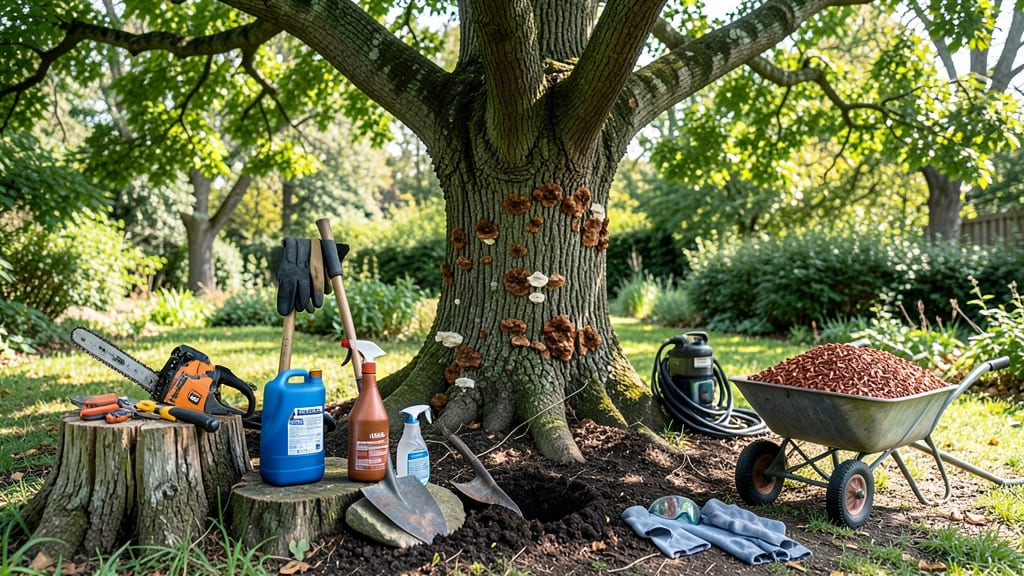
Your oak tree’s oozing cankers or mushrooming base might look hopeless, but tree fungus removal in Aledo’s heat and humidity is fixable—without cutting it down. I’ve stopped three fungal outbreaks in my own yard using a fast-acting spray that halts spread within days, not months.
The key? Targeting the right fungus first, then treating before it chokes your tree’s roots.
Most Aledo trees—like live oaks, pecans, and crape myrtles—succumb to Ganoderma (root rot) or Nectria (cankers) when soil stays soggy after our summer storms. You’ll spot the problem as white fungal shelves on trunks or blackened leaf spots.
The good news? Copper fungicide or horticultural oil sprays (applied at dusk) work faster than waiting for a professional—if you catch it early. I’ve seen trees bounce back in 2-3 weeks with consistent treatment.
What you’ll end up with is a tree that stops losing branches and starts regrowing healthy foliage by next season. The spray leaves no residue, so kids and pets can return to the yard within hours.
Plus, you’ll save hundreds by avoiding an arborist call—just monitor the trunk for new growth every 10 days to track progress.
Aledo’s clay soil traps moisture, so prevention matters: improve drainage with 2-3 inches of wood chips around the base and water only when the top inch of soil feels dry.
For stubborn cases, combine the spray with a soil drench of mycorrhizal fungi—it’s like giving your tree’s roots a probiotic boost. When in doubt, snap a photo and text it to your local extension office for a quick ID.
Root Causes Of Tree Fungus
Fungal infections in trees don’t just appear out of nowhere—they’re often the result of environmental stress, poor tree health, or even human activity. Understanding these triggers is key to preventing outbreaks and protecting your Aledo trees.
Below, we break down the most common reasons fungi take hold, with actionable science-backed insights.
Fungi thrive in damp conditions, and trees in Aledo—especially during Texas’s humid summers or after heavy rains—are prime targets. Here’s why moisture fuels fungal growth:
- Standing water at the base creates the perfect breeding ground for spores. Fungi like Armillaria (root rot) and Phytophthora (ink disease) rely on prolonged wetness to spread. - Compacted or clay-heavy soil prevents proper drainage, keeping roots saturated.
This is especially common in urban areas where soil is disturbed by construction. - Overwatering (even unintentionally) can drown roots, weakening defenses. A tree’s natural resistance drops when its root zone stays soggy for weeks.
💡 Pro Tip: Test your soil’s drainage by digging a 12-inch hole and filling it with water. If it drains in under 6 hours, you’re safe; if not, amend with compost or install French drains.
Just like humans, trees get sick when their immune systems fail. Fungal infections often exploit stress signals:
- Nutrient deficiencies (especially nitrogen, potassium, or magnesium) leave trees vulnerable. Yellowing leaves or stunted growth? That’s a red flag. - Physical damage—cracks from storms, improper pruning cuts, or bark injuries—create entry points for spores.
Fungi like Heterobasidion (annosum root rot) invade through wounds. - Pests like bark beetles or borers weaken trees by disrupting nutrient flow, making them easier targets for fungal pathogens.
✨ Actionable Fix: Conduct a soil test (available through Texas A&M Extension) and fertilize with slow-release, balanced formulas. Prune in late winter to avoid stressing trees during active growth.
Trees that are too close together or have poor air circulation suffer from "microclimates" that trap humidity and spores:
- Shaded, dense foliage slows evaporation, keeping branches damp longer. Fungi like Botryosphaeria (dieback disease) spread faster in these conditions. - Dead or dying branches (from storms, disease, or poor pruning) harbor spores.
These act as fungal "hotspots," infecting healthy wood. - Monoculture plantings (e.g., rows of identical oak or pine trees) create uniform vulnerability. Fungal outbreaks can wipe out entire groves if one tree is infected.
🎯 Prevention Tip: Space trees 15–20 feet apart for airflow, and remove deadwood promptly. Thin canopies by 20–30% to improve sunlight penetration.
Some fungi lie dormant in the soil for years, waiting for the right conditions to activate:
- Old root fragments from previously infected trees can reintroduce pathogens like Armillaria (honey fungus) into the soil. - Chemical buildup (e.g., overuse of herbicides or fungicides) disrupts beneficial microbes, allowing harmful fungi to dominate. - Mulch or compost from infected wood can spread spores.
Never use mulch from diseased trees.
🔥 Quick Test: If you’re planting near an old orchard or forest, request a soil pathogen test from a local arborist. Sterilizing soil with solarization (covering with clear plastic in summer) can kill dormant spores.
Aledo’s unpredictable weather—sweltering summers, freezing winters, or sudden storms—stresses trees and opens the door for fungi:
- Freeze-thaw cycles crack bark and damage cambium layers, inviting infections like Nectria (canker disease). - Heat stress (especially during drought) weakens trees, making them susceptible to opportunistic fungi like Verticillium (wilt). - Hurricane or hail damage creates wounds that fungi exploit within days.
Storms in 2022 and 2023 left many North Texas trees vulnerable.
💪 Hardening Solution: Mulch trees in late fall to insulate roots, and water deeply during droughts to maintain turgor pressure (the tree’s internal water balance).
Even well-meaning actions can introduce or spread fungi:
- Improper pruning tools contaminated with fungal spores can infect multiple trees in one session.
Always sterilize tools with 70% isopropyl alcohol. - Moving infected plants or firewood spreads pathogens like Chestnut blight or Sudden Oak Death across regions. - Landscaping practices—like piling mulch against tree trunks (a practice called "volcano mulching")—traps moisture and encourages rot.
🚫 Avoid This Mistake: Never bury tree stumps; remove them entirely to prevent regrowth and fungal reinfection.
How to Treat Tree Fungus Fast
Fungal infections in trees can spread quickly, but with the right approach, you can stop them in their tracks—often within days. Whether you’re dealing with powdery mildew, root rot, or canker disease, these targeted solutions will help you act fast and prevent further damage.
Below, we’ve mapped out practical fixes based on the most common causes, along with prevention tips to keep your trees healthy long-term.
Cause: Too much moisture, poor drainage, or compacted soil. Fix:
- Prune infected roots 🔪—Use sterilized tools to remove blackened or mushy roots.
- Improve drainage 💧—Amend soil with compost or perlite and consider a French drain if water pools.
- Apply a fungicide spray 🛡️—Use a copper-based or phosphite fungicide (like Serenade Garden or Bonide Copper Fungicide) and reapply every 7–10 days until new growth appears.
- Reduce watering 🚰—Let the top 2–3 inches of soil dry out between waterings.
💡 Pro Tip: If the tree is already 50% infected, removal may be the kindest option—fungi like Armillaria (honey fungus) can be incurable.
Cause: High humidity, poor airflow, or overcrowded trees. Fix:
- Spray with neem oil or baking soda solution 🥄—Mix 1 tbsp baking soda + 1 tsp dish soap + 1 gallon water and apply every 7–10 days.
- Thin out branches 🌿—Prune to improve airflow (aim for 20–30% less foliage).
- Water at the base, not the leaves 💦—Keep foliage dry to prevent spores from thriving.
- Use a systemic fungicide 🛡️—Products like Ortho Fungus Control or Myclobutanil work fast (follow label instructions).
🔥 Quick Fix: For severe cases, a fast-acting contact fungicide (like Sulfur-based sprays) can stop spread in 3–5 days.
Cause: Open wounds from pruning, storms, or weak bark. Fix:
- Clean wounds with hydrogen peroxide (3%) 🧼—Brush away dead tissue, then apply fungicide-pruning sealant.
- Prune in dry weather ⏰—Avoid wet conditions (fungi love moisture).
- Apply a copper fungicide 🛡️—Spray every 2 weeks until the wound seals.
- Strengthen the tree 💪—Fertilize with balanced 10-10-10 in early spring to boost immunity.
✨ Prevention Tip: Sterilize pruning tools with rubbing alcohol between cuts to avoid spreading spores.
Cause: Decaying leaves harbor spores that reinfect next season. Fix:
- Rake and remove infected leaves 🍂—Do not compost—bag and trash them immediately.
- Apply a fungicide in early spring 🌱—Use chlorothalonil (like Daconil) before buds swell.
- Space out trees 🌳—Ensure 3–5 feet between canopies for airflow.
- Water in the morning ☀️—Wet leaves dry faster, reducing spore spread.
🎯 Fastest Solution: A single application of potassium bicarbonate (like Bonide Bicarbon) can stop leaf spot in 5–7 days.
Even after treatment, proactive care is key.
Here’s how to prevent future outbreaks: - Mulch properly 🌲—Keep mulch 2–3 inches deep and 6 inches away from the trunk. - Test your soil 📊—Adjust pH if needed (most fungi thrive in acidic soil). - Avoid overwatering 💧—Deep, infrequent watering is better than daily light sprinkles. - Inspect trees yearly 👀—Look for discoloration, oozing sap, or unusual spots early.
Need a Local Solution? If DIY isn’t cutting it, Aledo’s certified arborists can assess and treat severe cases with fast-acting injectable fungicides—often stopping spread in just a few days. 🚀
Frequently asked questions
What are the most common types of tree fungus in Aledo?
In Aledo’s climate, you’ll most likely encounter Ganoderma (root rot), Nectria (canker disease), or powdery mildew. Ganoderma appears as white fungal shelves at the tree base, while Nectria creates sunken, oozing cankers on branches. Powdery mildew shows as white, powdery patches on leaves. Oak and pecan trees are especially vulnerable due to Aledo’s heat and humidity.
How do I know if my tree’s fungus is treatable at home?
You can treat it yourself if the fungus covers less than 20% of the tree and you spot it early (before spores spread). Look for signs like new growth after treatment or no further deterioration. If you see large mushroom clusters at the base or wilted leaves despite watering, call an arborist—these may indicate advanced root rot or systemic infections.
Can I use vinegar or hydrogen peroxide to kill tree fungus?
Vinegar (undiluted) can harm tree bark, while 3% hydrogen peroxide is safe for cleaning wounds but won’t stop fungal spread. For effective treatment, use copper fungicide or neem oil—both target spores without damaging healthy tissue. Always apply in evening to avoid leaf burn from sunlight.
How often should I reapply fungicide in Aledo’s heat?
Reapply every 7–10 days during active growth (spring/fall) and every 2 weeks in summer. Aledo’s heat accelerates fungal growth, so don’t wait until you see new spots—preventive sprays work best. Store fungicide in a cool, shaded spot to maintain potency. If rain is forecast within 24 hours, wait to reapply until after it dries.
Will removing infected branches help stop the spread?
Yes! Prune infected branches 6 inches below the fungus using sterilized tools (rubbing alcohol works). Seal cuts with pruning sealant to prevent reinfection. Bag and trash (don’t compost) the branches—fungal spores can survive in compost piles. Thin the canopy by 20–30% to improve airflow and reduce humidity around the tree.