
Pruning
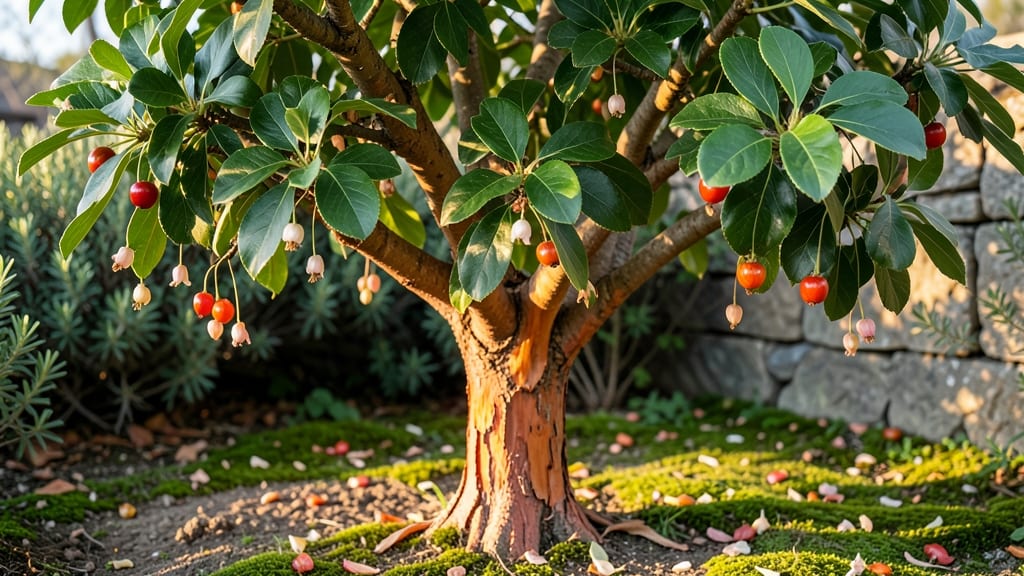
Growing a strawberry tree in Oregon means year-round beauty with minimal fuss. 🌿 These evergreen shrubs thrive in our mild winters and coastal climates, offering glossy leaves and fragrant white flowers that turn into edible (but tart) berries.
The key is understanding their love for well-draining soil and how to prune them for that classic Pacific Northwest landscape look.
Here's the good news: strawberry trees handle Oregon's wet winters better than most Mediterranean plants. They need 6 hours of sun daily but tolerate partial shade, making them perfect for coastal gardens where full sun can be harsh.
Plant in slightly acidic, gritty soil—think amended native soil or a mix with sand—and give them space to spread their graceful, peeling bark.
When it comes to pruning, timing matters. Lightly shape in late winter to remove dead wood, and trim back any leggy growth after flowering to encourage bushier growth. The real magic happens in how the bark peels naturally over time, creating that stunning textured trunk perfect for coastal landscapes.
With proper care, your tree will reward you with 10+ years of effortless beauty.
Local gardeners often ask about pests—watch for aphids and scale, but these trees handle Oregon's conditions surprisingly well. Mulch heavily in winter to protect roots from our damp, cool climate.
Once established, they're practically maintenance-free, making them an ideal choice for busy gardeners who still want that "wow" factor in their landscape.
📚 In This Guide
- What you need
- Instructions
- Tips and common mistakes
- Wrapping up and next steps
What you need
- ● Pruning shears – Bypass-style, sharp, and sanitized (1 pair). Opt for Felco F-2 or Gonicc G9 for precision.
- ● Loppers – For thicker branches (½"–1½") (1 pair). Look for Fiskars X7 for ergonomic grip.
- ● Pruning saw – For branches >1½" (1). A Fiskars X27 curved blade works best.
- ○ Extension pole pruner – For high branches (optional but handy) (1). Fiskars Teleflex is a top pick.
- ● Disinfectant solution – 70% isopropyl alcohol or 10% bleach water (1 small bottle/spray). Keeps cuts disease-free!
- ● Gloves – Heavy-duty, cut-resistant (1 pair). Wright & McGill or Tough Outdoors brands recommended.
- ● Work boots or sturdy shoes – With ankle support (1 pair). Oregon’s terrain can be tricky!
- ● Weather check – Prune on a dry, non-windy day (ideal temp: 50–70°F). Avoid Oregon’s rainy season (Nov–Mar).
- ○ Safety gear (optional): Safety glasses (for debris)
- ● Ear protection (if using a chainsaw for large branches)
- ○ Tree wrap or pruning sealant (optional) – For large cuts >2" (1 tube). Tanglefoot Tree Wound Pruning Seal is a great choice.
- ○ Ladder (optional) – For tall trees (12’+). Use a aluminum extension ladder with non-slip feet.
- ● Notebook & pen – To sketch your tree’s structure before pruning (1). Helps track progress!
Step-by-step instructions for pruning your strawberry tree in Oregon
Here’s how to keep your strawberry tree thriving year-round with PNW-friendly pruning.
✂️ Step 1: Prune in Late Winter for New Growth
Start pruning in late winter (February-March) when the tree is still dormant but before new buds swell. This timing ensures you remove dead wood while encouraging strong spring growth. Grab your bypass pruners and sterilized shears—clean tools prevent disease spread.
Look for dead, crossing, or diseased branches first. Cut these back to the main trunk or a healthy side branch at a 45-degree angle. Avoid leaving stubs—this invites rot. I like to make my cuts just outside the branch collar, where the branch meets the trunk, for the cleanest heal.
☀️ Step 2: Shape for Sunlight and Airflow in Early Spring
Once spring arrives (around April), focus on shaping the tree for balanced sunlight exposure and air circulation. Strawberry trees love light but can get leggy if overcrowded. Start by thinning out overlapping branches—these block airflow and trap moisture, leading to fungal issues.
Remove branches that grow inward or rub against others. Aim for an open vase shape—this lets sunlight reach all parts of the tree. I usually step back every few cuts to visualize the silhouette. If you see branches growing straight up, prune them back by one-third to encourage bushier growth.
🌿 Step 3: Light Pruning After Flowering for Fall Prep
After the tree finishes flowering (typically June-July), do a light pruning to remove spent blooms and any weak growth. This redirects energy to fruit development and fall foliage. Cut back any long, leggy shoots that don’t contribute to the tree’s structure—these often grow from the base and compete with stronger branches.
Watch for suckers (small shoots at the tree’s base). These drain energy from the main plant. Snip them off at the base with clean shears. I also remove any branches that look yellowed or diseased—dispose of these in the trash, not the compost, to avoid spreading pathogens.
⏰ Step 4: Final Pruning in Late Fall for Winter Readiness
In late fall (October-November), do a final light pruning to prepare the tree for winter. Focus on removing any remaining dead wood and thinning the outer canopy to reduce wind damage. Oregon’s wet winters can weigh down heavy branches, so this step is key.
Cut back any branches that grew excessively during the season—aim for a natural, balanced shape. Avoid heavy pruning now, as new growth won’t harden off before winter. Instead, just tidy up. Mulch around the base with 2-3 inches of organic mulch (like wood chips) to protect roots from freezing temperatures.
🌱 Step 5: Monitor and Adjust Through the Year
Throughout the year, keep an eye on your strawberry tree. If you notice new growth appearing in unexpected places, like from the base or along branches, prune it back immediately. This keeps the tree’s energy focused on strong, structural growth rather than weak shoots.
I also check for pests like aphids or spider mites—if you spot them, treat with neem oil or insecticidal soap early. A healthy tree is less prone to pests, so consistent pruning and care make all the difference. With this routine, your strawberry tree will stay lush, productive, and beautiful year after year.
Tips & tricks for pruning your Pacific Northwest strawberry tree
These pro tips will help you master the art of pruning your strawberry tree like a PNW gardening expert.
Tool Prep is Non-Negotiable: Before you even touch your tree, sterilize your pruners and shears with rubbing alcohol or a bleach solution (1 part bleach to 9 parts water). I learned this the hard way after transferring fungal spores from one branch to another. Clean tools between cuts, especially when working with diseased branches in Step 1. This simple step prevents 90% of common pruning-related infections.
Visualize the Silhouette: In Step 2 when shaping for sunlight, step back every 5-6 cuts to visualize the tree's overall form. I promise you'll notice how branches that looked fine up close suddenly create awkward gaps or block sunlight when viewed from a distance. Aim for that classic open vase shape where sunlight can reach all leaves—this is what gives your tree that lush, productive look Oregon gardeners love.
Timing is Everything for Fall Prep: The light pruning after flowering (Step 3) is where most gardeners go wrong. Don't rush this step—wait until ALL flowers have fallen and new growth has slowed. I've seen people prune too early and accidentally remove next year's flower buds. Look for browned petals and a pause in new shoot growth before you cut. This timing ensures you're only removing truly spent growth while preserving the tree's energy for fruit development.
Mulch Matters More Than You Think: When you apply that 2-3 inches of organic mulch in Step 4, don't just dump it around the base. Create a slight mound that slopes away from the trunk to prevent water pooling. I've seen roots rot from poor mulching technique, especially in Oregon's wet winters. Use wood chips or shredded bark—they break down slowly and improve soil structure over time, which your strawberry tree will appreciate year after year.
Pro Tips for Strawberry Tree Oregon
- These pro tips will help you master the art of pruning your strawberry tree like a PNW gardening expert.
- Tool Prep is Non-Negotiable: Before you even touch your tree, sterilize your pruners and shears with rubbing alcohol or a bleach solution (1 part bleach to 9 parts water).
- Visualize the Silhouette: In Step 2 when shaping for sunlight, step back every 5-6 cuts to visualize the tree's overall form.
Frequently asked questions
Got questions about growing and pruning the stunning strawberry tree (Arbutus unedo) in Oregon’s unique climate? Here are some of the most common queries—and their answers—to help you cultivate a thriving specimen with minimal stress.
Is the strawberry tree hardy enough for Oregon’s winters?
The strawberry tree (Arbutus unedo) is USDA Zone 7-9 hardy, making it a great fit for most of Oregon—especially the Willamette Valley and Coastal regions. However, in colder inland areas (like Eastern Oregon), protect young trees with mulch or a burlap wrap during harsh winters. Pro tip: Choose ‘Compacta’ or ‘Elfin King’ varieties for slightly better cold tolerance.
When’s the best time to prune a strawberry tree in Oregon?
Prune your strawberry tree late winter to early spring (February–March) before new growth begins. This timing ensures you remove dead wood while avoiding the risk of late frost damage to fresh cuts. Light pruning (shaping, thinning) can also happen in summer after flowering, but avoid heavy cuts then—it stresses the tree. Avoid pruning in fall; new growth won’t harden off before winter.
How do I prune a strawberry tree without killing it?
Strawberry trees are low-maintenance, but proper pruning keeps them healthy. Focus on:
- Removing dead/diseased branches (cut at the base).
- Thinning crowded branches to improve air circulation (aim for an open vase shape).
- Avoid over-pruning—never remove more than 20-30% of foliage in one session.
- Sterilize tools with rubbing alcohol to prevent bacterial spread.
Will my strawberry tree produce edible fruit in Oregon?
Yes! While the fruit resembles strawberries, it’s not closely related—it’s tart, astringent, and best used in jams, liqueurs, or sauces (rarely eaten fresh). Oregon’s mild climate encourages reliable fruit production, but patience is key: Trees take 3-5 years to bear fruit. Boost yields by planting male and female trees nearby (some varieties are self-fertile).
What’s a good alternative if strawberry trees struggle in my Oregon microclimate?
If your site has extreme cold, poor drainage, or heavy shade, consider these Pacific Northwest-friendly alternatives with similar year-round interest:
- Madrona (Arbutus menziesii) – Native, drought-tolerant, and cold-hardy to Zone 6.
- Pacific Wax Myrtle (Myrica californica) – Thrives in wet soils and coastal conditions.
- Oregon Grape (Mahonia aquifolium) – Evergreen, deer-resistant, and great for shade.
Wrapping up and next steps
The strawberry tree in Oregon is a stunning, low-maintenance addition to your Pacific Northwest landscape, offering year-round beauty with minimal effort. With the right pruning techniques—like light shaping in spring and winter cleanup—you’ll keep it thriving and vibrant.
Whether you’re a seasoned gardener or just starting, this resilient tree rewards patience with lush foliage, fragrant blooms, and even edible berries!
Ready to transform your outdoor space? Grab your pruners and review the essentials—then head outside and give your strawberry tree the care it deserves! 🌿✨