
Blooming
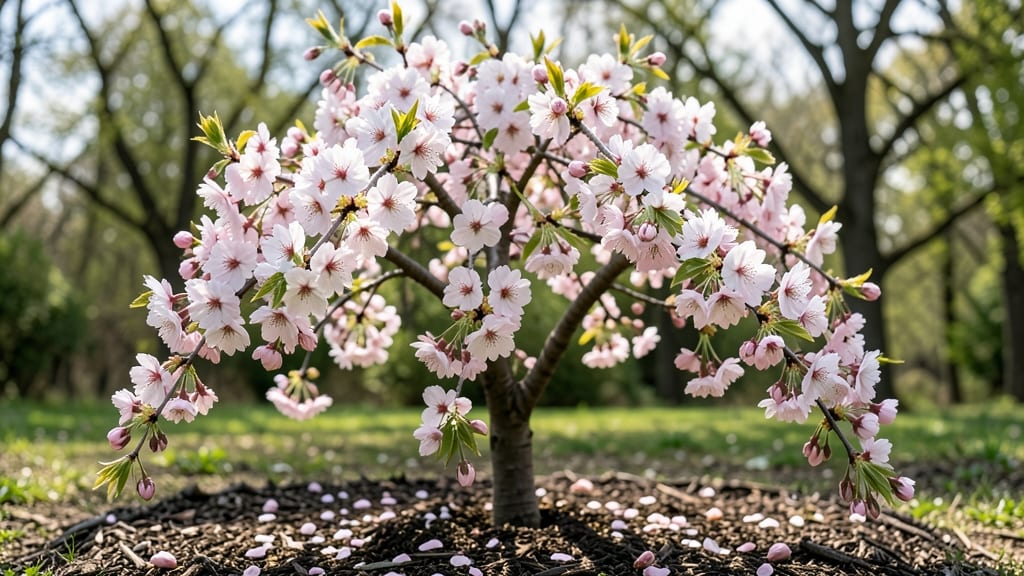
Sour cherry tree blossoms turn spring into a fragrant, edible dream—if you time care just right. 🌸 In Zone 5, those delicate pink blooms appear in late April to early May, but cold snaps can delay them, so winter prep matters.
I’ve learned the hard way that skipping winter mulch or heavy pruning too late can weaken next year’s blossoms.
The secret to abundant blooms? Prune in late winter before buds swell, removing dead wood and thinning crowded branches. A balanced 10-10-10 fertilizer in early spring feeds the tree without overstimulating leafy growth at the expense of flowers.
And watch for cherry leaf spot—those black spots on leaves after bloom can ruin next year’s fruit.
When the blossoms fade, don’t rush to prune again—wait until June or July after the fruit sets. Thin out overcrowded branches to improve airflow, which keeps pests away. The payoff? More blossoms next spring and sweeter sour cherries by late summer.
Works for backyard orchards, urban yards, or even large containers—just match your pruning and feeding to your local frost dates. Here’s how to keep those blossoms coming back stronger every year.
📚 In This Guide
- What you need
- Instructions
- Tips and common mistakes
- Wrapping up and next steps
What you need
- ● Sour cherry tree (Prunus cerasus): Choose a disease-resistant variety (e.g., 'Montmorency' or 'Morello'). Purchase a 1- to 3-gallon container-grown sapling from a reputable nursery.
- ● High-quality potting soil: 50 lbs of well-draining, slightly acidic soil (pH 6.0–6.5). Mix with 20% compost for nutrients.
- ● Organic mulch: 3–4 cubic feet of wood chips or straw to retain moisture and suppress weeds.
- ● Slow-release fertilizer: 10–20 lbs of a balanced 10-10-10 or fruit-tree-specific formula (e.g., Espoma Fruit Tree Fertilizer).
- ● Garden trowel or spade: For digging planting holes (12–18 inches wide/deep).
- ● Pruning shears: Sharp, bypass-style shears (4–6 inch blades) for shaping and maintenance.
- ● Watering can or hose with nozzle: A 2–3 gallon capacity for gentle watering.
- ● Garden gloves: Heavy-duty, waterproof gloves to protect your hands.
- ○ Stake and ties (optional): 1–2 wooden stakes (6–8 ft tall) and soft fabric ties for young trees.
- ○ Spray bottle (optional): For misting blossoms if growing indoors or in arid climates.
- ● Sunlight: A full-sun location (6+ hours/day). Partial shade may reduce blossom quality.
- ● Climate zone: Plant in USDA Zones 4–8. Sour cherries thrive in cold winters but need chilling hours (500–1,000) for optimal blooming.
- ● Space: Ensure 15–20 feet of clearance from structures or other trees.
- ● Pollination: Plant two compatible varieties for fruit production (blossoms are self-pollinating but yield better with a partner!).
How to care for sour cherry tree blossoms
Here’s how to nurture those delicate, fragrant blooms into a fruitful harvest.
🌱 Step 1: Prune for Better Airflow and Light
Start by removing any dead, diseased, or crossing branches with clean, sharp pruning shears. I always cut just outside the branch collar—the swollen area where the branch meets the trunk—to prevent damage. Open up the center of the tree to let sunlight and air circulate freely. This reduces humidity around the blossoms, which prevents fungal diseases like powdery mildew.
Watch for branches rubbing together—they’ll eventually create wounds where pests can enter. Prune these first, then thin out any overly dense growth. You’ll know you’ve done well when you can see light filtering through the canopy and the blossoms aren’t crowded together.
☀️ Step 2: Provide Ideal Conditions for Blooming
Sour cherry trees thrive in full sun—at least 6-8 hours daily. If your tree is in partial shade, the blooms will be sparse and less vibrant. I’ve seen trees in dappled shade produce half the flowers they would in full sun, and the fruit that does form is often smaller.
Keep the soil consistently moist but not soggy during bloom time. Water deeply 1-2 times per week, depending on rainfall, until the top 6 inches of soil feels slightly damp. Mulch around the base with 2-3 inches of organic mulch to retain moisture and regulate soil temperature. Avoid watering the blossoms directly—focus on the root zone to keep petals dry.
💧 Step 3: Protect Blooms from Pests and Weather
Watch for pests like aphids or Japanese beetles, which love to feast on cherry blossoms. I spray a light horticultural oil solution on the undersides of leaves where pests hide. If rain is forecasted, consider covering the tree with a breathable fabric to shield the blossoms from heavy downpours, which can damage petals and reduce pollination.
Real talk: If your tree is young, it might need a little help with pollination. Gently shake the branches on a calm day to encourage bees and other pollinators to move from flower to flower. You’ll see the difference in fruit set within a few weeks.
✂️ Step 4: Thin Fruit for Healthier Growth
Once the blossoms fade and tiny cherries begin to form, thin them to 6-8 inches apart to ensure each fruit gets enough nutrients. I use clean pruning shears to snip off excess fruit, leaving only the largest, healthiest ones. This step is crucial—overcrowded fruit leads to smaller, less flavorful cherries and increases the risk of disease.
Thinning also improves airflow, which helps prevent fungal issues like brown rot. You’ll know you’ve done it right when the remaining cherries are plump and evenly spaced along the branches. Avoid thinning when the fruit is still small—wait until it’s about ½ inch in diameter for the best results.
🌿 Step 5: Fertilize for Strong Post-Bloom Growth
After the blossoms drop, feed the tree with a balanced 10-10-10 fertilizer to support fruit development. I apply it in early summer, following the package instructions for your tree’s size. Avoid high-nitrogen fertilizers now—they encourage leafy growth at the expense of fruit.
Keep an eye out for signs of nutrient deficiency, like yellowing leaves or stunted growth. If you see these, adjust your fertilizer blend or do a soil test to identify what’s missing. A happy tree after bloom means a better harvest next season.
Tips & tricks for perfect sour cherry tree blossoms
A few simple strategies can transform your cherry tree from a struggling underachiever to a fragrant, fruit-filled star.
Timing is Everything: In Step 1, prune during late winter or early spring when the tree is still dormant but before buds begin to swell. This timing ensures you're removing dead wood without accidentally cutting off next year's blossoms. I always schedule my pruning right after the last hard frost in my zone—this gives the tree a full growing season to recover and set new buds.
Sunlight Secret: The 6-8 hours of full sun in Step 2 isn't just about quantity—it's about quality. Position your tree where it gets morning sun and afternoon shade if your climate is particularly hot. I've noticed that trees in southern exposures often produce more abundant blooms because they avoid the intense midday heat that can stress the blossoms. If you're in a shady spot, consider a dwarf variety that can still thrive with less light.
Pest Prevention: For Step 3, I've found that a preventive approach works better than reactive treatment. Start spraying your horticultural oil solution when you first see tiny green aphids or Japanese beetles, not when they've already taken over. I also recommend checking the undersides of leaves regularly—pests love to hide there, and catching them early makes all the difference. A quick wipe with a damp cloth can remove many early-stage infestations before they become a problem.
Thinning Technique: When thinning in Step 4, work systematically from the bottom up. Start with the smallest and least healthy cherries first, then move to the larger ones. I like to leave the cherries that are most exposed to sunlight on the outer branches—they'll develop the best color and flavor. Remember that thinning isn't about quantity but quality, so don't be afraid to be aggressive if your tree is overloaded.
Pro Tips for Sour Cherry Tree Blossom
- A few simple strategies can transform your cherry tree from a struggling underachiever to a fragrant, fruit-filled star.
- Timing is Everything: In Step 1, prune during late winter or early spring when the tree is still dormant but before buds begin to swell.
- Sunlight Secret: The 6-8 hours of full sun in Step 2 isn't just about quantity—it's about quality.
Frequently asked questions
Got questions about those stunning sour cherry tree blossoms? You’re not alone! Here are some of the most common queries—plus practical answers to help you make the most of this seasonal treasure.
When is the best time to enjoy sour cherry blossoms?
Sour cherry tree blossoms typically bloom in late spring (April–May in most U.S. zones), but timing varies by climate. For peak fragrance and aesthetics, admire them at dawn or dusk when temperatures are mild. If you’re harvesting buds for tea or syrup, pick them just as they open—before bees fully pollinate them!
Can I grow a sour cherry tree from a blossom?
Unfortunately, no! Cherry tree blossoms are sterile and won’t produce fruit or grow into a new tree. To propagate, you’ll need to plant seeds (from cherries) or graft branches from an established tree. Pro tip: If you love the blossoms, consider planting a self-pollinating variety like ‘Montmorency’ for future fruit too!
Are sour cherry blossoms safe to eat?
While the petals and buds are edible (used in teas, syrups, or garnishes), avoid the leaves and stems—they can be bitter or toxic. Always harvest from pesticide-free trees in clean areas. For a sweet treat, try infusing blossoms in simple syrup or steeping them in hot water for a floral tea.
How do I keep pests away from my sour cherry blossoms?
Blossoms attract bees (good!) but also pests like aphids or Japanese beetles. Preventative tips:
- Spray trees with neem oil before blooming.
- Encourage ladybugs (natural predators) with nearby plants like dill.
- Avoid overwatering—wet blossoms invite fungal issues.
What’s the difference between sour cherry blossoms and sweet cherry blossoms?
| Feature | Sour Cherry Blossoms | Sweet Cherry Blossoms |
|---|---|---|
| Fragrance | Mild, slightly tart | Strong, sweet, and heady |
| Fruit Use | Preserves, pies, sauces | Fresh eating, snacks |
| Tree Hardiness | More cold-resistant (zones 3–7) | Sensitive to frost (zones 5–8) |
Both are stunning, but sour cherries thrive in cooler climates and offer a unique tangy twist!
Wrapping up and next steps
The sour cherry tree blossom isn’t just a fleeting spring spectacle—it’s a symbol of nature’s generosity, blending beauty with future harvests. Whether you’re captivated by its fragrance, eager to grow your own tree, or simply inspired by its resilience, this blossom reminds us to savor life’s small, sweet moments. 🌸
Your next step? Plant a seed (literally or metaphorically)—visit a local nursery, sketch the blossoms, or share their story with fellow gardeners. Spring’s magic is in the doing!