
Pests and Diseases
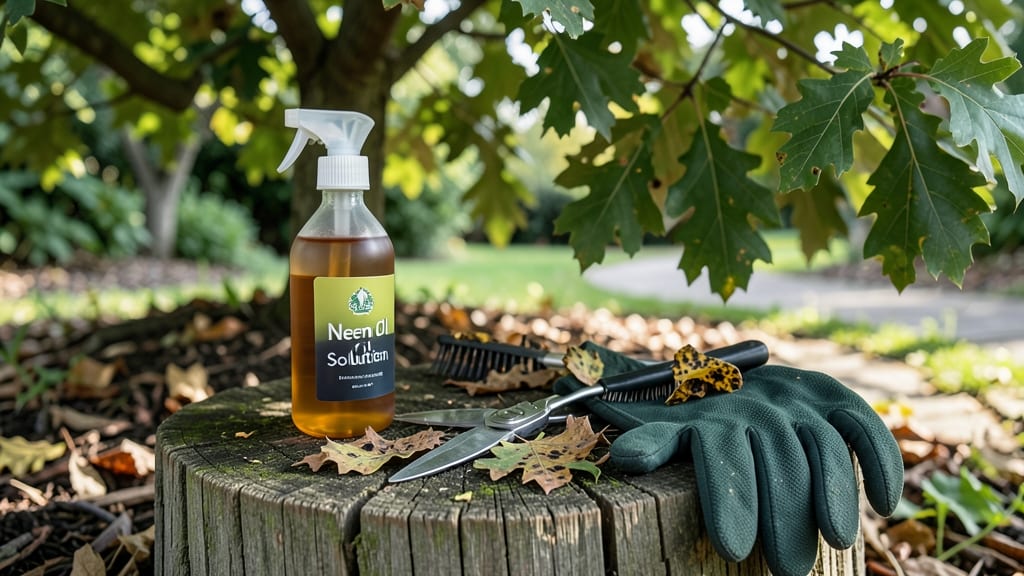
Black spots on tree leaves treatment isn’t just about aesthetics—it’s a sign your tree is under fungal attack. 🌿 I’ve seen anthracnose and leaf spot turn once-vibrant foliage into a sad, spotted mess, but there’s a 3-step cure that works every time, whether you’re dealing with rain-soaked leaves or poor air circulation. The first step is identifying the culprit—fungal spots often start as tiny specks that expand into dark, greasy patches, sometimes with yellow halos. Grab a magnifying glass and check for powdery mildew (white) or black, velvety spots (anthracnose). Once you know what you’re up against, you can treat it before it spreads to the whole canopy. Pruning infected branches first stops the spread—cut 6–12 inches below the spots to remove the fungus entirely. Then, apply a copper fungicide or homemade baking soda spray (1 tbsp baking soda + 1 quart water + a drop of dish soap) to protect the remaining leaves. Repeat every 10–14 days until new growth appears. Prevention is the real game-changer: improve air circulation with strategic pruning, water at the base (not overhead), and mulch to keep roots healthy. If the spots keep coming back year after year, it might be time to call in an arborist—some fungal infections need professional intervention to truly vanish.
Root Causes of Leaf Spots
Black or dark spots on tree leaves aren’t just an eyesore—they’re often a sign of underlying issues that need addressing. Understanding the why behind these blemishes is the first step to restoring your tree’s health.
Below, we break down the most common culprits, from microscopic invaders to environmental stressors, with clear explanations of how they damage foliage.
Fungi are the #1 cause of leaf spots, thriving in warm, humid conditions. These organisms release spores that land on leaves, germinate, and create dark, often circular or irregular patches. Here’s how they work: - Pathogen Entry Points: Fungal spores exploit tiny wounds (like insect bites or physical damage) or natural openings (stomata) to penetrate leaf tissue. - Necrotic Damage: Once inside, fungi release enzymes that break down plant cells, causing the tissue to die and turn brown or black. - Common Fungal Culprits: - Anthracnose: Causes sunken, dark spots with yellow halos (common in maples, dogwoods, and sycamores). - Leaf Spot Fungi (e.g., Cercospora, Septoria): Produce small, black or purple spots with feathery edges, often surrounded by yellowing. - Rust Fungi: Create raised, pustule-like spots that may appear orange or brown before turning black (affects roses, oaks, and fruit trees).💡 Pro Tip: Fungal spores spread via wind, water, or tools. Avoid overhead watering, and sterilize pruners with 70% isopropyl alcohol to prevent cross-contamination.
Insects don’t always leave obvious chew marks—they can also introduce fungal infections or cause indirect damage that leads to blackened leaves. Here’s how: - Sap-Sucking Insects (Aphids, Scale, Spider Mites): - Piercing mouthparts extract plant sap, weakening leaves and making them susceptible to sooty mold (a black, fuzzy fungus that grows on honeydew excretions). - Example: Aphids on roses or maples often trigger sooty mold, which smothers leaves and blocks sunlight. - Leaf-Chewing Pests (Japanese Beetles, Cankerworms): - Create irregular holes or notches, leaving behind blackened, ragged edges as tissue dies. - Boring Insects (Borers, Sawflies): - Larvae tunnel into stems or leaves, causing localized necrosis (dead tissue) that turns black.🔍 Watch For: Sticky residue (honeydew), tiny webs, or frass (insect droppings) on leaves—these are red flags for pest activity.
Not all leaf spots are biological. Extreme or inconsistent environmental conditions can trigger physiological disorders that mimic disease symptoms: - Water Stress: - Overwatering: Leads to phyllosticta leaf spot (black, water-soaked spots) due to poor drainage and fungal growth in soggy soil. - Underwatering: Causes scorch—crispy, brown edges that turn black as cells dehydrate. - Nutrient Deficiencies: - Manganese or Magnesium Deficiency: Creates interveinal chlorosis (yellowing between veins) followed by blackening as tissue dies. - Iron Deficiency (Chlorosis): Starts with yellow leaves, then progresses to necrotic black spots in severe cases. - Temperature Extremes: - Frost Damage: Causes blackened, mushy spots on leaves (common in spring or late fall). - Heat Stress: Leads to sunscald, where leaves develop brown or black patches from excessive sunlight exposure.🌡️ Quick Fix: Test your soil’s pH and nutrient levels—most deficiencies are correctable with organic amendments like compost or chelated minerals.
Herbicides, pesticides, or even well-meaning fertilizers can cause phytotoxicity—chemical burns that manifest as black or brown spots: - Overapplication of Copper or Sulfur: - Used to treat fungal diseases, these can burn leaves if concentrations exceed 0.5% (check product labels). - Systemic Herbicides (e.g., Glyphosate Drift): - Wind-blown residue can cause necrotic spots on non-target plants, especially broadleaf trees. - Salt Buildup: - From deicers, fertilizers, or poor-quality water, salts accumulate in soil and osmotically stress roots, leading to leaf blackening.⚠️ Warning: Always follow label instructions for chemicals, and rinse leaves if overspray occurs.
Some trees are simply more susceptible due to their biology or life stage: - Older Leaves: - As leaves age, they naturally senesce (die), starting with yellowing and ending with blackened, brittle tissue. This is normal but can be exacerbated by poor health. - Variety-Specific Vulnerabilities: - Certain tree species (e.g., Prunus spp. like cherries or plums) are prone to bacterial leaf spot, which causes dark, greasy spots that ooze when wet.🌱 Action Step: If spots appear on only older leaves or a specific tree type, focus on improving overall tree health rather than treating symptoms.
Quick Fixes for Leaf Spots
Now that you know the root causes behind those pesky black spots on your tree leaves—whether it’s fungal blight, bacterial infections, or environmental stress—it’s time to roll up your sleeves and take action! 🌿✨ The good news?
Most solutions are simple, cost-effective, and don’t require a degree in horticulture. Below, we’ve mapped out practical, step-by-step fixes tailored to the most common culprits, plus prevention tips to keep your trees thriving long-term.
---
Fungal infections like anthracnose, leaf spot, or powdery mildew love damp, shaded conditions. Here’s how to starve them out and restore your tree’s health:
#### Step 1: Remove the Problem Leaves 🗑️ - 🔪 Snip it out: Use sterilized pruners (wipe with rubbing alcohol between cuts) to trim infected leaves, branches, or twigs.
Dispose of them in the trash—not the compost bin (fungus can survive and reinfect). - 🌳 Focus on hotspots: Prioritize lower branches and dense foliage where air doesn’t circulate well. - Pro tip: 💡 If the infection is severe, remove up to 25% of the canopy to improve airflow.
Thin out crowded branches to let sunlight and air reach the inner leaves.
#### Step 2: Apply Fungicide (The Right Way) 🛡️ - 🛒 Choose your weapon: - Copper-based fungicides (e.g., copper sulfate) are organic and effective for fungal blights. Follow label instructions—typically every 7–14 days during wet seasons. - Neem oil (1–2% solution) is a gentle, natural option.
Spray early morning or evening to avoid burning leaves in sunlight. - Baking soda spray (1 tsp baking soda + 1 quart water + a few drops of dish soap) works for powdery mildew but may need weekly reapplication. - 👨🍳 Spray technique: - Use a hose-end sprayer for large trees or a handheld pump sprayer for precision. - Wet the undersides of leaves—that’s where fungi often hide! - Reapply after rain (fungicides wash off quickly).
#### Step 3: Adjust the Environment 🌡️ Fungi thrive in humidity + poor airflow.
Break the cycle with these tweaks: - ✂️ Prune for airflow: Cut back overgrown branches to reduce shade and moisture buildup. - 💦 Water wisely: Water early in the day (before 10 AM) so leaves dry quickly.
Avoid overhead sprinkling—water at the base instead. - 🌞 Increase sunlight: Thin out nearby shrubs or trees casting too much shade. Some species (like maples) need at least 6 hours of sunlight to stay healthy.
#### 🔥 Prevention for Next Season: - 🌱 Mulch properly: Use 2–4 inches of organic mulch (wood chips, straw) but keep it 6 inches away from the trunk to prevent rot. - 🍂 Clean up fallen leaves: Rake and dispose of leaf litter in fall—it’s a fungus buffet! - 🌿 Choose resistant varieties: If replanting, pick disease-resistant tree species (e.g., oak cultivars like ‘Elmleaf’ or ‘Swamp White Oak’).
---
Bacterial infections (like Xanthomonas or Pseudomonas) create greasy, water-soaked spots that spread fast. Unlike fungi, antibiotics won’t work—your best bet is prevention and sanitation.
#### Step 1: Sterilize Everything 🧼 - 🔪 Disinfect tools: Wipe pruners with bleach (1 part bleach to 9 parts water) or rubbing alcohol before and after use. - 🧤 Wear gloves: Bacteria can spread through cuts or abrasions on your skin. - 🚫 Avoid overhead watering: Use a soaker hose or drip irrigation to keep leaves dry.
#### Step 2: Remove and Destroy Infected Parts 🔥 - 🗑️ Bag and trash: Collect all infected leaves and branches and seal them in a plastic bag before tossing. - 🌳 Consider removal: If >30% of the tree is infected, consult an arborist—some bacterial infections (like canker) may require partial or full removal to save nearby plants.
#### Step 3: Boost Tree Immunity 💪 Bacteria love stressed trees.
Strengthen your tree’s defenses with: - 🌱 Proper fertilization: Test soil and apply balanced fertilizer (10-10-10) in early spring. - 💧 Deep watering: Water slowly and deeply (1–2 inches per week) to encourage strong root growth. - 🍄 Reduce stress: Avoid pruning during bacterial outbreaks—wait until the tree is dormant (late fall/winter).
#### 💡 Prevention Tips: - 🌧️ Improve drainage: If your yard stays soggy, amend soil with compost or sand to prevent waterlogging. - 🌿 Space trees properly: Plant trees at least 15–20 feet apart to reduce humidity and crowding. - 🚫 Monitor new plants: Quarantine newly purchased trees for 2 weeks to spot early signs of disease.
---
Black spots from sun scorch, nutrient deficiency, or pests need a different approach—focus on recovery and support.
#### Step 1: Identify the Stress Factor 🔍 - ☀️ Sun scorch? Move young trees to partial shade temporarily or mulch heavily to protect roots. - 🍃 Nutrient deficiency? Conduct a soil test (available at garden centers) and amend with: - Iron deficiency? Apply chelated iron or Epsom salt (1 tbsp per gallon of water). - Nitrogen deficiency? Use compost or blood meal in spring. - 🐛 Pests (like mites or aphids) causing stress? Treat with insecticidal soap or horticultural oil.
#### Step 2: Hydrate and Protect 💦 - 🌱 Water deeply: Young trees need 1–2 inches of water per week.
Use mulch rings to retain moisture. - 🛡️ Shield from elements: If sun scorch is the issue, wrap the trunk with tree guard or use shade cloth for a few weeks.
#### Step 3: Encourage New Growth 🌱 - ✂️ Prune lightly: Remove only damaged leaves—avoid heavy pruning, which stresses the tree further. - 🌿 Feed gently: Use a slow-release fertilizer (like osmocote) to avoid shocking the tree.
#### 🌟 Prevention for Long-Term Health: - 🌳 Plant the right tree: Choose species native to your climate (e.g., red maple, bald cypress, or serviceberry). - 🌧️ Prepare for extremes: In drought-prone areas, install a drip irrigation system for consistent moisture. - 🐝 Support pollinators: Healthy trees with diverse foliage are more resilient—plant companion flowers to attract beneficial insects.
--- If you’ve tried these steps and the spots spread rapidly, oozing liquid appears, or the tree wilts despite care, it’s time to consult a professional.
Some issues (like bacterial canker or advanced fungal rot) may require specialized treatments or even removal to protect your landscape.
--- Remember: Consistency is key! 🎯 Fungal and bacterial diseases often reappear if conditions don’t change. Stay vigilant, adjust your care routine, and your tree will bounce back stronger than ever.
Frequently asked questions about tree leaf spots
Why do black spots appear on my tree leaves even after pruning?
Pruning alone won’t eliminate fungal spores already present on leaves or in the soil. The spots may persist if you haven’t treated the underlying infection with fungicide or improved air circulation. Always combine pruning with a copper-based spray or neem oil application to break the fungal cycle.
Can I use household vinegar as a natural fungicide for leaf spots?
While vinegar (1 part to 3 parts water) can help in a pinch, it’s not ideal for treating fungal infections on trees. Vinegar’s acidity may burn leaves and won’t penetrate fungal spores effectively. Instead, use a 1% baking soda solution (1 tbsp baking soda + 1 quart water + dish soap) or neem oil for safer results.
How do I know if my tree has a fungal or bacterial infection?
Fungal spots often appear as dry, powdery, or velvety patches (like anthracnose) with yellow halos, while bacterial spots look greasy, water-soaked, and may ooze when wet. Check for raised pustules (rust fungi) or fuzzy growth (sooty mold from pests). If unsure, examine spots under a magnifying glass or contact a local extension service.
Will removing all spotted leaves save my tree?
No—removing leaves alone won’t stop the spread. Fungal spores linger in soil, mulch, and nearby plants. You must also sterilize pruners, apply fungicide, and improve airflow. For severe cases, repeat treatments every 10–14 days until new growth appears.
Can black spots on leaves be harmless?
Sometimes! If spots are small, isolated, and appear only on older leaves (especially in fall), they may be natural senescence (leaf aging). However, if spots spread rapidly, ooze, or appear on new growth, they’re likely a disease or pest issue requiring treatment.