
Pruning
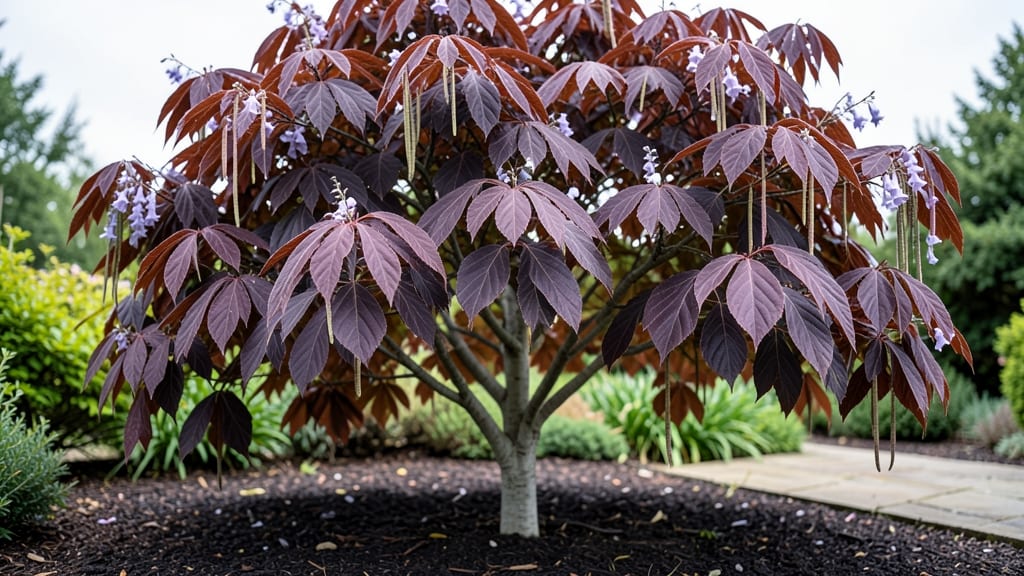
Growing a Purple Empress Tree Paulownia feels like cheating—it grows 10 feet in a single season while looking like a purple velvet cloud. 🌿 I’ve watched mine transform from a sapling to a towering shade provider in just three years, and the secret isn’t magic—it’s knowing when and how to prune.
This tree thrives in full sun and well-draining soil, but its real superpower is its adaptability. Even in urban areas, it handles heat and drought better than most shade trees. The trick is pruning aggressively in late winter to encourage that sky-high growth while keeping it manageable.
By summer, you’ll have a lush canopy of deep purple leaves that turn golden in fall, plus a sturdy trunk ready for climbing or birdhouses. The best part? It’s disease-resistant and rarely bothered by pests, making it a low-maintenance showstopper.
For beginners, start with a young tree and prune back one-third of the growth in its first year. That’s all it takes to unlock its full potential—no green thumb required.
📚 In This Guide
- What you need
- Instructions
- Tips and common mistakes
- Wrapping up and next steps
What you need
- ● Pruning shears (bypass or anvil type) – Choose sharp, high-quality shears (e.g., Felco F-2 or Corona) to avoid tearing branches. Size: 7-9 inches for medium branches.
- ● Loppers – For thicker branches (1-2 inches in diameter). Look for ratcheting or bypass-style loppers (e.g., Fiskars X27) for precision.
- ● Pruning saw (if needed) – For branches over 2 inches thick. A curved-tooth saw (e.g., Bahco) prevents splintering.
- ● Gloves (cut-resistant) – Protect your hands from thorns and rough bark (e.g., Mechanix or heavy-duty gardening gloves).
- ● Disinfectant (70% isopropyl alcohol or bleach solution) – Clean tools between cuts to prevent disease spread (1 part bleach : 9 parts water).
- ○ Pruning sealant (optional but recommended) – Helps larger wounds heal faster (e.g., Tanglefoot Tree Wound Pruning Seal).
- ● Ladder or extension pole – For reaching high branches safely. A lightweight aluminum ladder (e.g., Little Giant) works well.
- ● Heavy-duty trash bags or bucket – Collect pruned branches for cleanup (5-10 gallon capacity).
- ● Safety gear – Safety glasses and ear protection (if using a chainsaw for large branches).
- ● Notebook & pen – Sketch a pruning plan or mark branches to remove.
- ● Chainsaw (for very large branches) – Only if you’re experienced! Use a pole saw for hard-to-reach areas.
- ● Tree climbing gear – Harness and spikes (if pruning a mature, tall Purple Empress Tree).
- ● Hose or spray bottle – Dampen tools or branches to reduce dust and improve visibility.
- ● Pruning rope or zip ties – Secure branches temporarily if making large cuts.
- ● Camera or phone – Document your tree’s structure before and after pruning for reference.
Instructions for pruning a Purple Empress tree Paulownia
Here’s how to keep your Purple Empress Tree growing strong and fast—without sacrificing its stunning height.
✂️ Step 1: Time Your Pruning for Maximum Growth
Prune your Purple Empress Tree in late winter or early spring, just as new growth begins. This timing ensures you remove old wood while stimulating fresh, vigorous shoots. I avoid pruning in fall because the tree needs to harden off for winter, and cutting too late can leave it vulnerable to cold damage.
Watch for the first signs of bud swell—those plump, fuzzy buds signal it’s time to act. If you miss this window, you can still prune in early summer, but growth won’t be as explosive. The key is to prune before the tree puts too much energy into leaves, so it focuses on height instead.
✂️ Step 2: Remove Dead or Weak Branches First
Start by cutting out any dead, diseased, or crossing branches—these are the first to slow down your tree’s growth. Use clean, sharp pruners to make 45-degree cuts just above a healthy bud or branch collar. I always sanitize my tools with rubbing alcohol between cuts to prevent spreading disease.
Look for branches that rub against each other or grow inward—they’ll compete for nutrients and weaken the tree’s structure. Remove these aggressively, even if they’re small. A healthy Purple Empress Tree should have an open, airy canopy, letting sunlight reach all branches for even growth.
✂️ Step 3: Thin Out to Encourage Sky-High Growth
Next, thin out 20-30% of the tree’s branches to redirect energy upward. Focus on removing branches that grow downward or horizontally—they’ll drain energy that could fuel vertical growth. I like to step back and visualize the tree as a single, tall column, then prune anything that disrupts that vision.
Cut branches back to their origin point or a strong lateral branch. Avoid leaving stubs—this invites decay and weakens the tree. If you’re unsure where to cut, follow the branch’s natural angle back to the trunk or a larger branch. The goal is to create a strong, central leader that dominates the tree’s shape.
✂️ Step 4: Shape for Height and Structure
Now, shape the tree by selectively pruning to encourage height. Leave the top 3-4 strongest branches and remove any competing leaders—these are the branches that grow straight up and could split the trunk later. Cut them back to a strong lateral branch or the trunk itself.
For a more dramatic look, you can also top the tree by cutting the main stem just above a strong set of buds. This stimulates bushier growth at the top, but be cautious—over-pruning can stress the tree. I usually limit myself to one major height adjustment per year to keep growth fast and healthy.
🌱 Step 5: Post-Pruning Care for Fast Recovery
After pruning, water the tree deeply to help it recover. The roots will need extra moisture to support new growth, especially if you’ve made large cuts. I also apply a balanced fertilizer (like 10-10-10) in early spring to give the tree a nutrient boost for the growing season ahead.
Monitor the tree closely for the first few weeks—new shoots should appear within 2-4 weeks if conditions are right. If growth stalls, check for pests, disease, or environmental stress (like too much shade or drought). A well-pruned Purple Empress Tree can grow 10-15 feet in a single season with the right care!
Tips & tricks for pruning a Purple Empress tree Paulownia
Want to turn your pruning session into a growth turbocharger? These insider tricks will help you maximize height while keeping your tree healthy and happy.
Timing is Everything: The late winter/early spring window isn't just about avoiding winter stress—it's when your tree's energy reserves are at their peak. I've seen trees grow an astonishing 15 feet in a season when pruned at this exact time. Watch for those plump, fuzzy buds to swell; that's your green light. Missing this window? Early summer is your backup, but expect slower growth since the tree will prioritize leaf production over height.
Tool Prep Prevents Problems: Never underestimate the power of clean tools. I learned this the hard way after a fungal infection spread through my tree from contaminated pruners. Always sanitize your tools with rubbing alcohol between cuts, especially when dealing with diseased branches. And here's a pro move: Use sharp pruners to make clean 45-degree cuts—this minimizes damage to the branch collar and speeds up healing. Dull blades crush the bark, creating entry points for pests and diseases.
Visualize the Vertical: Step back and really look at your tree's structure before making cuts. I like to imagine an invisible vertical line running through the center—anything that deviates from this line is fair game for removal. Focus on eliminating downward-growing branches and competing leaders (those upward-growing branches that could split the trunk). Remember, you're not just pruning—you're sculpting a sky-high silhouette. Aim to remove 20-30% of the branches total, cutting them back to their origin points rather than leaving stubs.
Growth Monitoring Matters: After pruning, keep an eye out for new shoots within 2-4 weeks. If you don't see fresh growth appearing, check for environmental stressors like poor drainage, compacted soil, or insufficient sunlight. I've found that a deep watering after pruning (especially in dry climates) can make all the difference in recovery time. And don't forget—your tree will need that balanced fertilizer (like 10-10-10) to fuel its rapid growth spurt.
Pro Tips for Purple Empress Tree Paulownia
- Want to turn your pruning session into a growth turbocharger?
- Timing is Everything: The late winter/early spring window isn't just about avoiding winter stress—it's when your tree's energy reserves are at their peak.
- Tool Prep Prevents Problems: Never underestimate the power of clean tools.
Frequently asked questions
How fast does the Purple Empress Tree grow, and when should I prune it?
The Purple Empress Tree is a growth powerhouse, shooting up 3–5 feet per year under ideal conditions! Prune it in late winter or early spring (before new growth starts) to shape it and encourage bushier foliage. Avoid heavy pruning in fall—it can stimulate tender new growth vulnerable to frost.
Can I prune the Purple Empress Tree too much? What are the signs?
Over-pruning can stress this fast grower. Watch for yellowing leaves, stunted growth, or excessive leaf drop—these are red flags. Aim to remove no more than 20–30% of the canopy per year. If you’ve already pruned aggressively, focus on light maintenance pruning for a season to recover.
Is the Purple Empress Tree suitable for small yards? How do I control its size?
While it’s stunning, this tree can reach 50+ feet tall—not ideal for tight spaces! To keep it manageable, prune it annually and consider dwarf varieties like Paulownia ‘Nana’. For small yards, plant it near property lines or use container growing (with deep pots) for patio-style pruning.
What’s the best way to revive a Purple Empress Tree that’s struggling after pruning?
If your tree looks leggy or weak post-prune, it needs a growth boost! Fertilize with a balanced, slow-release fertilizer (10-10-10) in spring, ensure it gets full sun (6+ hours/day), and water deeply 1–2 times per week during dry spells. Mulch the base to retain moisture.
Are there alternatives to the Purple Empress Tree with similar fast growth and pruning ease?
If you love the Purple Empress but want options, try:
- Mimosa Tree (Albizia julibrissin): Fast-growing, drought-tolerant, and great for pruning.
- Bradford Pear (Pyrus calleryana): Compact, flowering, and easier to shape.
- Lombardy Poplar (Populus nigra ‘Italica’): Narrow, vertical growth—ideal for hedges.
Each has unique pruning needs, so research before choosing!
Wrapping up and next steps
The Purple Empress Tree Paulownia is a gardener’s dream—its rapid growth and stunning foliage make it a standout choice for both aesthetics and practicality.
By mastering the art of pruning, you’ll unlock its full potential, ensuring a lush, healthy tree that thrives year after year. Ready to transform your landscape? Grab your tools, embrace the process, and watch your Paulownia reach new heights—literally! 🌿✨
Next steps:
- Start with light pruning in early spring to shape your tree.
- Monitor growth and adjust techniques as needed.
- Share your progress with fellow gardeners—inspiration spreads!