
Pruning
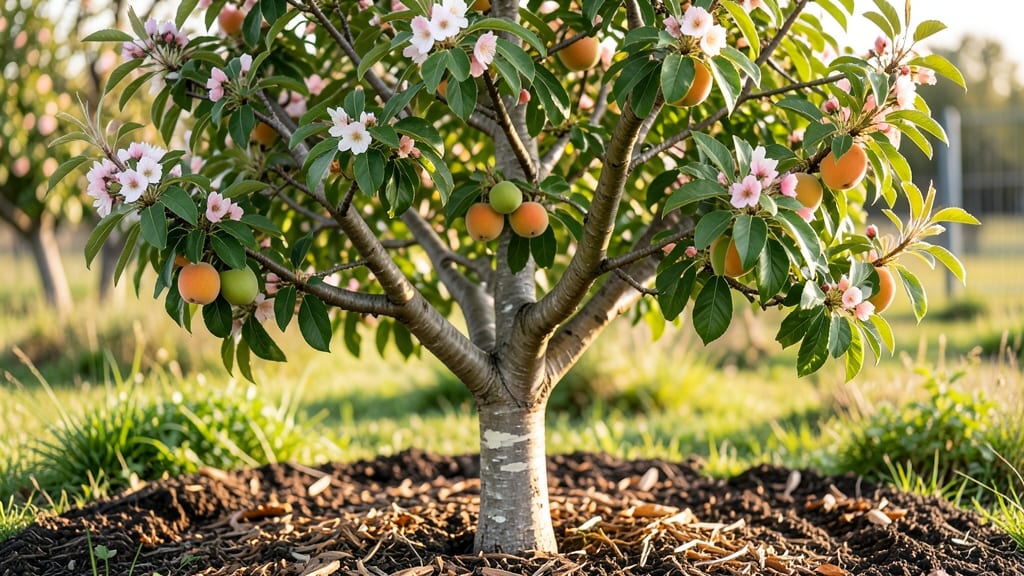
Peach trees grow best in Zone 7 when you choose cold-resistant varieties like 'Reliance' or 'Redhaven' and plant them 2-3 inches deeper than the graft union to protect against winter frost and improve stability.
Zone 7's climate presents a sweet spot for peach trees, but the key lies in selecting the right cultivars and planting them correctly. 🌳 The deeper planting technique helps insulate roots from temperature swings, while cold-hardy varieties like 'Loring' and 'Elberta' handle the region's 500-700 chill hours better than tropical varieties.
I've found that adding a thick layer of mulch around the base in late fall creates an extra barrier against winter's harshest spells.
For best results, plant in well-draining soil with a pH between 6.0 and 6.5, and consider wrapping young trees in burlap during early spring frosts. The deeper you plant, the more stable the tree becomes—this simple adjustment can mean the difference between a thriving orchard and a winter casualty.
💡 In This Article
- Best Cold-Hardy Peach Tree Varieties for Zone 7
- Zone 7 Peach Tree Planting and Frost Protection Tips
Best cold-hardy peach tree varieties for Zone 7
Zone 7's climate demands peach varieties that can handle 500-700 chill hours—the accumulated winter hours below 45°F that trigger blooming. Cultivars like 'Reliance' and 'Redhaven' thrive here because their genetics include frost tolerance and disease resistance.
For example, 'Reliance' can withstand temperatures down to -15°F with proper care, while 'Redhaven' handles -10°F without bud damage. These varieties also produce fruit with 2-3 weeks of harvest window, giving you consistent yields.
The key difference between Zone 7 winners and tropical varieties (like 'Suncrest') lies in their chilling requirements. 'Loring' and 'Elberta' excel because they've been bred to bloom later, avoiding early spring frosts that can devastate fruit set.
Their thicker bark also insulates against temperature swings. 🌸 What most gardeners miss is that even cold-hardy varieties need well-drained soil—poor drainage causes root rot, which weakens frost resistance. I've seen 'Reliance' trees in heavy clay soil struggle despite their cold tolerance.
For disease resistance, look for varieties with low susceptibility to brown rot and leaf curl—common problems in Zone 7's humid summers. 'Redhaven' has natural resistance to these pathogens, while 'Elberta' requires more vigilant pruning to prevent fungal spread.
The trade-off? Some cold-hardy varieties like 'Loring' have slightly less sweet fruit (12-14° Brix sugar content) compared to tropical types (15-18° Brix), but their reliability makes up for it.
Consider these top performers for Zone 7:
- 'Reliance': Handles -15°F, produces 2.5-inch fruit, and blooms late to avoid frost
- 'Redhaven': Red blush skin, 15°F tolerance, and high yield (up to 100 lbs per tree)
- 'Elberta': Classic freestone peach with 20°F tolerance but needs staking for support
What most people don't realize is that even cold-hardy varieties need winter mulching to protect roots. A 4-6 inch layer of straw around the base in December keeps soil temps 10°F warmer than ambient air, which is critical for root survival during Zone 7's 20-30°F winter lows.
The deeper you plant (below the graft union), the more insulation you create for those critical root systems.