
Trees
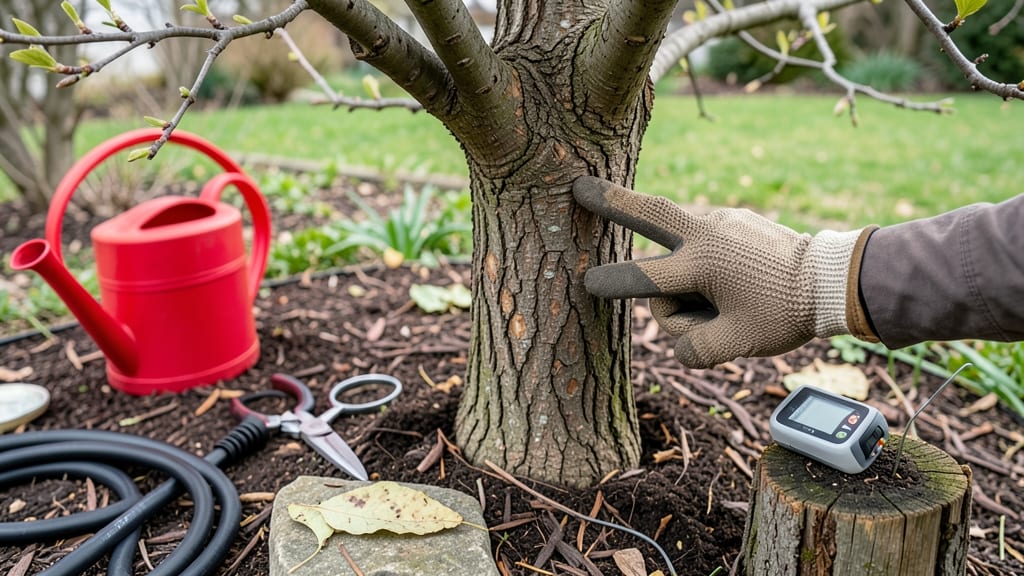
A peach tree that lost all its leaves might be fighting root rot, but there's still hope. 🌱 I've seen this happen after heavy rains or overzealous watering, and the good news is that with the right approach, your tree can bounce back stronger than ever.
The first step is diagnosing the problem—root rot thrives in soggy soil, so check for mushrooms at the base or a foul smell when you dig a few inches down. Other culprits like bacterial leaf spot or nutrient deficiencies can mimic this, but root rot is the most urgent fix.
You'll start by improving drainage (raised beds or sand amendments work wonders) and pruning back any dead branches. Within a few weeks, you'll notice new shoots pushing through the bark, and with consistent care, your tree can recover fully.
This method works for backyard peach trees, container-grown specimens, or even newly planted trees that didn't establish properly. Let's get your tree back to producing those sweet, juicy peaches you love.
Root Causes Behind Sudden Leaf Loss
When your peach tree sheds its leaves overnight, it’s often a distress signal from the roots—or something even more sinister. Understanding the why behind this defoliation is the first step to saving your tree.
Below, we break down the most common culprits, backed by science, so you can diagnose the issue like a pro.
Peach trees thrive in well-drained soil, but when roots sit in soggy conditions for too long, root rot sets in—fast. This fungal or bacterial infection (often caused by Phytophthora or Fusarium) clogs root cells, cutting off water and nutrient flow. Without moisture and nutrients, leaves yellow, wilt, and drop.
How to spot it:
- Mushy, dark brown roots when dug up
- A foul, sour smell at the base
- Leaves turning yellow before falling (a classic "nutrient starvation" look)
Why it’s deadly: Roots can’t absorb oxygen in waterlogged soil, leading to suffocation. Within weeks, the entire tree weakens.
Ironically, too little water can trigger leaf loss just as quickly as too much. Peach trees are deep-rooted and need consistent moisture—especially in hot, dry spells. When soil dries out, roots shrink, and the tree abscises (drops) leaves to conserve water.
How to spot it:
- Crispy, brown leaf edges (unlike the soft yellow of overwatering)
- Soil pulling away from the pot (if potted) or cracking in the ground
- Wilting that doesn’t recover after watering
Why it’s sneaky: Trees often show drought stress after damage is done. By the time leaves fall, roots may already be compromised.
Peach trees are tender in cold snaps, especially young ones or those in USDA Zones 5-7. A hard freeze (<20°F) can rupture cell walls in leaves and bark, causing them to blacken and drop. Winter burn (desiccation from dry winter winds) also stresses trees, leading to premature defoliation.
How to spot it:
- Brown, papery leaves that crumble easily
- Cracked or peeling bark on trunks/branches
- Leaf loss starting at the tips of branches (classic winter burn pattern)
Why it’s seasonal: Trees often recover in spring, but repeated damage weakens them long-term.
Tiny invaders like aphids or peach tree borers can strip a tree of its vitality. Aphids suck sap, causing leaves to curl and drop, while borers tunnel into the trunk, disrupting nutrient transport. Spider mites, thriving in dry heat, create stippled, yellowing leaves that eventually fall.
How to spot it:
- Aphids: Sticky residue (honeydew) on leaves/bark
- Borers: Sawdust-like frass near the trunk or oozing sap
- Spider mites: Fine webbing on undersides of leaves
Why it’s urgent: Aphids spread viruses, and borers can kill a tree in months if untreated.
Peach trees are heavy feeders, and poor soil leads to leaf loss. Nitrogen deficiency causes pale, yellow leaves (chlorosis), while potassium deficiency leads to weak, brittle leaves that drop easily. Over time, this mimics drought stress or disease.
How to spot it:
- Nitrogen: Yellowing between leaf veins (older leaves first)
- Potassium: Brown, dead patches on leaf edges ("scorch")
- Magnesium (less common): Yellowing between veins but starting on older leaves
Why it’s fixable: A soil test reveals gaps—often corrected with organic matter or balanced fertilizer.
Peach trees hate constant wind, which dehydrates leaves (transpiration). Air pollution (ozone, sulfur dioxide) also causes stippling and premature leaf drop. Even herbicide drift (like glyphosate) can kill roots, leading to sudden defoliation.
How to spot it:
- Leaves with tiny brown spots (pollution)
- One-sided leaf loss (wind damage)
- Yellowing near the base of the tree (herbicide root kill)
Why it’s overlooked: Symptoms mimic other issues—check for nearby construction, traffic, or farming.
Quick Fixes for Bare Peach Tree
If your peach tree has lost all its leaves, don’t panic—there are practical ways to revive it! The first step is identifying the root cause (which we covered in the previous section), but here’s how to tackle the most common issues with clear, actionable solutions.
If your tree’s bare branches and mushy roots signal root rot, act fast to save it.
🍳 Step 1: Improve Soil Drainage
Root rot thrives in soggy soil. Dig around the base of the tree (6–12 inches deep) to check for waterlogged conditions.
If the soil feels compacted or stays wet for days after rain: - Add organic matter: Mix in compost or aged manure to loosen the soil and improve aeration. - Raise the root zone: If your tree sits in a low spot, mound gravel or sand around the base to create a slight slope for water runoff. - Install drainage: For container-grown peach trees, ensure pots have drainage holes and elevate them slightly.
👨🍳 Step 2: Prune Damaged Roots (If Severe)
If roots are black, mushy, or crumbling:
- Sterilize tools with rubbing alcohol to prevent spreading fungus.
- Trim away rotted roots with clean pruners, cutting back to firm, white tissue.
- Dust cuts with cinnamon or copper fungicide to inhibit regrowth of pathogens.
🥘 Step 3: Adjust Watering Habits
- Water deeply but infrequently: Peach trees prefer 1–1.5 inches of water per week (including rain).
Avoid shallow, frequent watering. - Water at the base only: Never wet the foliage (if any remain) to reduce fungal spores. - Use a soaker hose to deliver moisture directly to the roots without oversaturating the soil.
⏰ Step 4: Apply Fungicide (If Needed)
For persistent root rot, use a copper-based fungicide or hydrogen peroxide (3%) diluted in water (1 part peroxide to 10 parts water). Spray the soil surface and roots, then water lightly to activate.
If your tree lost leaves due to heat stress, cold damage, or poor sunlight, these adjustments will help it recover.
💡 Step 1: Optimize Sunlight Exposure
Peach trees need 6–8 hours of full sun daily.
If your tree is in shade: - Prune nearby trees/shrubs blocking sunlight. - Relocate young trees to a sunnier spot if possible (transplant in early spring). - Use reflective mulch (like white gravel) around the base to bounce light onto the trunk.
🎯 Step 2: Protect from Temperature Extremes
- Cold damage? Wait until spring to prune dead branches—cut back to healthy growth just above a bud.
- Heat stress? Provide light shade (e.g., a 50% shade cloth) during extreme heatwaves, then remove it once temps drop.
- Windburn? Wrap the trunk in burlap during winter to prevent cracking.
✨ Step 3: Mulch Properly
- Add 2–4 inches of organic mulch (straw, wood chips) around the base, keeping it 6 inches away from the trunk.
- Replenish mulch annually to maintain moisture and temperature regulation.
Yellowing leaves, weak growth, or stunted branches? Your tree may need a nutrient boost.
📊 Step 1: Test Your Soil
- DIY test: Use a home soil kit (available at garden centers) to check pH and nutrient levels.
- Ideal pH for peaches: 6.0–7.0.
If too acidic (below 6.0), add lime; if too alkaline (above 7.0), use sulfur or peat moss.
💪 Step 2: Fertilize Correctly
- Spring feeding: Use a balanced fertilizer (10-10-10) or one high in nitrogen (e.g., 12-0-0) to promote leaf regrowth.
- Slow-release option: Granular organic fertilizer (like alfalfa meal) feeds roots steadily over months.
- Avoid over-fertilizing: Too much nitrogen can burn roots—follow package instructions.
🥗 Step 3: Boost with Micronutrients
If leaves are pale or curled, your tree may lack:
- Iron (for yellowing leaves): Apply chelated iron or sprinkle iron sulfate around the base.
- Magnesium (for yellow patches): Use Epsom salt (1 tbsp per gallon of water) as a soil drench.
- Zinc or manganese: Use a liquid micronutrient mix if growth remains stunted.
Once your peach tree starts recovering, keep it healthy long-term with these proactive steps:
- 🌱 Plant in well-draining soil from the start—avoid clay-heavy or waterlogged areas.
- 💧 Water consistently but avoid soggy roots; use a moisture meter if unsure.
- 🌿 Prune in late winter/early spring to improve airflow and sunlight penetration.
- 🛡️ Monitor for pests (aphids, borers) that stress trees—use neem oil as a preventive spray.
- 🌡️ Acclimate young trees to temperature changes gradually if moving them.
Pro Tip: 🌟 If your tree is very young (under 3 years), it may still be establishing roots. Be patient—new leaves should appear within 4–6 weeks of proper care. For older trees, recovery may take 1–2 seasons, but consistent efforts will pay off!
Frequently asked questions
Can my peach tree recover if it's completely bare?
Yes! Many peach trees bounce back fully with proper care. If the bark is still firm and the branches are pliable (not brittle), root damage likely isn't severe. Focus on improving drainage, adjusting watering, and providing balanced nutrients. New leaves typically appear within 4-6 weeks for young trees or 1-2 seasons for mature ones.
What's the difference between leaf loss from root rot vs. nutrient deficiency?
Root rot causes mushy roots with a foul smell and leaves that yellow before falling, while nutrient deficiency shows as yellowing between leaf veins (nitrogen) or brown leaf edges (potassium). Check the soil: soggy conditions = rot; dry, compacted soil = likely deficiency.
Is it safe to prune a leafless peach tree?
Wait until spring to prune unless branches are dead or diseased. Cut back to healthy growth just above a bud. Never prune in winter—it stresses the tree further. For severe cases, remove only 1/3 of the canopy to avoid overburdening the remaining structure.
How can I tell if my tree needs more water or less?
Check the soil 2 inches down: if it's dry, water deeply. If it's soggy, reduce watering immediately. Peach trees prefer 1-1.5 inches per week (rain + water). Look for crispy leaf edges (drought) vs. soft yellowing (overwatering).
Will my peach tree produce fruit next year if it lost all leaves?
Fruit production depends on recovery. A healthy tree can fruit within 1-2 seasons of regaining leaves, but stressed trees may take longer. Focus on root health first—strong roots = better fruit later. Thin the crop in the first year of recovery to help the tree redirect energy.