
Pruning
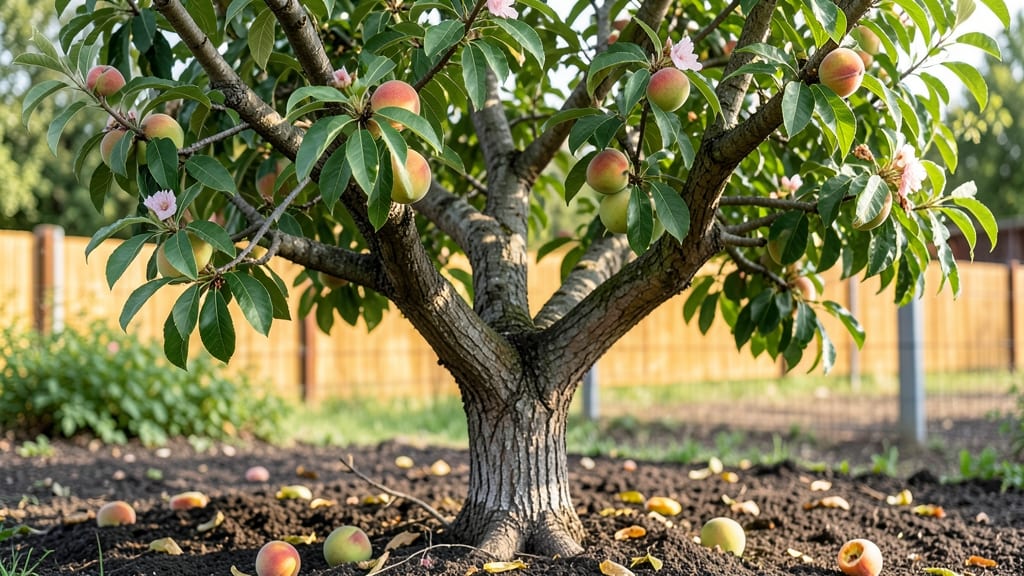
Pruning peach trees in fall demands precise timing—after leaves fall but before frost—to eliminate dead wood, refine the tree's structure, and strengthen its resilience for winter while minimizing disease exposure. Always use sterilized tools and clean cuts.
Fall pruning isn't just about cutting branches—it's about preparing your peach tree for dormancy.
The key window opens after leaves turn brown but before temperatures drop below 32°F, as this balance reduces disease risks while still allowing the tree to heal. 🌳 I recommend checking your local frost dates and pruning 2-3 weeks before the first expected freeze, giving the tree time to recover before winter stress begins.
When shaping the canopy, focus on removing branches that cross or rub against each other, as these create entry points for pests and diseases. Always cut just outside the branch collar—the swollen area where the branch meets the trunk—to promote proper healing.
For dead wood, look for branches that snap easily when bent or show no green tissue when cut open.
💡 In This Article
- Optimal Fall Pruning Timeline for Peach Trees
- Step-by-Step Fall Pruning Techniques for Peach Trees
Optimal fall pruning timeline for peach trees
Peach trees enter dormancy as temperatures drop, making fall an ideal time to prune—but timing is everything. The tree's natural defenses weaken after leaf drop, yet pruning too late exposes fresh cuts to winter diseases like silver leaf fungus.
Aim for 2-3 weeks before hard frost (typically when daytime highs stay above 40°F) to allow wounds to callus over before cold stress sets in. In warmer climates (Zones 8-10), this window extends until late November, while colder regions (Zones 5-7) should prune by early October.
The biological trigger is leaf senescence—when chlorophyll breaks down, revealing brown hues. Test readiness by gently tugging a leaf: if it detaches easily, the tree's energy has shifted from growth to storage. Avoid pruning when leaves still cling green, as the tree remains active and vulnerable to bleeding sap.
Frost forecasts are your best guide: check the 10-day outlook and schedule pruning when nighttime lows won't dip below 35°F for at least a week afterward.
Regional adjustments matter significantly. Southern growers can prune later due to milder winters, while northern gardeners must act sooner. For example, in Zone 6, where frosts arrive by late October, prune by mid-September.
The goal is to complete healing before 32°F temperatures trigger dormancy hormones. Even a 24-hour delay in colder regions can mean the difference between a clean cut and one that invites rot.
Disease risk spikes when temperatures hover between 35°F and 50°F—the perfect range for fungal spores to germinate on fresh wounds. This is why sterilizing tools with 70% isopropyl alcohol or a bleach solution (1 part bleach to 9 parts water) is non-negotiable.
The tree's bark also becomes more sensitive, so avoid heavy pruning if you notice cracked bark or peeling patches, as these indicate winter stress.
Here's how to assess your tree's readiness visually: healthy branches should feel firm when pressed, while dead wood crumbles easily. Look for brown, shriveled leaves that stay attached only at the base—this signals dormancy.
In contrast, green leaves with yellow edges mean the tree is still photosynthesizing. Pro tip: Use a thermometer to check soil temperature at 4 inches deep—prune when it's consistently below 50°F.
What most people overlook is how pruning affects the tree's root pressure. Late fall cuts reduce the tree's ability to push water upward, which is why winter watering (if temperatures stay above freezing) can help.
Think of it like giving your tree a bandage—the goal is to minimize stress while maximizing recovery time before winter's harshest conditions.