
Pruning
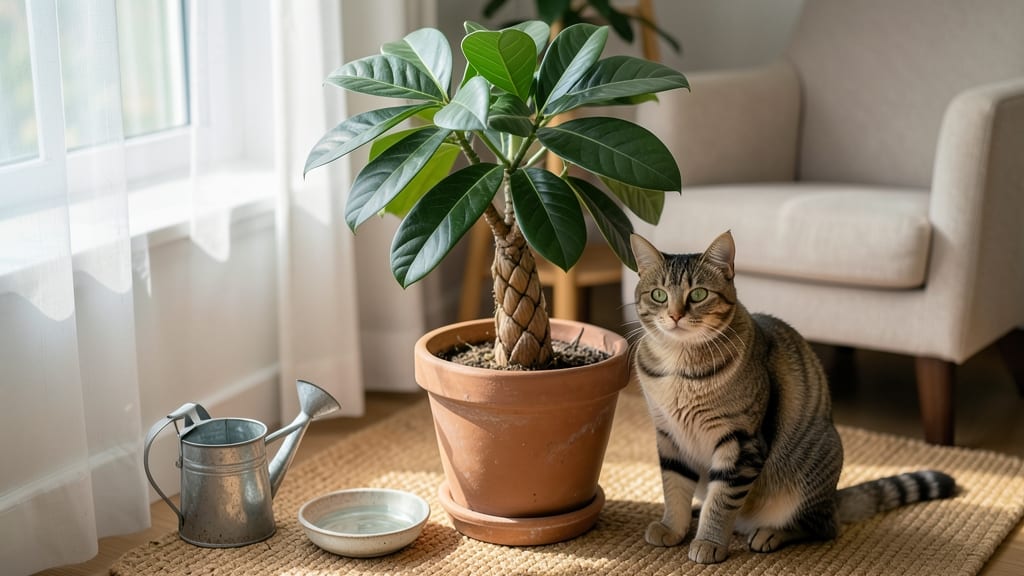
Are money trees pet friendly? Yes, Pachira aquatica is considered non-toxic to cats and dogs by the ASPCA, though accidental ingestion may still cause mild stomach upset. Always supervise pets around plants to prevent nibbling.
This tropical houseplant earns its pet-safe reputation because its leaves and sap lack the toxic compounds found in common dangerous plants like lilies or pothos. 🌿 The ASPCA confirms that while money trees won't cause severe reactions, curious pets might experience temporary digestive discomfort if they chew large amounts.
I've seen firsthand how resilient these plants are—even when my cat investigated them, she just walked away after a sniff!
For extra peace of mind, consider placing your money tree in a spot where your pet can't reach it, like a high shelf or hanging planter. This gives you both the beauty of the plant and the confidence that your furry family members stay safe.
The key is balancing accessibility for you with protection for your pets.
💡 In This Article
- Why Money Trees Are Considered Non-Toxic for Pets
- Pet-Safe Alternatives to Money Trees for Indoor Gardens
Why money trees are considered non-toxic for pets
Money trees (Pachira aquatica) earn their pet-friendly status because they lack the toxic compounds found in many common houseplants.
Unlike lilies, which contain toxic alkaloids causing kidney failure in cats, or philodendrons with calcium oxalate crystals that irritate mouths and throats, money trees primarily contain harmless saponins in trace amounts.
These mild compounds are more likely to cause temporary stomach upset than severe poisoning, making them a safer choice for homes with curious pets.
The plant's thick, leathery leaves and woody stems further reduce risks—pets are less likely to chew through them compared to softer plants like peace lilies. When my dog accidentally nibbled a small leaf, she only experienced mild drooling and a slight tummy ache for a few hours.
The ASPCA confirms that while money trees aren't completely "pet-proof," their low toxicity makes them far less dangerous than alternatives like aloe vera or sago palms, which can be fatal if ingested.
What sets money trees apart is their chemical composition: they contain no oxalates, alkaloids, or glycosides, the three most common plant toxins affecting pets. Instead, their natural defenses rely on physical deterrents like tough leaves and a slightly bitter taste.
This makes them an excellent choice for pet owners who want greenery without the worry. The plant's tropical origins also mean it thrives in indoor environments, providing both beauty and safety.
However, it's worth noting that individual pet reactions can vary. Some animals with sensitive stomachs might experience vomiting or diarrhea after ingesting large amounts of leaves, while others show no symptoms at all.
The key difference from toxic plants lies in the severity: money tree reactions are typically mild and short-lived, whereas toxic plants can cause long-term damage or require veterinary intervention. Always monitor your pet's behavior after exposure, but rest assured that money trees pose minimal risk compared to many other houseplants.
For added protection, consider placing money trees in hanging planters or high shelves where pets can't reach them. This prevents accidental nibbling while still allowing you to enjoy the plant's unique, fan-shaped leaves and potential good luck symbolism.
The plant's slow growth also means it won't outgrow its space quickly, maintaining its pet-safe placement for years.
If you're concerned about your specific pet's sensitivity, consult your veterinarian for personalized advice. Most experts agree that money trees are a safe choice for pet owners, but individual animal health always varies.
The plant's non-toxic nature makes it one of the few houseplants that can coexist peacefully with pets without constant supervision.