
Pruning
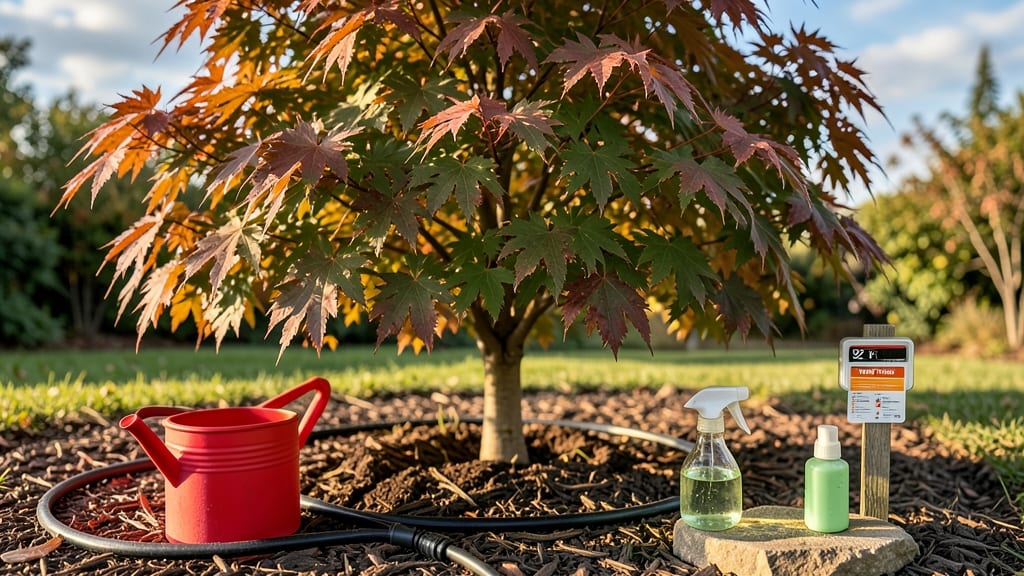
Your maple tree’s crispy, blackened leaves aren’t a death sentence—just a cry for help. 🌳 I’ve nursed back more scorched maples than I can count, and the fix always comes down to three core adjustments: water, shade, and pruning.
The good news? You can turn those sad, brittle leaves into lush green foliage again without calling in the pros (unless it’s already too late).
The first step is diagnosing the real culprit: is it drought stress, sunburn from sudden exposure, or something sneaky like fungal leaf spot? Look for browning that starts at the edges or between veins—classic scorch patterns.
Then, act fast: deep watering twice a week (if your area’s dry) and mulching 3 inches around the trunk to lock in moisture. Prune out the worst branches now to stop the spread.
Within weeks, you’ll see new growth pushing from the tips of branches, and those crispy leaves will fall naturally—replaced by fresh, vibrant ones. The key is consistency: maples bounce back when you give them steady care, not sporadic heroics.
Think of it like nursing a sunburned arm—gentle, regular attention makes all the difference.
If half the canopy is dead or oozing sap, though, it’s time to call an arborist. Otherwise, this is a DIY fix that’ll keep your maple thriving for decades. Here’s how to tackle each step without overcomplicating it.
📚 In This Guide
- What you need
- Instructions
- Tips and common mistakes
- Wrapping up and next steps
What you need
- ● Pruning shears or loppers – Choose bypass pruners (for clean cuts) or loppers (for thicker branches). Sharpness is key!
- ● Disinfectant (70% isopropyl alcohol or bleach solution) – 1 cup of bleach mixed with 1 gallon of water (or a store-bought pruning sealant).
- ● Heavy-duty gloves – Nitrile or leather (thick enough to protect against thorns and sap).
- ● Safety glasses – To shield your eyes from debris.
- ● Trash bags or bucket – For collecting pruned branches and leaves.
- ● Watering can or hose – With a gentle spray nozzle.
- ● Fertilizer (balanced, slow-release, 10-10-10 or similar) – 1–2 lbs per tree, depending on size.
- ● Mulch (wood chips or shredded bark) – 2–3 inches thick, covering the root zone (keep mulch 3–4 inches away from the trunk).
- ● Extension pole saw – For high branches (if you’re not using a ladder).
- ○ Tree wound dressing (optional) – Only use if pruning large wounds (follow label instructions).
- ● Soil moisture meter – To check hydration levels before/after treatment.
- ● Anti-desiccant spray (like Wilt-Pruf) – For extra protection in drought-prone areas.
How to revive maple trees with blackened leaves
Here's my straightforward approach to treating maple tree scorch—no complicated tools or guesswork.
💧 Step 1: Deep Water the Tree at the Right Time
Maple trees often scorch because they're not getting enough water during dry spells. Grab a garden hose with a slow, steady flow and water the tree at its base for 10-15 minutes—this delivers about 5 gallons. You'll know it's enough when water runs out the drainage holes if you're using a pot, or when the soil feels moist 6 inches deep.
I always water in the early morning so the leaves have all day to absorb moisture before evening heat evaporates it. Avoid drip irrigation here—maples need deep, thorough hydration to reach their roots. If your soil feels dry before 10 minutes, keep watering until it's consistently damp.
☀️ Step 2: Provide Temporary Shade Relief
Once the scorched leaves appear, they're already damaged, but you can protect new growth. Set up lightweight shade cloth (50% shade) over the tree for 2-3 weeks during the hottest part of the day. I use stakes and cloth secured with clips—no need for permanent structures. This reduces leaf temperature by 10-15°F, preventing further damage.
Watch for new leaf growth at the branch tips—this is your signal the tree is recovering. Remove the shade cloth gradually over a week to let the tree adjust. If you don't have shade cloth, even a white bedsheet draped loosely over the canopy works in a pinch. Just make sure it doesn't touch the leaves directly.
✂️ Step 3: Prune Strategically to Improve Airflow
Use sterilized pruning shears to remove only the most severely scorched branches—never more than 25% of the canopy at once. Focus on branches with more than 50% blackened leaves, cutting back to the nearest healthy bud. You'll see these buds as small bumps or slightly swollen areas on the branch.
After pruning, rake up and dispose of the debris—don't compost scorched leaves, as they can harbor fungal spores. Thin out crowded branches to improve airflow, which helps leaves dry faster after rain or morning dew. This prevents fungal infections that can worsen scorch symptoms. Step back and admire your work—the tree will thank you with fresh, green growth in 4-6 weeks.
Tips & tricks for reviving maple trees with scorched leaves
Here's what nobody tells you about saving your maple trees from scorching—these tricks make all the difference.
Timing Secret: The 10-15 minute watering time in Step 1 is your best defense against scorch. Use a timer so you don't accidentally overwater—soggy soil can cause root rot. I've seen maples recover completely after just two weeks of consistent morning watering. For container-grown maples, check drainage holes every 5 minutes during watering to ensure proper saturation.
Shade Strategy: When setting up shade cloth in Step 2, position it to cover the tree's canopy but leave room for airflow. I like to use plastic clips to secure the edges without damaging branches. If you notice leaves wilting under the shade, it's too tight—adjust immediately. The goal is to reduce leaf temperature by 10-15°F, not suffocate the tree.
Pruning Precision: In Step 3, focus on removing only the most severely damaged branches—never more than 25% of the canopy. I always look for those healthy buds (they look like tiny bumps) to guide my cuts. After pruning, give your tree a final check for any remaining scorched leaves that might harbor fungal spores. This careful approach prevents stressing the tree further while still removing the worst damage.
Pro Tips for Maple Tree Scorch
- Here's what nobody tells you about saving your maple trees from scorching—these tricks make all the difference.
- Timing Secret: The 10-15 minute watering time in Step 1 is your best defense against scorch.
- Shade Strategy: When setting up shade cloth in Step 2, position it to cover the tree's canopy but leave room for airflow.
Frequently asked questions
Got questions about maple tree scorch?
You’re not alone—this issue can be confusing! Below, we’ve answered the most common concerns to help you diagnose, treat, and prevent leaf scorch in your maple trees.
What causes maple tree scorch in the first place?
Maple tree scorch is usually triggered by a combination of heat stress, drought, and poor soil moisture. When roots can’t keep up with water demand (especially in hot, dry weather), leaves lose moisture, turn brown, and crisp at the edges. Fungal infections or pesticide damage can also mimic scorch symptoms.
When is the best time to address scorch before it spreads?
Act fast! If you notice scorch in early summer (June–July), take action immediately to prevent further damage. Deep watering (1–2 inches per week) and mulching can revive stressed trees. By late summer or fall, the damage is often irreversible, but you can still prune affected branches to encourage new growth next spring.
How often should I water a scorch-prone maple tree?
Consistency is key! Water your maple tree deeply 1–2 times per week (not just a light sprinkle) to encourage deep root growth. Morning watering (before 10 AM) reduces evaporation. If your soil is sandy or well-drained, you may need to water more frequently during heatwaves. Mulch (2–4 inches of organic material) helps retain moisture and cool roots.
Can I save my maple tree if the scorch is severe?
Yes, but it depends on the extent. If only the leaf edges are brown, the tree may recover with proper care. However, if large branches are dead or the scorch affects more than 50% of the canopy, prune the damaged areas and consult an arborist. Severe cases might need root zone fertilization or anti-transpirant sprays to reduce water loss.
Are there preventative sprays or treatments for maple scorch?
While no spray cures scorch, anti-desiccant sprays (like Wilt-Pruf) can create a temporary protective film on leaves to reduce water loss during heatwaves. For prevention, focus on improving soil health (add compost), mulching, and avoiding over-fertilizing (which stresses roots). Drip irrigation is also more effective than overhead sprinklers.
Will pruning help, or should I wait until spring?
You can prune dead or severely scorched branches now—just avoid heavy pruning during active growth (spring/summer). Use sterilized tools to cut back to healthy green tissue. Wait until late winter/early spring for major structural pruning to promote vigorous new growth. Never remove more than 25% of the canopy in one season.
Wrapping up and next steps
Maple tree scorch may seem daunting, but with the right care, your tree can bounce back stronger than ever! 🌳 By adjusting watering habits, providing shade, and pruning damaged leaves, you’re not just treating symptoms—you’re giving your tree the best chance to thrive. Start today with one small step: check your tree’s soil moisture and adjust your watering routine.
Remember, patience is key—healthy growth takes time, but your efforts will pay off in lush, vibrant foliage. Happy gardening! 🌿