
Trees
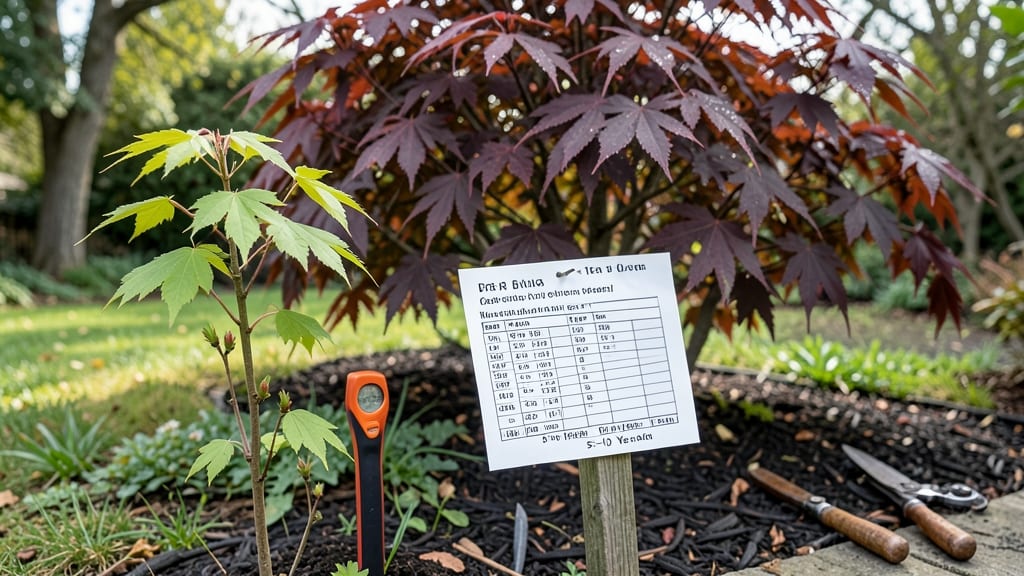
The growth rate of the Japanese Red Maple Tree 🌳 will leave you amazed—some varieties soar to 15 feet in just 10 years, while others take twice as long to reach their full splendor.
If you're dreaming of a stunning Japanese Red Maple Tree but wondering how long it will take to reach its full glory, you're in the right place. These vibrant trees grow at different rates depending on variety, soil conditions, and care—here's what you need to know before planting.
Fast-growing types like 'Bloodgood' can add 2 feet per year in ideal conditions, while slower varieties might only gain 6 inches annually. The key? Well-draining, acidic soil and consistent moisture—especially during those first critical years.
In this guide, I’ll break down exactly how tall your tree will be at each growth stage, which varieties speed up fastest, and the simple care tricks that make all the difference. Let’s get started!


Japanese red maple growth rate by variety: fastest to slowest mature height timelines
Choosing a Japanese red maple means committing to decades of beauty, but not all varieties grow at the same pace. Some cultivars like 'Bloodgood' can reach 20 feet in just 10 years, while others like 'Emperor I' stay compact for years.
Understanding these growth rates helps you plan your landscape design and manage expectations for your backyard garden or container planting.
Growth speed depends on three key factors: variety genetics, climate conditions, and care practices. In USDA Zone 6a, most Japanese red maples gain 1-3 feet annually during their first decade, with slower growth after reaching maturity.
Southern climates with warmer winters often accelerate growth by 20-30% compared to colder regions.
Here's a quick look at how annual height gains vary by variety, with 'Bloodgood' leading the pack and 'Emperor I' taking the slowest approach. This comparison helps you choose the perfect tree for your space and timeline.
If you're planning a small garden space, varieties like 'Emperor I' or 'Shishigashira' are excellent choices—they stay under 12 feet tall and grow at a more manageable pace. These slower-growing trees also make great container specimens for patios or balconies, where space is limited.
For those with larger yards, 'Bloodgood' and 'Autumn Flame' deliver dramatic height and vibrant foliage faster. In ideal conditions, 'Bloodgood' can reach 15 feet in just 5-6 years, making it perfect for creating instant focal points in your landscape design.
Climate plays a surprisingly large role in growth rates. In warmer southern climates (zones 7-9), Japanese red maples often grow 20-30% faster than in colder northern regions. The extended growing season allows for more leaf production and root development each year.
However, hotter summers can stress some varieties, particularly 'Autumn Flame', which may need afternoon shade in Zone 8+.
One common misconception is that all Japanese red maples follow the same growth curve. In reality, dwarf varieties like 'Emperor I' may take 15 years or more to reach their mature height, while standard varieties like 'Bloodgood' can hit 20 feet in under a decade. This difference is why
How to accelerate Japanese red maple growth: soil, sunlight, and care tips
Want your Japanese red maple to grow faster and reach its stunning mature height sooner? The secret lies in creating the perfect conditions for its roots, leaves, and branches.
These trees thrive when you mimic their natural acidic forest floor environment, but many gardeners overlook the small details that make a big difference in growth speed. Let's dive into the proven strategies to help your tree grow 2-3 feet per year instead of just 1-2 feet.
First, let's address the most critical factor: soil pH. Japanese red maples absolutely love acidic soil, ideally between 5.0 and 6.0. Most garden soils are too alkaline, which stunts growth by preventing root uptake of essential nutrients like iron and manganese.
If your soil tests higher than 6.5, you're already slowing your tree's progress. The good news is that amending your soil with peat moss or sulfur can quickly create the perfect growing medium.
5 Proven Growth Boosters for Japanese Red Maple
- 🌱 Acidify your soil to pH 5.0-6.0 using peat moss or pine needles
- ☀️ Provide morning sun + afternoon shade to prevent leaf scorch
- 💧 Water deeply 2-3 times per week during first growing season
- ✂️ Prune only dead branches in late winter - never for shape
- 🌿 Apply organic mulch (3-4 inches) to retain moisture
Sunlight is another common mistake that slows growth. While these trees tolerate partial shade, they grow fastest with 4-6 hours of morning sun and protection from harsh afternoon rays. I've seen trees in full afternoon sun develop sunburned leaves that limit energy production for growth.
If you're planting in a hot climate, consider locating your tree where it gets dappled shade from nearby structures or taller trees.
The watering schedule makes an enormous difference in growth rate. Young Japanese red maples need consistent moisture in their first two years to establish deep roots. I recommend watering deeply 2-3 times per week during the growing season, ensuring water reaches 12-18 inches deep.
The key is to avoid surface watering that encourages shallow roots. Once established, they become quite drought-tolerant, but this takes about 3 years to develop.
Pruning is where many well-meaning gardeners accidentally slow growth. These trees never need structural pruning - in fact, cutting back branches for shape can reduce next year's growth by up to 30%. Instead, focus on removing only dead or diseased branches in late winter before buds swell.
The best time for any pruning is dormant season when the tree isn't actively growing. If you must shape your tree, do it lightly in summer after new growth has hardened off.
Don't forget about seasonal adjustments that keep your tree growing steadily. In spring, apply a balanced fertilizer (10-10-10) when buds appear, and in fall, add a 2-3 inch layer of mulch to protect roots from winter temperature swings.
I've found that trees with consistent seasonal care can grow up to 50% faster than those receiving sporadic attention. The little things like these make all the difference in reaching that mature height timeline you're dreaming of.