
How To
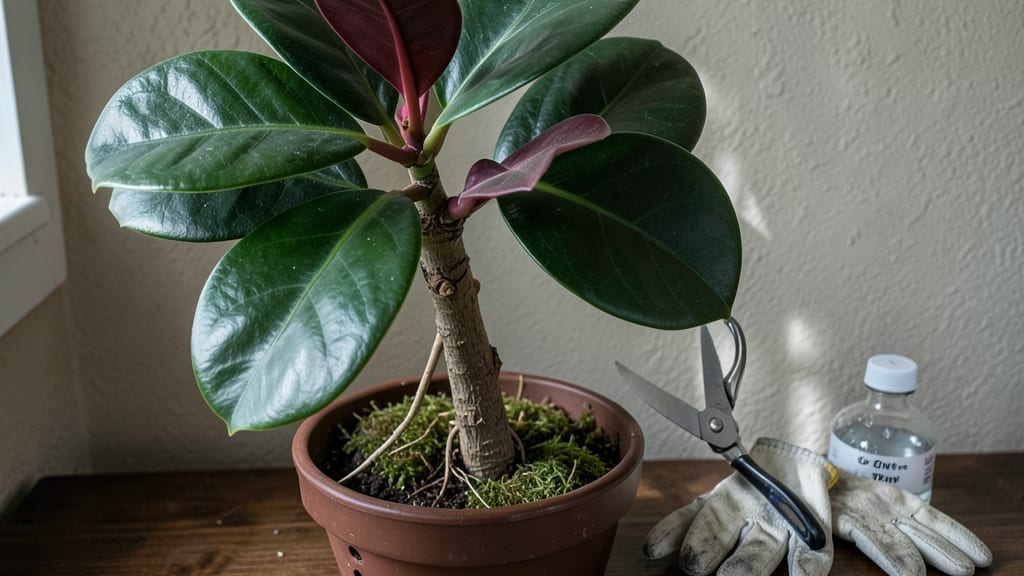
How to stop your rubber tree growing too tall—literally scraping my kitchen light fixture last winter—is easier than you think. The good news? Pruning isn't just about hacking branches; it's about shaping growth while keeping your plant happy. With the right cuts and timing, you can tame that vertical growth without stressing the tree.
Start by cutting just above a leaf node (the bump where leaves grow) using clean, sharp pruners. Focus on the top third to encourage bushier growth lower down. Rubber trees handle pruning well, but avoid removing more than 25% of the foliage at once—this keeps them from getting shocked.
Wipe the sap on your cuts with rubbing alcohol to prevent staining.
📚 In This Guide
- What you need
- Instructions
- Tips and common mistakes
- Wrapping up and next steps
What you need
- ● Pruning shears: Bypass pruners (sharp, clean, and sterilized with rubbing alcohol) for small branches (up to ½ inch thick). Pro tip: 💡 Avoid dull blades—they crush stems, inviting disease!
- ● Hand pruners: For thicker branches (½ to ¾ inch), opt for bypass pruners or anvil pruners (if disinfecting thoroughly).
- ● Loppers: For branches ¾ to 1½ inches thick—look for long-handled, bypass-style loppers for leverage.
- ● Pruning saw: For branches thicker than 1½ inches; choose a curved-tooth saw to avoid tearing bark.
- ● Rubbing alcohol (70% or higher): 1 small bottle to sterilize tools between cuts and prevent fungal spread.
- ● Gloves: Heavy-duty gardening gloves (nitrile-coated for grip and protection against sap).
- ● Disposable pruning bags: 2-3 medium-sized bags (13-gallon capacity) to collect trimmings and reduce mess.
- ● Step stool or ladder: A stable, non-slip ladder (3-4 feet tall) or a foldable step stool for hard-to-reach branches.
- ● Marking twine or tape: Thin, stretchy twine or painter’s tape to temporarily mark where to cut for even height.
- ● Plant hormone paste: 1 small tube (e.g., Rootone) to seal cuts on larger branches and encourage faster healing.
- ● Hose with nozzle: For rinsing tools and removing sap residue post-pruning.
- ● Compost bin or mulch: To recycle trimmings into nutrient-rich compost for your garden.
- ● Safety goggles: To shield eyes from debris if working with a saw.
- ● Camera or phone: To snap before/after pics—because progress deserves a celebration! 🌟
Step-by-step guide to pruning a rubber tree for controlled height
Here’s how I keep my rubber tree lush and compact—without sacrificing its health or beauty.
Identify the Right Pruning Time
Prune your rubber tree in early spring or late summer when it’s actively growing but not stressed. This timing ensures the plant has time to recover and regrow before dormancy. Avoid pruning in winter or during extreme heat, as the tree may struggle to heal. You’ll know it’s the right time when you see fresh, vibrant new growth along the stems.
If your tree is growing too tall too quickly, it’s likely due to excess light or fertilizer. Before pruning, check its location—bright, indirect light is ideal. Too much direct sun can spur rapid growth. Reduce fertilizer applications to once every 2-3 months during the growing season to slow vertical growth.
Gather the Right Tools and Prepare
Use clean, sharp pruning shears to make precise cuts—dull tools crush stems and invite disease. Wipe the blades with rubbing alcohol before and after pruning to prevent bacterial spread. You’ll also need a small bucket of water to rinse your tools if needed, and a pair of gloves to protect your hands from the tree’s milky sap.
Examine the tree’s structure before cutting. Look for overly leggy branches or stems growing straight upward without leaves. These are prime candidates for pruning. Avoid cutting back more than one-third of the tree’s height in a single session—this can shock the plant. Instead, focus on shaping gradually over time.
Prune for Height Control
To stop the tree from growing too tall, cut back the topmost stems just above a leaf node or bud. This encourages branching below the cut, creating a fuller, bushier shape. Aim to reduce the height by no more than 6-12 inches per pruning session—this prevents stress and promotes healthy regrowth.
For thicker stems, make your cut at a 45-degree angle about ¼ inch above a leaf node. This angle helps water run off the cut instead of pooling, reducing rot risk. If you’re pruning multiple stems, space out the cuts over a few weeks to avoid overwhelming the tree. You’ll see new growth emerging from the sides within 2-4 weeks—this is your signal that the pruning worked.
Encourage Bushier Growth
After pruning, rotate the tree a quarter turn every few days to ensure even light exposure on all sides. This prevents the tree from leaning toward a light source and promotes balanced growth. Place the tree in a spot with bright, indirect light—direct sun can cause the new growth to become leggy again.
To further encourage bushiness, pinch back any new shoots that grow straight upward. Simply use your fingers to gently remove the top ½ inch of growth. This redirects the plant’s energy into producing side branches. Within 6-8 weeks, you should notice a fuller, more compact shape with fewer tall, sparse stems.
Maintain and Monitor
Water the tree thoroughly after pruning to help it recover, but avoid overwatering—let the top inch of soil dry out between waterings. Overwatering can stress the tree and slow down new growth. Fertilize lightly with a balanced, water-soluble fertilizer (10-10-10) every 2-3 months during the growing season to support recovery without promoting rapid height growth.
Keep an eye on the tree’s response over the next few months. If you notice new growth is still leggy, it may need more frequent pruning or a change in light conditions. Adjust as needed, but remember: patience is key. A rubber tree pruned correctly will gradually grow into a manageable, bushy size with minimal upkeep.
Tips & tricks for perfectly pruned rubber trees
The secret to keeping your rubber tree from towering over your home lies in these simple yet effective techniques that I’ve perfected over years of gardening. Here’s what nobody tells you—these small adjustments make all the difference.
Timing is Everything: The early spring or late summer window isn’t just about avoiding dormancy—it’s also when your rubber tree is most responsive to pruning. I’ve learned this the hard way after seeing trees struggle to recover when pruned at the wrong time. Look for those fresh, vibrant leaves as your cue that it’s time to act. If you’re unsure, check the calendar: March-April or August-September are your safest bets.
Tool Precision Matters: Using clean, sharp pruning shears isn’t just about making neat cuts—it’s about the health of your tree. I always wipe my blades with rubbing alcohol before and after each use, even when working with just one tree. The milky sap can dry and clog dull blades, making cuts messy and increasing the risk of disease. And don’t forget those gloves—the sap can be surprisingly irritating to some skin types.
Strategic Cutting Technique: When you’re making that 45-degree cut above the leaf node, think of it as creating a tiny roof. This angle prevents water from pooling at the cut site, which is crucial for preventing rot. I mark the spot with a pencil first to ensure I’m cutting exactly ¼ inch above the node—this small detail makes a huge difference in how quickly new growth appears. Patience here pays off with bushier, healthier regrowth.
Pro Tips for Stop Rubber Tree Growing Too Tall
- The secret to keeping your rubber tree from towering over your home lies in these simple yet effective techniques that I’ve perfected over years of gardening.
- Timing is Everything: The early spring or late summer window isn’t just about avoiding dormancy—it’s also when your rubber tree is most responsive to pruning.
- Tool Precision Matters: Using clean, sharp pruning shears isn’t just about making neat cuts—it’s about the health of your tree.
Frequently asked questions
about controlling your rubber tree’s height—because even the greenest thumbs need a little guidance!Can I prune my rubber tree at any time of year?
Pruning is best done in spring or early summer when the tree is actively growing. Avoid heavy pruning in fall or winter, as the plant may struggle to recover. Light trimming for shape is fine year-round, but major height control should wait for the growing season.
Will pruning stunt my rubber tree’s growth permanently?
No—pruning regulates growth, not stunts it permanently. Rubber trees are resilient and will bounce back with new growth after pruning. However, if you prune too aggressively (e.g., cutting back more than 1/3 of the height at once), it may take longer to recover. Think of it like a haircut: keep it balanced!
How do I know if I’ve pruned too much?
Watch for yellowing leaves, wilting, or slow recovery after pruning. If your tree looks stressed for more than 2–3 weeks, you may have overdone it. To fix it, reduce watering slightly, place it in bright (but indirect) light, and avoid pruning again until new growth appears.
Can I keep my rubber tree small indoors without pruning?
Not really! While rubber trees grow slower indoors due to limited light, they’ll still outgrow small spaces over time. Pruning is the only reliable way to maintain height. Alternatively, choose a dwarf variety (like Ficus elastica ‘Robusta Compacta’) if you want a naturally smaller plant.
What should I do with the cuttings after pruning?
Don’t toss them! Rubber tree cuttings root easily in water or soil. Place a 4–6 inch cutting in a jar of water (change weekly) or a pot with moist perlite. Keep it in bright, indirect light until roots form (usually 2–4 weeks). Now you’ve got a free baby plant!
Wrapping up and next steps
Stopping your rubber tree from reaching towering heights doesn’t have to be a challenge—just a little patience and the right techniques! By pruning regularly, using proper tools, and understanding its growth habits, you’ll keep it lush and manageable.
Remember, consistency is key, and your tree will thank you with vibrant, healthy foliage.
Now that you’re armed with the know-how, grab those shears and get pruning! Your perfectly sized rubber tree awaits—happy gardening! 🌿✨