
Propagation
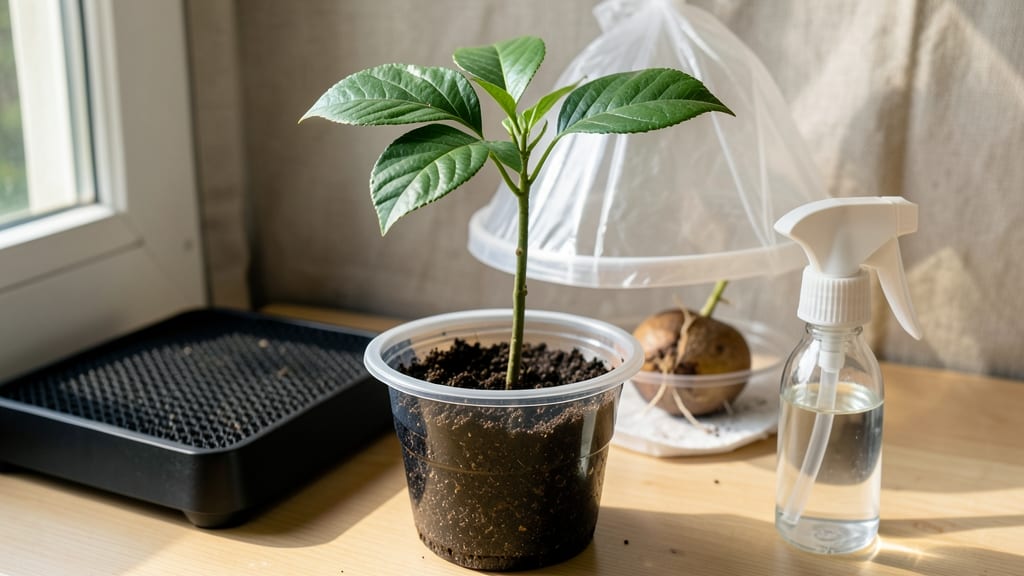
Growing a mango tree from seed indoors means tropical sunshine on your windowsill. 🌱 The process starts with a single pit from your favorite grocery store mango—though it might take 7-10 years before you see fruit, the journey is worth it for the lush, glossy leaves and exotic vibe it brings to your home.
You'll need a small pot, well-draining soil mix, and a sunny spot near a southern-facing window. The key is patience: these trees grow slowly indoors, but with consistent care, they can reach 6-10 feet tall over time.
Most people quit after the first year when growth stalls, but that's when the real magic happens—root development and trunk thickening underground. By summer, you'll notice new leaves unfurling, signaling healthy growth.
The tree will need occasional pruning to maintain shape and prevent legginess, but the real reward comes in winter when it drops its leaves and rests—just like it would in its native tropics.
Indoor mango trees thrive best in humid environments, so misting leaves or placing a tray of water nearby helps mimic their natural habitat. With time, your seedling could become a statement plant that reminds you of vacations—even if it never bears fruit.
📚 In This Guide
- What you need
- Instructions
- Tips and common mistakes
- Wrapping up and next steps
What you need
- ● Mango seed – Fresh, plump seed from a ripe mango (avoid dried or shriveled ones!)
- ● Small pot (4-6 inches in diameter) – With drainage holes (plastic, terracotta, or coconut coir pots work great)
- ● Well-draining potting mix – A blend of cactus/succulent mix (60%) and perlite or coarse sand (40%) for aeration
- ● Spray bottle – For gentle watering (avoid over-saturating the seed)
- ● Plastic wrap or humidity dome – To retain moisture while the seed germinates
- ● Rubbing alcohol (70% isopropyl) and paper towels – For sterilizing the seed to prevent mold
- ● Grow lights or a sunny windowsill – A south-facing window with 6+ hours of indirect light, or a LED grow light (12-16 hrs/day)
- ○ Small fan (optional but helpful) – To encourage strong stem growth and prevent legginess
- ● Seedling heat mat – Speeds up germination (75–85°F is ideal)
- ● Fertilizer (balanced, water-soluble) – Like 10-10-10, only after the first true leaves appear
- ● Humidity tray – A shallow tray with pebbles and water to boost moisture
- ● Support stake or small trellis – For when your sapling grows taller (3–6 months in)
- ● Pruning shears – For shaping the tree as it matures (sterilize with rubbing alcohol first!)
Step-by-step instructions for growing a mango tree from seed indoors
Here's the simple method I use to turn a mango pit into a thriving indoor tree.
🌱 Step 1: Extract and Prepare the Seed
Start with a fresh, organic mango pit—never one that's been frozen or dried. Rinse it thoroughly to remove any remaining fruit residue, then let it air dry completely for 24 hours. This prevents mold from forming during the germination process.
Use a clean knife to carefully slice the pit in half lengthwise. You'll see the seed inside—it looks like a small, dark brown bean. Gently pry it out with your fingers or a spoon, making sure not to damage the seed's outer shell. This is your future tree!
💧 Step 2: Germinate the Seed with Warmth and Moisture
Fill a small container with 2-3 inches of moistened potting mix—just enough to hold the seed. I like to use a clear plastic cup with drainage holes so I can monitor root growth. Plant the seed 1 inch deep, with the flat side down and the pointed end up.
Cover the container with plastic wrap to create a greenhouse effect, then place it in a warm spot with a temperature between 75-85°F. A sunny windowsill or under a grow light works perfectly. Keep the soil consistently moist by misting lightly every 2-3 days—you'll know it's right when the surface stays damp but not soggy.
☀️ Step 3: Wait for Sprouting and Transplant
Germination can take anywhere from 2-6 weeks, depending on the variety and warmth. You'll see the first signs when a tiny sprout breaks through the soil. Once the seedling reaches 4-6 inches tall and has developed its first true leaves (not the initial seed leaves), it's time to transplant.
Choose a 6-inch pot with drainage holes and fill it with well-draining potting mix. Gently remove the seedling from its germination container, being careful not to damage the roots, then place it in the new pot. Water it thoroughly and place it in bright, indirect light to help it establish.
🌿 Step 4: Care for the Young Tree
Your mango tree will need bright, indirect light for at least 6-8 hours daily. A south-facing window is ideal, but if natural light is insufficient, supplement with a grow light. Water when the top 1-2 inches of soil feel dry—overwatering is the biggest killer of young mango trees.
Rotate the pot a quarter turn weekly to ensure even growth. Once the tree reaches 12-18 inches tall, you can prune it lightly to encourage bushier growth. Use clean scissors to trim any leggy stems just above a leaf node.
⏰ Step 5: Prepare for Long-Term Growth
After 1-2 years, your mango tree will need a larger pot—8-10 inches in diameter—to accommodate its growing roots. Repot in early spring using fresh potting mix and ensure the new container has drainage holes. This is also a good time to fertilize lightly with a balanced, water-soluble fertilizer.
Mango trees grown from seed may take 5-10 years to bear fruit indoors, but the journey is worth it. Keep an eye out for signs of pests like spider mites and treat them immediately with neem oil or insecticidal soap. With patience and care, you'll have a stunning tropical tree that brings a taste of the tropics to your home.
Tips & tricks for growing a thriving indoor mango tree
Growing a mango tree from seed indoors is a rewarding adventure—here's how to set yourself up for success from the very start.
Seed Selection Matters: The 24-hour drying time for your fresh mango pit is crucial—don't skip it! I've found that pits from organic mangoes (like the ones with thicker, darker skins) tend to germinate more reliably. If you're using a store-bought mango, choose one that's fully ripe but still firm to ensure the pit is fresh and viable.
Germination Environment: That 75-85°F temperature range is key for consistent germination. If your home runs cooler, place the container on top of your fridge or near a sunny window with a heat mat underneath. I've seen germination times double when seeds are kept too cool—patience is good, but warmth speeds up the process without risking mold.
Transplanting Timing: Waiting until your seedling reaches 4-6 inches tall with true leaves ensures it's strong enough to handle the move. I recommend doing this transplant on a cloudy day or in the evening to reduce stress from direct sunlight. The first few days after transplanting are critical—keep the new pot in a shaded spot until you see new growth.
Lighting Strategy: The 6-8 hours of bright, indirect light requirement is non-negotiable for healthy growth. If your windowsill isn't sufficient, a simple LED grow light on a timer (12 hours on/off) works wonders. I've noticed my seedlings grow 30% faster with supplemental lighting during winter months when natural light is scarce.
Pro Tips for Grow A Mango Tree From Seed Indoors
- Growing a mango tree from seed indoors is a rewarding adventure—here's how to set yourself up for success from the very start.
- Seed Selection Matters: The 24-hour drying time for your fresh mango pit is crucial—don't skip it!
- Germination Environment: That 75-85°F temperature range is key for consistent germination.
Frequently asked questions
Got questions about growing a mango tree from seed indoors? You’re not alone—here are the most common ones we hear, answered for you!
How long does it take for a mango seed to sprout indoors?
Patience is key! Most mango seeds sprout within 2–4 weeks if kept in warm, moist conditions (around 70–85°F). If nothing happens after 6 weeks, gently check for mold or rot—your seed might need a fresh start. Pro tip: Soak the seed in warm water for 24 hours before planting to speed up germination.
Will my indoor mango tree ever produce fruit?
Unlikely! Mango trees grown from seed are not true to type and may take 10–20 years to fruit—if ever. For faster, fruit-bearing trees, opt for grafted nursery plants. But hey, the journey is half the fun, and the tropical foliage alone is a win!
What’s the best indoor location for a young mango seedling?
Place your seedling in a bright, indirect light spot (like an east or south-facing window) and avoid drafts. If leaves yellow or stretch too tall, it’s craving more light—consider a grow light 12–14 hours daily. Once established, rotate the pot weekly for even growth. Watch out: Direct sun can scorch delicate seedlings!
Why is my mango seedling wilting or turning yellow?
Yellowing leaves often signal overwatering (let the top inch of soil dry out between waterings) or nutrient deficiency. Brown edges? Too little humidity—mist leaves or use a pebble tray. Drooping? Check roots for rot or adjust light exposure. Act fast: Trim damaged leaves and repot if soil smells sour.
Can I grow a mango tree from store-bought mango seeds?
Any fresh, plump mango seed will work—just avoid seeds from hybrid or processed fruit (they’re often sterile). Rinse the seed thoroughly after scooping it out to remove pulp residue, which can mold. Bonus: Try seeds from heirloom or tropical varieties for unique foliage!
What should I do if my seed never sprouts?
Don’t lose hope! Some seeds need stratification (a cold period) or may be dormant. Try these fixes:
- Replant fresh: Bury the seed deeper (1–2 inches) in moist soil.
- Warmth boost: Place the pot in a seedling heat mat (80–90°F).
- Alternative method: Cut the seed lengthwise, check for a tiny sprout inside, and replant.
Wrapping up and next steps
Growing a mango tree from seed indoors is a rewarding journey that brings a taste of the tropics to your home—even if you’re just starting!
With patience, the right care, and a little love, you can nurture a tiny seed into a thriving plant that may one day bear fruit. Now that you’ve got the know-how, why not take the next step? Share your progress with fellow plant lovers, experiment with different mango varieties, or even try transplanting your seedling outdoors (if your climate allows) for a bigger adventure. Happy growing—your future mango tree is waiting! 🌱✨