
Trees
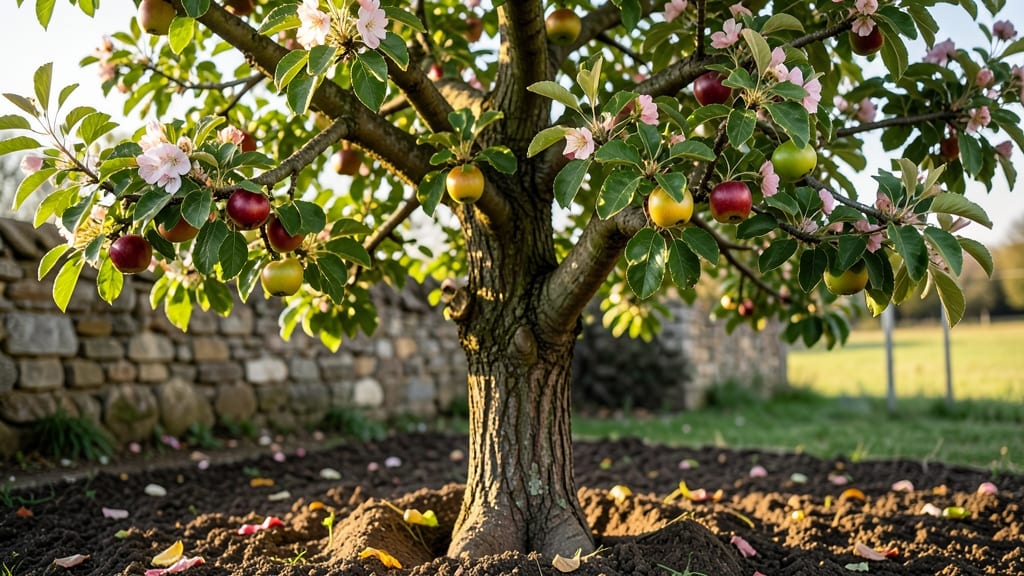
Yes, one apple tree can produce fruit if it's a self-pollinating variety or has a compatible pollinator nearby, though yields may vary based on climate, soil quality, and care. Most apple trees require cross-pollination for optimal harvests.
A single apple tree can bear fruit through two key pathways: self-pollination or cross-pollination with a nearby compatible variety. 🌳 Self-pollinating trees (like 'Liberty' or 'Enterprise') have flowers that fertilize themselves, while others need bees to transfer pollen from different trees.
The difference matters—cross-pollinated trees often produce larger, more abundant harvests. I've found that even self-pollinating trees benefit from having a pollinator neighbor, as wind or insects can improve fertilization rates.
Beyond pollination, factors like sunlight exposure, soil nutrients, and proper pruning play critical roles. For instance, a tree in full sun with well-draining soil will consistently outperform one in shade or compacted ground.
Regular pruning in late winter or early spring helps maintain tree health and encourages better fruiting. These practices turn a single tree into a reliable producer rather than a hit-or-miss harvest.
💡 In This Article
- Self-Pollinating vs. Cross-Pollinating Apple Trees
- Maximizing Fruit Production from a Single Apple Tree
Self-pollinating vs. cross-pollinating apple trees
The biological difference between self-pollinating and cross-pollinating apple trees starts at the flower level. Self-pollinating varieties, like 'Liberty' or 'Enterprise', have flowers with both male and female reproductive parts that can fertilize themselves.
This means they can produce fruit even when isolated, though yields may be 20-30% lower than cross-pollinated trees. Cross-pollinating varieties, however, rely on bees or wind to transfer pollen from one tree's flowers to another's, creating genetic diversity that often results in larger, more flavorful fruit.
Here's how it works: When a bee visits a cross-pollinating apple tree's flower, it picks up pollen from that tree's anthers (male parts) and carries it to the stigmas (female parts) of another tree's flowers. This process, called xenogamy, leads to stronger, more vigorous fruit.
For example, 'Honeycrisp' and 'Gala' are popular cross-pollinating varieties that thrive when planted near each other. The pollen grains, which measure about 0.004 inches in diameter, must land on compatible stigmas within hours of release to ensure fertilization.
Temperature and weather play crucial roles too. Apple blossoms typically open in spring when temperatures reach 55-60°F, and pollen viability lasts only 2-3 days after release. If rain washes away pollen or cold weather delays bee activity, fertilization rates drop dramatically.
This is why gardeners in colder climates often plant multiple apple varieties together—even self-pollinating trees can benefit from occasional cross-pollination to boost yields.
What most people don't realize is that some apple trees exhibit partial self-pollination. Varieties like 'Golden Delicious' can set fruit on their own but produce far better harvests when cross-pollinated.
The difference in fruit quality is striking: self-pollinated apples may be smaller or less sweet, while cross-pollinated ones develop fuller flavor and texture. For instance, a 'Fuji' apple grown through cross-pollination will typically weigh 6-8 ounces, whereas a self-pollinated one might only reach 3-4 ounces.
If you're growing just one apple tree, choosing a self-pollinating variety ensures you'll get some fruit, but expect 30-50% fewer apples than a cross-pollinated tree. The trade-off is independence—no need to coordinate with neighbors or worry about pollinator shortages.
For optimal results, though, most experts recommend planting at least two compatible varieties within 50 feet of each other to maximize both quantity and quality.
Consider this real-world example: A study by Cornell University found that 'McIntosh' apple trees produced 40% more fruit when planted alongside 'Cortland' trees compared to when grown alone. The key takeaway? While one apple tree can produce fruit, its potential is unlocked when paired with the right companion.