
Pruning
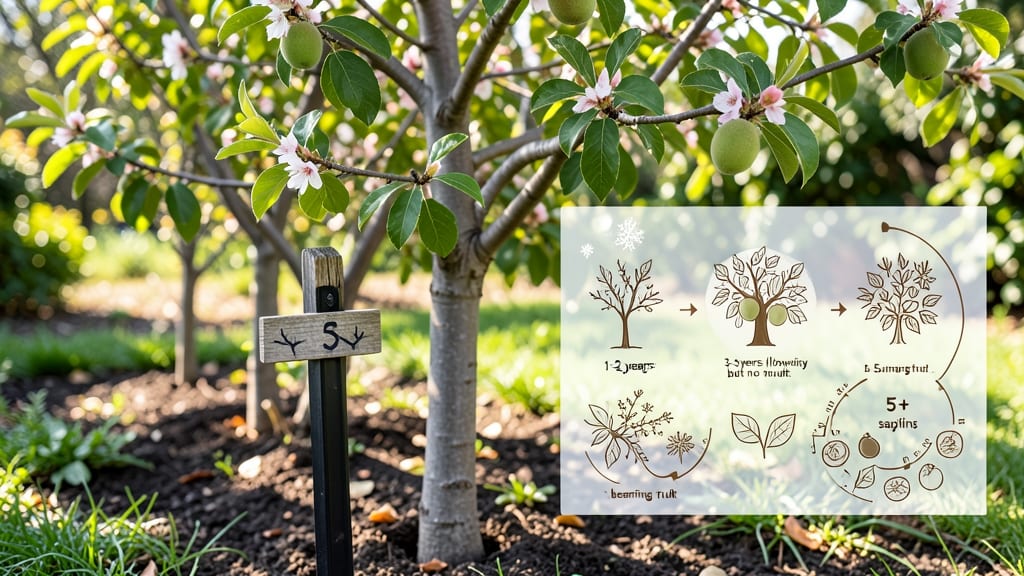
Peach trees usually take 2 to 5 years to bear fruit, with dwarf varieties fruiting as early as 2 years and standard trees often taking 4-5 years. Proper care and early blooming can speed up fruiting, but consistent patience ensures the best harvest quality.
This fruiting timeline isn't just about time—it's about growth stages. 🌱 Dwarf varieties like 'Bonanza' or 'Redhaven' mature faster because their rootstock is bred for compact growth, while larger trees need more time to establish strong root systems.
I've seen some early bloomers produce tiny fruit in their second year, but these rarely develop fully until the third or fourth season. Climate plays a huge role too: warmer regions often see faster maturation, while colder areas may push fruiting back by a year or more.
The key is monitoring trunk thickness and flower bud formation—when your tree starts showing these signs, you know fruiting isn't far off.
What's interesting is how care directly impacts this timeline. Trees that receive proper pruning, consistent watering, and balanced fertilization often fruit earlier than neglected ones. I recommend testing soil pH annually—peaches thrive in slightly acidic soil (pH 6.0-6.5)—as this can make a noticeable difference in fruiting speed.
The first year of blooms might not produce much fruit, but each subsequent year builds on that foundation, leading to more abundant harvests.
💡 In This Article
- Peach Tree Varieties and Their Fruiting Timelines
- Signs Your Peach Tree Is Ready to Fruit
Peach tree varieties and their fruiting timelines
Peach tree fruiting windows vary dramatically based on their genetic makeup and rootstock. Dwarf varieties like 'Bonanza' or 'Sanguinelle' often produce their first harvest in just 2 years because their rootstock is grafted onto semi-dwarfing understocks that accelerate growth.
These compact trees reach maturity faster but typically produce smaller fruit batches—around 50-100 pounds annually compared to 200-300 pounds from standard trees.
The key difference lies in their root systems: dwarf varieties develop extensive root networks within 12-18 months, while standard trees need 3-4 years to establish comparable root strength.
Standard peach trees like 'Elberta' or 'Redhaven' usually take 4-5 years to bear fruit because their rootstocks are bred for larger canopies and longer lifespans. These trees require more time to build structural integrity—think of them like marathon runners compared to sprinters.
The trade-off is worth it, though: mature standard trees can produce fruit for 15-20 years with proper care, whereas dwarf varieties often peak after 8-10 years.
Climate also plays a surprising role—trees in USDA Zone 7 (like those in Georgia) may fruit a year earlier than identical varieties in Zone 5 (like Minnesota) due to longer growing seasons and warmer winters.
Freestone peaches (where fruit separates easily from the pit) tend to fruit slightly earlier than clingstone varieties because their energy goes more toward fruit development than pit attachment strength. For example, 'Contender' (freestone) often bears fruit in 3 years, while 'Halford' (clingstone) might wait until 4 years.
The difference comes down to how the tree allocates its energy during dormancy—freestone varieties prioritize fruit growth over structural reinforcement of the pit. This is why hybridizers often graft freestone varieties onto dwarf rootstocks to combine early fruiting with manageable size.
What most gardeners don't realize is how rootstock choice can shave off 1-2 years from the fruiting timeline. Trees grafted onto 'Lovell' rootstock (a common peach rootstock) mature 1-2 years faster than those on 'Nemaguard' (which prioritizes disease resistance over speed). The trade-off?
'Lovell' rootstock makes trees more susceptible to nematodes, while 'Nemaguard' adds 1-2 years to maturity but extends the tree's productive life by 5-7 years. This is why commercial orchards often use different rootstocks for different climates—speed in warm regions, longevity in colder ones.
Consider these variety-specific timelines when planning your orchard:
- Dwarf varieties: 2-3 years to first fruit (e.g., 'Bonanza', 'Redhaven')
- Semi-dwarf varieties: 3-4 years (e.g., 'Elberta', 'Sanguinelle')
- Standard varieties: 4-5 years (e.g., 'Contender', 'Halford')
- Clingstone vs. Freestone: Freestone typically 6-12 months earlier
The science behind these timelines involves a fascinating interplay between cambium growth (the tree's growth layer) and hormonal balance. During the first 2-3 years, a peach tree's primary focus is building its vascular system—think of it like laying plumbing before building walls.
Only after this infrastructure is complete does the tree shift energy toward reproductive growth (flower buds). This biological sequence is why you'll often see trees with abundant leaves but no fruit in their first few years—they're still in their "construction phase." 🌱