
Pruning
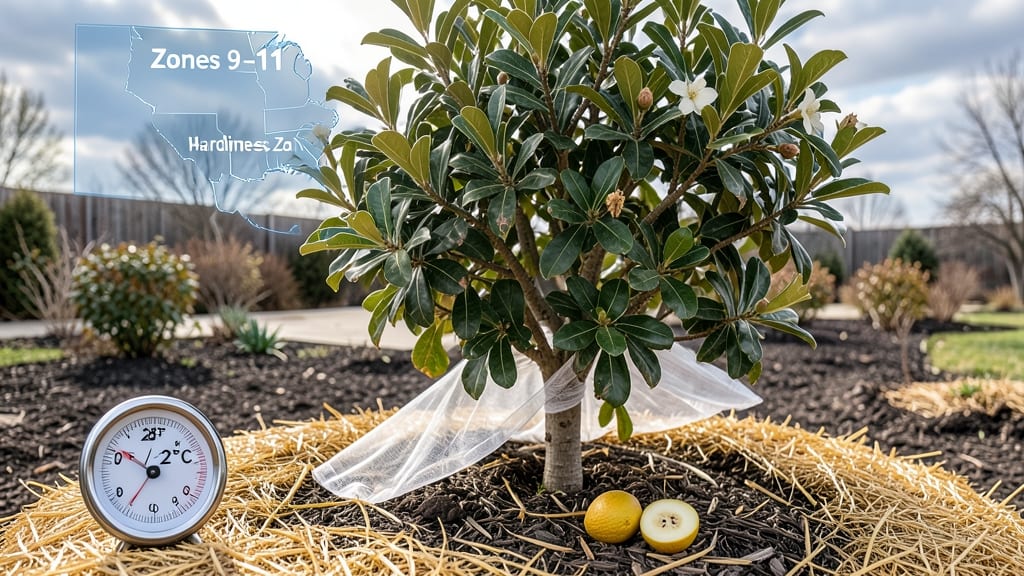
Guava tree cold hardiness depends on USDA Zones 9-11, where they tolerate brief dips to 25°F (-4°C) but risk severe damage when temperatures drop below 20°F (-7°C). Young trees and tropical varieties are especially sensitive, while mature specimens may recover from light frost with proper care.
Understanding these temperature thresholds helps explain why guava trees struggle in colder climates.
The key difference lies in their tropical origins—most varieties can't handle prolonged exposure to freezing conditions, which disrupts their root systems and fruit production. 🌱 For gardeners in marginal zones like Zone 8, strategic protection becomes essential to extend the tree's lifespan and productivity.
Even within the ideal range, temperature fluctuations matter. A sudden drop from 30°F to 20°F (-1°C to -7°C) can cause irreversible damage to leaves and branches, while gradual cooling gives the tree time to acclimate.
This is why experienced growers monitor weather forecasts and prepare protective measures well in advance of expected cold snaps.
The good news? With the right techniques—like mulching, wrapping, and using frost cloths—you can push these limits slightly. For instance, a thick layer of straw mulch around the base can insulate roots, while burlap wraps protect the trunk from cracking.
These methods don't make guavas cold-hardy, but they buy critical time during unexpected frost events.
💡 In This Article
- USDA Zones and Guava Tree Frost Tolerance Limits
- Protecting Guava Trees from Cold: Mulching, Wrapping, and Emergency Frost Methods
USDA zones and guava tree frost tolerance limits
Guava trees (Psidium guajava) originate from tropical regions, which explains why their cold tolerance is so closely tied to USDA Zones 9-11.
The 25°F (-4°C) threshold represents the point where most varieties can survive brief exposure without permanent damage, thanks to their ability to enter a temporary dormancy-like state.
This limit affects every part of the tree: leaves may show frostburn, but the roots and trunk often remain intact if the cold snap is short-lived. Below 20°F (-7°C), however, the damage becomes critical—cell membranes rupture, and the tree's vascular system can fail, leading to dieback.
The difference between tropical and subtropical guava varieties is striking. Tropical types, like the common 'White' or 'Red' guavas, have almost no cold tolerance and will suffer leaf scorch at 32°F (0°C).
Subtropical varieties, such as 'Supreme' or 'Kwai,' can handle 25°F (-4°C) but still risk fruit loss and branch dieback.
The root system is particularly vulnerable: when soil temperatures drop below 30°F (-1°C), root activity slows dramatically, weakening the tree's ability to absorb water and nutrients. 🌡️ This is why mature trees—with deeper, more established roots—often recover better than young saplings after frost.
Fruit production takes the biggest hit during cold snaps. Guava flowers are highly sensitive to frost, and even light damage can reduce pollination success by up to 70%. The fruit itself may develop brown spots or fail to ripen properly if exposed to temperatures below 28°F (-2°C).
In Zone 9, where winters are mild but occasional dips occur, trees may produce smaller harvests or drop fruit prematurely. Gardeners in these areas often prune back damaged branches in late winter to stimulate new growth, but this requires careful timing to avoid encouraging late-season frost damage.
What most gardeners don't realize is how humidity plays a role in frost survival. In drier climates (like parts of Zone 9), guava trees can lose moisture faster during cold snaps, making them more susceptible to desiccation. In contrast, coastal areas with higher humidity provide a slight protective buffer.
This is why guavas thrive in Florida's tropical climate but struggle in inland desert regions of Arizona, even within the same USDA Zone. The key is mimicking their natural tropical environment as closely as possible—consistent moisture, shelter from wind, and gradual temperature changes.
For those pushing the limits in Zone 8, the 30°F (-1°C) mark becomes a critical psychological threshold. While guavas won't survive winter in these areas without protection, strategic microclimates—like planting near south-facing walls or using row covers—can extend their growing season.
The trade-off? Even with protection, fruit production may be inconsistent, and trees will need extra care to recover from seasonal stress. 🌿 This is why many Zone 8 gardeners opt for container-growing guavas, which can be moved indoors during winter months.
Understanding these thresholds helps explain why guava trees often decline in colder climates. The root system's sensitivity to cold is the primary limiting factor, as it disrupts the tree's ability to transport water and nutrients.
Even in ideal zones, sudden temperature swings—like a 30°F (0°C) night followed by a 70°F (21°C) day—can stress the tree, making it more vulnerable to pests and diseases. This is why experienced growers monitor weather patterns and prepare protective measures well in advance of cold snaps.