
Pruning
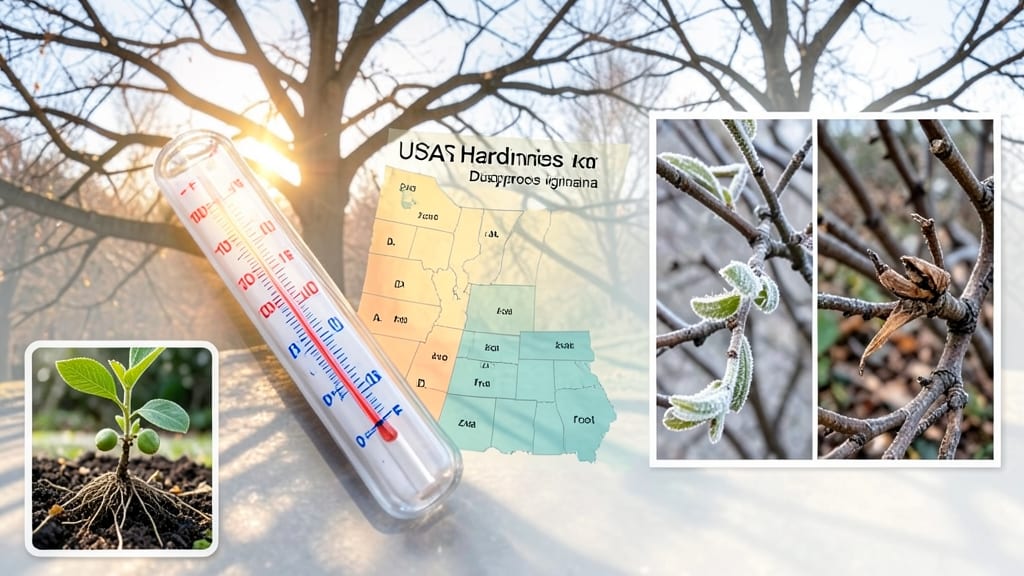
Understanding persimmon tree temperature tolerance reveals they thrive in USDA Hardiness Zones 5-8, with American persimmons surviving down to -15°F (-26°C) and Asian types enduring -10°F (-23°C). Proper winter care is essential for young trees to withstand cold snaps and late frosts.
Persimmon trees show impressive cold resilience, but their survival depends on both variety and preparation. 🌱 American persimmons, like the 'Meader' cultivar, handle harsh winters better than their Asian counterparts, which include popular varieties such as 'Fuyu' and 'Hachiya'.
The key difference lies in their root systems—mature trees develop deeper roots that insulate against freezing, while young trees need protective measures like thick mulch layers and frost cloths.
This winter prep isn't just about temperature protection; it also prevents moisture loss and frost cracks in the bark that can invite disease.
What many gardeners overlook is that persimmon trees actually benefit from cold periods—they enter dormancy, which helps them store energy for spring growth. However, sudden temperature swings in late winter can be deadly, especially when buds begin to swell.
That's why I always monitor the forecast and cover vulnerable branches if a hard freeze is predicted. The right balance of protection and natural cold exposure is what makes these trees thrive in colder climates.
💡 In This Article
- Persimmon Tree Cold Hardiness by Variety
- Winter Care for Persimmon Trees in Cold Zones
Persimmon tree cold hardiness by variety
American persimmons like 'Meader' and 'Pollen' varieties can endure temperatures as low as -15°F (-26°C) thanks to their native adaptation to North American winters. Their thick bark and extensive root systems create natural insulation, allowing them to survive prolonged cold snaps.
The key difference comes down to their cellular structure—American varieties have smaller, denser cells that resist ice crystal formation in their vascular tissues, which is why they don't suffer from frost cracks like some fruit trees.
Asian persimmons, including 'Fuyu' and 'Hachiya', typically handle only -10°F (-23°C) without protection, as they originated in East Asia's milder climates. Their thinner bark and larger cells make them more vulnerable to winter damage.
What's fascinating is how their cold tolerance improves with age—young Asian persimmon trees often need winter wraps, while mature specimens can withstand slightly colder temperatures. The rootstock also plays a role: grafted trees on hardy rootstock like 'Diospyros virginiana' show better cold resistance than those on Asian rootstock.
Temperature extremes trigger a fascinating biological response in persimmons. When nights drop below 32°F (0°C), the trees enter dormancy, which slows metabolic processes and prevents frost damage. However, sudden temperature swings—especially when daytime warmth exceeds 50°F (10°C)—can break dormancy prematurely, leaving buds vulnerable to late frosts.
This is why gardeners in Zone 5-6 need to monitor weather forecasts closely during spring transitions.
Here's what happens at the cellular level: Persimmon trees produce antifreeze proteins during cold periods that prevent ice formation in their sap. These proteins are most effective between 28-32°F (-2 to 0°C), which explains why trees can survive brief dips below their official hardiness ratings.
The trade-off is that prolonged exposure to -10°F (-23°C) or colder can still cause bark splitting or branch dieback, particularly in young trees.
Consider these variety-specific survival thresholds:
- American persimmons: Can handle -15°F (-26°C) with proper care, especially mature trees with established root systems
- Asian persimmons: Typically limited to -10°F (-23°C) without protection, with younger trees needing additional winter safeguards
- Hybrid varieties: Often fall between these ranges, showing improved cold tolerance while retaining some Asian fruit characteristics
The most critical factor isn't just the minimum temperature, but how quickly the tree can adjust to temperature changes. American varieties have evolved to handle rapid fluctuations between freezing nights and thawing days, while Asian types often struggle with this pattern.
This biological adaptation explains why American persimmons often outperform Asian varieties in northern climates, even when planted in similar conditions.