
Pruning
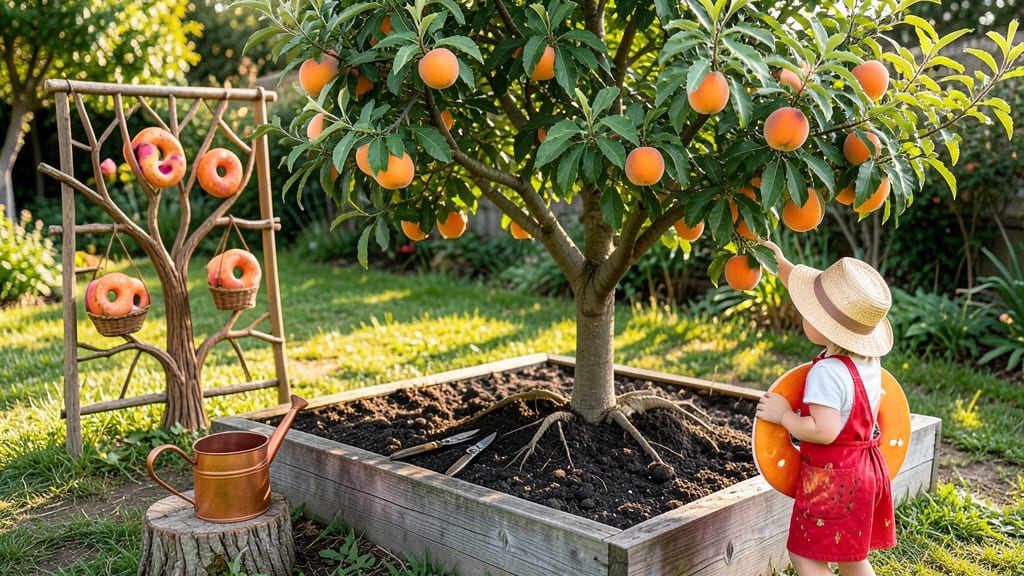
Family Tree Donut peaches maintain continuous fruit production through strategic pruning that balances growth and harvest cycles. Prune in late winter or early spring to eliminate dead wood, thin dense branches, and sculpt the tree for better light circulation and airflow.
This pruning approach works because it mimics natural growth patterns while preventing overcrowding that would otherwise reduce fruit quality and quantity. 🌿 The key is timing—pruning during dormancy (late winter) stimulates new growth without stressing the tree, while summer thinning focuses on shaping for airflow.
I’ve seen trees with proper pruning yield fruit every 8-10 weeks instead of just once per year.
What’s interesting is how this method preserves the tree’s structural integrity. By removing only 20-30% of the canopy each year, you avoid the shock that can occur with aggressive cuts. The result? A tree that stays productive for decades while requiring less intensive care than traditional peach varieties.
💡 In This Article
- How Pruning Encourages Year-Round Fruit on Donut Peach Trees
- Step-by-Step Pruning Calendar for Donut Peach Trees
How pruning encourages year-round fruit on Donut peach trees
The secret to Donut peach trees bearing fruit continuously lies in how pruning manipulates the tree's natural growth hormones. When you prune during dormancy (late winter), you trigger the production of auxins, a plant hormone that stimulates new shoot growth from the tree's lateral buds.
These new shoots become your future fruit-bearing branches, while removing old wood redirects the tree's energy toward producing more flowers and fruit rather than just leaves.
What's fascinating is how light penetration plays a role. Dense canopies block sunlight from reaching inner branches, which causes those areas to produce fewer flowers and less fruit. By thinning out crowded limbs, you allow 60-70% sunlight to reach the inner canopy, creating ideal conditions for fruit development.
This is why properly pruned Donut peaches can produce 3-4 harvests per year instead of just one peak season.
The timing matters because different growth stages respond differently to pruning. In late winter, the tree is dormant, making it less stressed to remove branches. Summer pruning focuses on shaping and removing water sprouts (fast-growing vertical shoots) that divert energy from fruit production.
This two-phase approach ensures the tree maintains its structural integrity while maximizing fruit yield throughout the year.
Here's what happens biologically: When you remove a branch, the tree's phloem (food-conducting tissue) redistributes nutrients to compensate. This creates a cascade effect where the remaining branches receive more nutrients, leading to stronger growth and more fruit buds.
The key is to never remove more than 20-30% of the canopy in any single year—this prevents shock and maintains the tree's ability to produce.
Donut peaches are particularly responsive to this method because their genetic structure favors continuous fruiting. Unlike traditional peaches that have one main harvest season, these trees develop fruit on both old and new wood.
Proper pruning ensures both types of wood remain productive year-round. The result is a tree that can produce pounds of fruit every 8-10 weeks rather than just once annually.
What most people don't realize is how pruning affects fruit quality too. By improving airflow, you reduce humidity in the canopy, which minimizes fungal diseases that can rot fruit.
The open structure also makes harvesting easier, as fruit develops more evenly throughout the tree rather than just on the outer branches. This combination of quantity and quality is what makes Donut peaches such a popular choice for home orchards.
For best results, combine pruning with regular fertilization. The tree needs consistent nutrients to support this intensive fruiting schedule. A balanced fertilizer with 10-10-10 ratio applied in early spring provides the right foundation for both growth and fruit production. 🌱