
Pruning
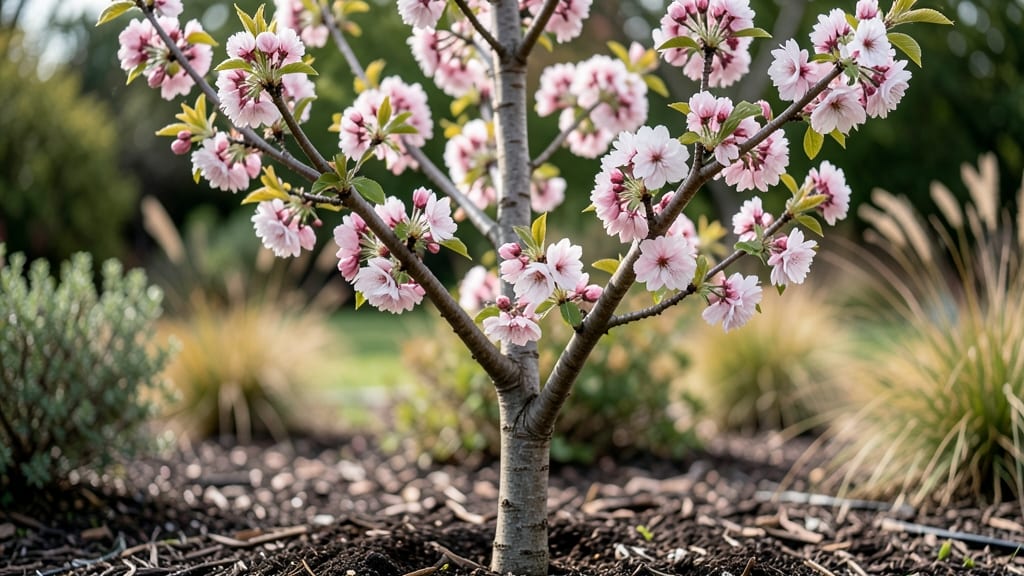
Your donut peach tree's flower display could be perfect every spring—if you prune the right way. ✂️ I learned this the hard way after my first tree produced sparse blooms, but now it's covered in hundreds of pink blossoms that last for weeks.
The secret isn't complicated: it's about timing, technique, and understanding what this special tree actually needs.
This isn't your average peach tree—it's a non-fruiting ornamental bred for showstopping flowers. While other peaches focus on fruit, this variety puts all its energy into bold, double-layered blooms that look like edible donuts.
That means pruning works differently: you're shaping for flowers, not harvest. The best time to prune is late winter, just before buds swell, when the tree's dormant but ready for new growth.
What you'll end up with is a tree that blooms earlier and more abundantly than store-bought varieties. The flowers stay vibrant longer, and the tree's shape remains compact and balanced—no messy tangles or bare branches.
Even better, the pruning process itself is simple once you know the key cuts to make. No fancy tools needed, just sharp pruners and about 30 minutes of focused work.
This method works for both newly planted trees and established ones, and the same principles apply whether you're in Zone 5 or Zone 9. The only difference is adjusting your timing slightly for early or late frosts. Let's get those blooms looking their absolute best!
📚 In This Guide
- What you need
- Instructions
- Tips and common mistakes
- Wrapping up and next steps
What you need
- ● Pruning shears: Bypass pruners (sharp, 5-7 inch blades) for clean cuts—1 pair (sterilize with rubbing alcohol between cuts!).
- ● Loppers: Bypass or anvil type (8-10 inch blades) for thicker branches—1 pair.
- ● Pruning saw: Curved-tooth saw for branches >2 inches thick—1 saw.
- ● Gloves: Heavy-duty, cut-resistant (gardening or pruning-specific)—1 pair.
- ● Disinfectant: 70% isopropyl alcohol or bleach solution (1 part bleach:9 parts water)—small spray bottle or cloth.
- ○ Sealing wax: Pruning sealant (optional but recommended for large cuts)—small tube.
- ● Twine or rubber tree ties: For supporting branches if needed—5-10 feet.
- ● Weather check: Prune on a dry, cloudy day (avoid frost or extreme heat).
- ● Tree health: Ensure the tree is dormant (late winter/early spring) or post-bloom (summer) for best results.
- ○ Safety gear: Safety glasses (optional but wise for debris).
- ● Pruning guide: Measuring tape or ruler for tracking branch lengths.
- ● Notebook/pencil: To sketch your pruning plan or track progress.
- ● Tree food: Organic fertilizer or compost for post-pruning nourishment.
- ● Mulch: Wood chips or straw to protect roots after pruning.
Step-by-Step guide to donut flower pruning for peach trees
Unlock the secret to year-round blooms with this precision pruning method—your peach tree will reward you with perfect flowers.
✂️ Step 1: Understand the Donut Flower Pruning Technique
The donut method involves removing the center growth from your peach tree to redirect energy toward outward-facing branches. This creates a circular "donut" shape where sunlight penetrates the center, encouraging dense flowering. Start in late winter or early spring before buds break, when the tree is still dormant but ready for shaping.
Focus on branches thicker than 1/4 inch—these are the main energy conduits. You'll remove about 20-30% of the tree's total growth in this first pruning. This might sound aggressive, but trust me: it's what transforms a sparse tree into a blooming powerhouse. Use sharp, clean pruners to make cuts at a 45-degree angle just above an outward-facing bud.
🌿 Step 2: Remove Center Growth to Create the Donut Shape
Begin by identifying the tree's central leader—the main vertical stem. You'll want to remove about half of this central growth, cutting just above a strong lateral branch or bud. This forces the tree to focus energy outward rather than upward. Look for branches growing straight up or inward; these are your targets.
Make your first cut about 6-12 inches down from the top, removing the very center growth. Then work your way down the trunk, cutting back any vertical shoots that block sunlight from reaching the inner branches. You'll see the donut shape emerge as you remove these obstructive branches. The goal is to leave a hollow center where light can penetrate to the trunk.
☀️ Step 3: Thin Out Crowded Branches for Airflow
Now focus on the outer branches. Remove any that cross over others or grow too close together—this prevents disease and improves airflow. Aim to space branches about 8-12 inches apart on the tree's perimeter. You'll also want to prune back any branches that are growing at sharp angles (less than 30 degrees) from the trunk, as these are more prone to breaking.
This is where the magic happens: by thinning the outer branches, you create a perfect balance. The tree now has room to breathe, and sunlight reaches all the way to the center. Watch for new growth emerging from the sides—these will become your flowering branches. After this step, your tree should look like a well-structured donut with an open center.
⏰ Step 4: Maintain Year-Round with Seasonal Adjustments
After the initial pruning, maintain your donut shape with light trimming throughout the year. In late summer, remove any suckers (new shoots growing from the base) and any branches that are growing inward. During fall, prune back any dead or diseased branches immediately to prevent winter damage.
Spring is your next opportunity to refine the shape. Remove any water sprouts (fast-growing, vertical shoots) and any branches that are rubbing against each other. This keeps the tree healthy and ensures those perfect blooms continue year after year. With this method, you'll see a dramatic increase in flower production—your peach tree will look like a blooming donut, and the fruit will follow.
🌱 Step 5: Encourage Flowering with Strategic Pruning
To maximize flowering, always prune just after a bloom cycle. This gives the tree time to recover before the next flowering season. Avoid heavy pruning in late summer or fall, as this can stimulate new growth that won't harden off before winter. Instead, focus on cleaning up and shaping.
Here's the thing—your peach tree will thank you for this attention. By redirecting its energy outward and ensuring sunlight reaches the center, you're creating the perfect conditions for abundant blooms. Within a season, you'll notice a transformation: fewer sparse branches and more lush, flowering growth. This isn't just pruning; it's an investment in your tree's future beauty and productivity.
Tips & tricks for perfect donut flower pruning
Here's what nobody tells you about transforming your peach tree into a blooming masterpiece—these are the secrets that'll make all the difference.
Pruning Timing is Everything: Late winter or early spring is your golden window for donut pruning, right before buds start to swell. I learned this the hard way after pruning too early one year—my tree barely bloomed that season. The dormant state means the tree can focus all its energy on healing and preparing for new growth. If you miss this window, wait until after the first bloom cycle, but avoid pruning in late summer or fall, as this can stimulate tender new growth that won't survive winter.
The 45-Degree Angle Matters: When making your cuts in Step 1, that 45-degree angle isn't arbitrary—it's about directing water and nutrients away from the cut to prevent rot. Always cut just above an outward-facing bud to encourage growth in the direction you want. I've seen beginners make straight cuts that leave stubs, which can trap moisture and invite disease. Think of it like creating a little roof over the bud to protect it while allowing new growth to emerge.
Visualizing the Donut Shape: The magic happens when you create that hollow center in Step 2. Imagine looking at your tree from above—you want to see sunlight streaming through the middle like a spotlight. Start by removing about half of the central leader's growth, then work your way down, cutting back any vertical shoots blocking light. After this step, your tree should resemble a donut with a perfect hole in the center. This isn't just about looks; it's about creating the ideal environment for maximum flowering.
Seasonal Maintenance is Key: Don't think this is a one-time job! After your initial pruning, maintain that donut shape with light trimming throughout the year. In late summer, remove any suckers growing from the base and any branches growing inward. During fall, prune out dead or diseased branches immediately. Spring is your chance to refine the shape—remove water sprouts and any branches rubbing against each other. This ongoing care is what transforms a good pruning job into a stunning, year-round blooming tree.
Pro Tips for Donut Peach Tree Flower
- Here's what nobody tells you about transforming your peach tree into a blooming masterpiece—these are the secrets that'll make all the difference.
- Pruning Timing is Everything: Late winter or early spring is your golden window for donut pruning, right before buds start to swell.
- The 45-Degree Angle Matters: When making your cuts in Step 1, that 45-degree angle isn't arbitrary—it's about directing water and nutrients away from the cut to prevent rot.
Frequently asked questions
Got questions about keeping your peach tree donut flower blooming year-round? You’re not alone! Here are the most common queries—and expert answers—to keep your tree thriving.
When is the best time to prune peach tree donut flowers for maximum blooms?
Prune after flowering (late spring) to avoid cutting off next year’s blooms. Light shaping in early spring (before buds swell) also works, but avoid heavy pruning in winter—peach trees are dormant and prone to disease. Pro tip: Use clean, sharp tools to prevent damage!
Why aren’t my peach tree donut flowers blooming like they should?
Lack of blooms often stems from over-pruning, nutrient deficiencies (like nitrogen), or stress (drought, pests). Check for peach tree borers or fungal spots. Adjust care: water deeply 1–2x/week, fertilize in early spring, and prune selectively to encourage airflow.
Can I prune peach tree donut flowers in fall or winter?
Fall/winter pruning is risky—peach trees are vulnerable to silver leaf fungus and bacterial canker when wounded. If you must prune, do it in dormant season (late winter) and sterilize tools with rubbing alcohol. Focus on removing dead wood only.
Are there alternatives to traditional pruning for donut flowers?
Yes! Try topiary shaping (for decorative trees) or selective thinning to open the canopy. For minimalists, no-prune methods work if your tree is young/healthy—but expect denser growth. Bonus: Mulch heavily to retain moisture and reduce stress.
How do I encourage more donut flowers on my peach tree?
Boost blooms with these tricks:
- Sunlight: Ensure 6+ hours of direct sun daily.
- Fertilizer: Use a balanced 10-10-10 formula in early spring.
- Watering: Deep water 1–2x/week (drought stress = fewer flowers).
- Pollinators: Plant bee-friendly flowers nearby!
Wrapping up and next steps
Watching your donut peach tree flower thrive is a rewarding experience, and with the right pruning techniques, you can enjoy year-round blooms and bountiful harvests! 🌸 The key lies in understanding seasonal needs, using the right tools, and maintaining patience—your tree will thank you with vibrant flowers and delicious fruit.
Now that you’re armed with expert tips, grab those shears and get pruning!
Ready to take it further? Start a pruning journal to track your tree’s progress or explore advanced grafting techniques for even more variety. Happy gardening!