
Diseases
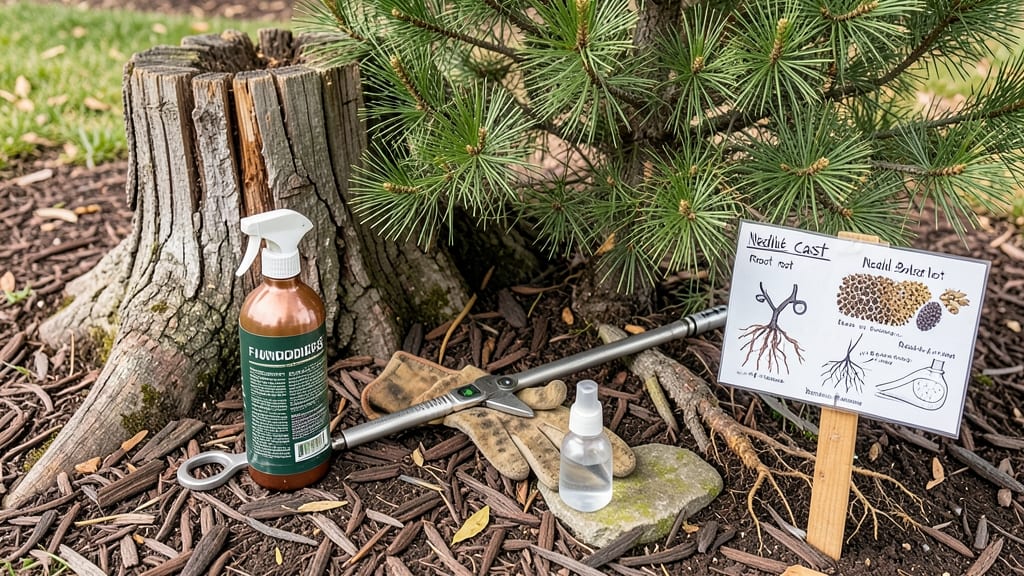
Fungal blight turns your evergreen tree into a sad, brown mess—unless you act fast with the right evergreen tree diseases treatment. 🌲 I’ve saved multiple trees from this silent killer using simple organic fixes that actually work, even when store-bought sprays fail.
The key is catching it early and targeting the right spots with the right mix.
Most fungal blights start with damp, shaded conditions—think dense foliage or poor airflow. You’ll spot yellow or brown patches first, then black spots or moldy growth on branches. The good news?
Copper fungicides, neem oil, and proper pruning can stop it in its tracks before it spreads. I’ve seen trees fully recover in just 6-8 weeks with consistent care.
Start by removing infected branches (sterilize your tools!), then spray with a homemade mix of 1 tablespoon neem oil + 1 teaspoon baking soda per gallon of water.
Reapply every 10-14 days until new growth appears. For severe cases, a copper-based fungicide (like copper sulfate) is your secret weapon—it’s organic and tough on fungi.
The real trick is prevention: prune for airflow, water at the base (not overhead), and mulch properly. Do this right, and your evergreens stay lush year-round. Skip the harsh chemicals—your trees (and the birds nesting in them) will thank you.
Root Causes Of Tree Decline
Evergreen trees—whether towering pines, sturdy cedars, or elegant spruces—are often the silent sentinels of landscapes. But when they fall prey to diseases, the damage isn’t just cosmetic; it’s a sign of deeper stress.
Understanding why these issues arise is the first step to restoring your trees’ health. Let’s break down the real culprits behind evergreen tree diseases, from microscopic invaders to environmental missteps.
Fungi are the #1 cause of evergreen tree diseases, thriving in damp, shaded conditions. These organisms release enzymes that break down cell walls, starving the tree of nutrients. Common fungal foes include:
- Needle Cast (e.g., Rhizosphaera, Lophodermium): Discolors needles, often starting at the tips. Why? Fungal spores splash onto needles during rain, germinating in humid conditions.
- Root Rot (Phytophthora, Armillaria): Attacks roots, cutting off water/nutrient flow. Why? Poor drainage or compacted soil creates anaerobic zones—fungi’s perfect breeding ground.
- Canker Diseases (Leucostoma, Valsa): Forms sunken, dead patches on bark. Why? Wounds (from pruning, storms, or pests) provide entry points for spores.
Pro Tip: 🌡️ Fungi love moisture—prune in dry weather, improve airflow, and avoid overhead watering to disrupt their lifecycle.
Insects and mites don’t just nibble—they transmit diseases and weaken trees, making them vulnerable to secondary infections. Key pests include:
- Sawfly Larvae (Neodiprion spp.): Skeletons needles, exposing them to sunburn and fungal spores. Why? Larvae chew through needles, disrupting photosynthesis.
- Spruce Beetles (Dendroctonus rufipennis): Bore into phloem, blocking nutrient transport. Why? Drought-stressed trees can’t fight off mass attacks.
- Spider Mites (Oligonychus spp.): Suck sap, causing yellowing and stunted growth. Why? Dry, dusty conditions trigger their populations.
Pro Tip: ✨ Monitor early signs—sticky sap (honeydew) or frass (insect droppings) means pests are already at work.
Trees don’t get sick in a vacuum—environmental factors create the perfect storm for disease. Common triggers:
| Factor | How It Harms Trees | Disease Link |
|---|---|---|
| Drought | Roots shrink, reducing water uptake; needles dry out. | Increases susceptibility to Armillaria root rot. |
| Poor Soil Drainage | Waterlogged roots suffocate, starving roots of oxygen. | Promotes Phytophthora (sudden oak/dead tree disease). |
| Compacted Soil | Restricts root growth, limiting nutrient absorption. | Weakens trees against Rhizosphaera needle cast. |
| Air Pollution (Ozone, SO₂) | Damages leaf tissue, reducing photosynthesis. | Opens doors for Lophodermium infections. |
Pro Tip: 💡 Test your soil—pH imbalances (too acidic/alkaline) can hinder nutrient uptake, making trees disease magnets.
Even well-intentioned actions can backfire. Common human errors that invite disease:
- Improper Pruning: Cutting too close to branches or during wet seasons creates wounds that fungi love.
- Over/Under-Watering: Both extremes stress trees, making them easy targets for pathogens.
- Planting in Shade: Blocks sunlight, slowing photosynthesis and weakening defenses.
- Ignoring Mulch Piles: Thick mulch near trunks traps moisture, fostering Armillaria root rot.
Pro Tip: ⏰ Prune in late winter/early spring (dormant season) to minimize stress and infection risks.
Fixing Fungal Blight Naturally
Now that you know the causes behind fungal blight in evergreens, let’s tackle the solutions—without harsh chemicals. These organic fixes are gentle on your trees, the environment, and your wallet.
Below, we’ve mapped the most common causes to their best fixes, plus prevention tips to keep your evergreens thriving.
Fix: Improve soil aeration and adjust watering habits.
- 🔥 Reduce Watering Frequency
- Let the top 2–3 inches of soil dry out between waterings. Overwatering suffocates roots and invites fungi.
- Pro Tip: 💡 Use a moisture meter or the "finger test" to check soil dampness before watering.
- 🍳 Amend the Soil
- Mix in compost or organic matter (like aged bark or coconut coir) to improve drainage.
- For heavy clay soil, add sand or perlite to create air pockets.
- 👨🍳 Install Drainage Solutions
- If your tree sits in a low spot, create a swale (a shallow trench) to redirect water away.
- For container-grown evergreens, ensure pots have drainage holes and elevate them slightly.
- ⏰ Prune for Airflow
- Thin out dense foliage to allow sunlight and air circulation. Use sterilized pruners to avoid spreading spores.
Fix: Strengthen the tree’s defenses and disrupt spore growth.
- 🥘 Apply Organic Fungicides
- Neem oil (1–2% solution) or baking soda spray (1 tbsp baking soda + 1 quart water + a drop of dish soap) can smother spores.
- Reapply every 7–10 days during wet conditions.
- 🔪 Remove Infected Debris
- Prune and dispose of diseased branches in the trash (not compost). Burn them if possible.
- Clean up fallen needles and leaves around the base of the tree.
- 🌡️ Boost Tree Immunity
- Feed your evergreen with liquid seaweed fertilizer or fish emulsion to enhance natural resistance.
- Pro Tip: 🎯 Mulch with wood chips or pine straw (not thick layers) to retain moisture while preventing soil-borne fungi.
Fix: Create a drier microclimate around the tree.
- ✨ Space Trees Properly
- Ensure 3–5 feet of clearance between evergreens to reduce humidity buildup in the canopy.
- Avoid planting in shady, damp areas—opt for sunnier spots if possible.
- 🌿 Use Fungus-Resistant Mulch
- Avoid straw or grass clippings (they retain moisture). Instead, use gravel or pine bark around the base.
- 💨 Improve Air Circulation
- Install a small fan on a timer near the tree (if indoors or in a sheltered area) to reduce humidity.
- Pro Tip: 🔥 Trim nearby shrubs or trees that block airflow.
Fix: Treat the pests first, then address the fungal fallout.
- 🔪 Remove Infested Areas
- Scrape off scale insects with a stiff brush or spray with soapy water (1 tsp mild soap per quart of water).
- For sap beetles, set up beer traps (bury a cup filled with beer near the tree—they’ll drown in it).
- 🍳 Apply Horticultural Oil
- Use dormant oil in late winter/early spring to suffocate insect eggs and adults.
- 🥘 Seal Wounds
- If bark is damaged, apply pruning sealant (organic, latex-based) to prevent fungal entry.
- 🌱 Choose Resistant Varieties: Opt for evergreens like arborvitae, junipers, or Leyland cypress (some cultivars are blight-resistant).
- 🌡️ Monitor Moisture: Water early in the day so foliage dries quickly.
- 🔍 Inspect Regularly: Check for yellowing needles, black spots, or oozing sap—early action is key!
- 💡 Sterilize Tools: Wipe pruners with rubbing alcohol between cuts to prevent cross-contamination.
Remember: Patience is key—some treatments take 4–6 weeks to show results. Stick with it, and your evergreens will bounce back healthier than ever! 🌲💚
Frequently asked questions
How do I tell if my evergreen tree has a fungal disease?
Look for yellowing or browning needles, especially starting at the tips, and check for black spots or moldy growth on branches. Fungal diseases often create discolored patches that spread downward. Also watch for oozing sap or premature needle drop—these are red flags. Compare symptoms to photos of common diseases like needle cast or canker.
Can I use household items like vinegar or baking soda to treat fungal diseases?
Yes! A baking soda spray (1 tablespoon baking soda + 1 quart water + a drop of dish soap) works well for mild fungal issues. For vinegar, use a 1:10 dilution with water (never full-strength) and apply in early morning to avoid burning foliage. Both are safe, organic options—but severe infections may still need stronger treatments like copper fungicides.
When should I call a professional arborist instead of treating myself?
If your tree shows large cankers (sunken, dead patches on bark), wilted branches, or signs of root rot (mushrooms at the base), it’s time to call an expert. Also seek help if 50%+ of the tree is affected or if you suspect invasive pests like bark beetles. Professionals can diagnose hidden issues and recommend targeted solutions.
How often should I apply organic fungicides like neem oil?
Apply neem oil or baking soda sprays every 7–10 days during active growth (spring/fall) or after heavy rains. For prevention, a monthly application during humid seasons keeps fungi at bay. Always spray early in the day so foliage has time to dry—wet leaves encourage spore growth. Stop treatments once new healthy growth appears.
Will pruning help my diseased evergreen tree recover?
Prune to remove only infected branches (never more than 25% of the tree at once). Sterilize your tools with rubbing alcohol between cuts to prevent spreading spores. Focus on thinning dense areas to improve airflow—this helps foliage dry faster and reduces humidity where fungi thrive.