
Trees
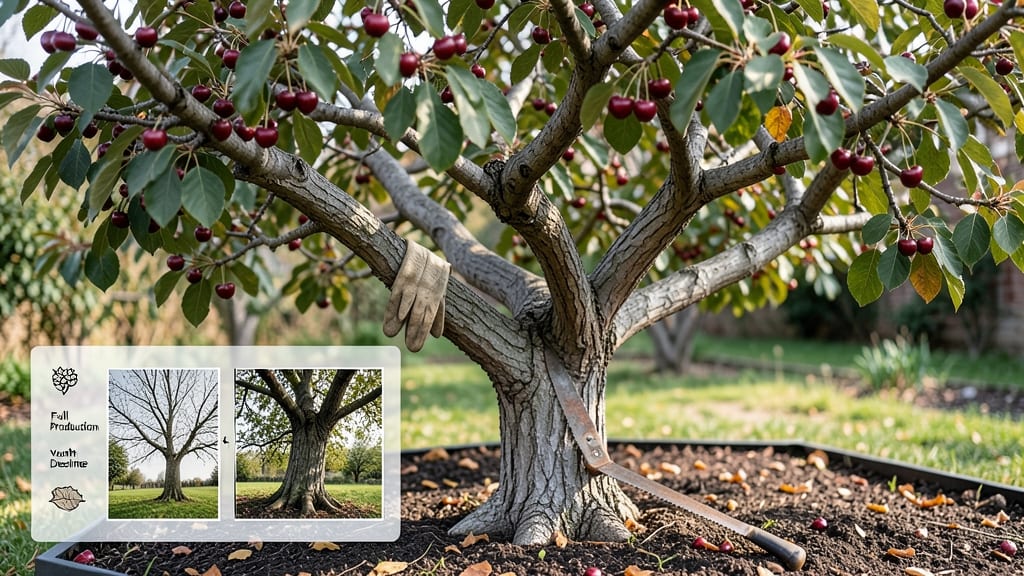
The lifespan of cherry trees ranges from 25 to 50 years, with sour cherry varieties potentially living 75+ years under ideal conditions, while sweet cherries generally reach 30 to 40 years. Proper soil management, climate suitability, and regular pruning are key to maximizing their longevity.
Understanding a cherry tree's lifespan helps you plan for its long-term care. 🌳 The difference between sweet and sour varieties isn't just about fruit—it's rooted in their genetic resilience. Sour cherries, like the Montmorency, often outlive sweet cherries because they're hardier against pests and cold snaps.
Even within the same type, a tree planted in well-draining soil with consistent moisture can thrive decades longer than one struggling with poor conditions. I've seen neglected trees in my neighborhood wither within 10 years, while properly maintained specimens in orchards easily surpass 50 years.
What's fascinating is how climate plays a role—trees in Mediterranean regions often live longer due to milder winters, while those in colder zones may face more stress.
Regular pruning isn't just about shape; it's a health maintenance routine that removes diseased branches before they spread, directly impacting how many years you'll enjoy that sweet summer harvest. 💫
💡 In This Article
- Factors That Extend or Shorten Cherry Tree Lifespan
- Cherry Tree Varieties with the Longest Lifespans
Factors that extend or shorten cherry tree lifespan
Soil quality is the foundation of a cherry tree's longevity—think of it as the difference between building a house on solid rock versus unstable sand. 🌱 Sweet cherries thrive in well-draining, slightly acidic soil (pH 6.0-6.5), while sour cherries tolerate more alkaline conditions (pH 6.5-7.0).
Poor drainage causes root rot, which can kill a tree within 5-10 years by cutting off its nutrient supply. I've seen trees in heavy clay soil struggle to reach maturity, while those in loamy soil with 1-2% organic matter often live decades longer.
The climate zone where you plant makes a dramatic difference. Sweet cherries need 100-1,000 chill hours (temperatures between 32-45°F) annually, while sour cherries require only 500-1,000 chill hours.
Trees outside their ideal zone experience stress that weakens their immune system, making them vulnerable to pests like borers or diseases such as brown rot. In my experience, trees in USDA zones 5-7 with 30-50 inches of annual rainfall consistently outlive those in drier or wetter regions.
Pruning isn't just about aesthetics—it's a survival technique. Regular removal of dead or diseased branches prevents fungal spread, while strategic thinning improves air circulation. I recommend pruning in late winter when the tree is dormant, removing no more than 25% of the canopy per year.
Over-pruning weakens the tree, while neglect allows pests to establish colonies that can shorten lifespan by 10-20 years. The key is balance: enough to maintain health, but not so much that you stress the tree.
Disease resistance is where sour cherries have the edge. Varieties like Montmorency develop fewer cankers and less leaf spot than sweet cherries, which are more susceptible to bacterial infections. 🌿 Sweet cherries often require annual fungicide treatments to prevent fruit rot, adding maintenance that can become burdensome over decades.
The right variety choice can add 20-30 years to a tree's life by reducing disease pressure from the start.
Watering habits also play a surprising role. Young trees need 1-2 inches of water weekly during establishment, but overwatering creates anaerobic soil that suffocates roots. Mature trees develop deeper root systems that access moisture independently, but drought stress can cause premature decline.
I've observed that trees with 6-8 feet of root depth recover better from dry spells than shallow-rooted specimens.
Finally, consider the tree's genetic heritage. Some cultivars are bred specifically for longevity, like the 'Stella' sweet cherry, which naturally resists cracking—a major weakness in many varieties. These genetic advantages can translate to 10-15 extra years of productive life compared to less hardy types.
The right selection at planting time is one of the most impactful decisions you'll make for your tree's future.