
Container Gardens
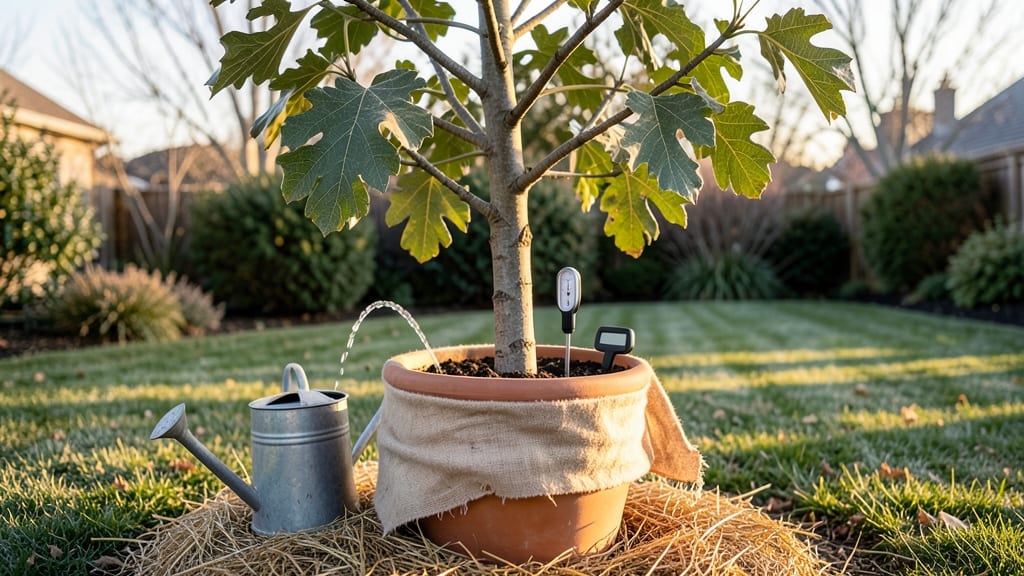
Your potted fig tree winter care starts with a single, critical move: moving it indoors before temps dip below 40°F. 🌿 I’ve watched figs struggle when left outside too long—leaves blacken, branches crack, and the whole plant weakens.
But with the right care, your tree can stay healthy and even produce fruit again next year.
The key is mimicking its natural Mediterranean climate: bright light, cooler temps (50–60°F), and reduced water. Place it near a south-facing window or under grow lights, and cut back on watering—soil should stay barely moist, not soggy.
Prune dead or damaged branches now to encourage fresh growth in spring, but avoid heavy pruning until after dormancy.
By spring, you’ll see new leaves unfurling, proof your fig is thriving. The secret? Consistency—no sudden temperature swings or overwatering. Even in colder zones (like USDA 7–9), this method keeps potted figs productive for years. Let’s make sure yours makes it through winter unscathed.
Pro tip: If your space gets too dry, group plants together or use a humidity tray. Watch for signs of stress—yellow leaves or wilting means adjust your care. With these steps, your fig will bounce back stronger than ever when warmer weather arrives.
📚 In This Guide
- What you need
- Instructions
- Tips and common mistakes
- Wrapping up and next steps
What you need
- ● Well-draining potting mix: 1 bag (10-15 lbs) of cactus/succulent blend or a mix with perlite/vermiculite (60% inorganic material for drainage).
- ● Larger container (if repotting): 1 pot (2-4 inches wider/deeper than current) with drainage holes. Terracotta or ceramic preferred for breathability.
- ● Slow-release fertilizer: 1 packet of balanced 10-10-10 or citrus-specific fertilizer (use sparingly—figs need less in winter!).
- ● Mulch: 2-3 inches of straw, pine needles, or shredded bark to insulate roots.
- ● Watering can with narrow spout: 1 (to avoid overwatering).
- ● Pruning shears: 1 pair (sterilized with rubbing alcohol).
- ○ Thermometer (optional but helpful): 1 indoor/outdoor model to monitor temps (aim for 40–50°F for dormancy).
- ● Grow lights: 1-2 LED bulbs (for indoor setups if natural light is less than 6 hours/day).
- ● Humidity tray: 1 with pebbles and water (to combat dry indoor air).
- ● Plant cover: Frost cloth or burlap (if moving outdoors; drape loosely over the pot).
- ● Root stimulator: 1 bottle of mycorrhizal fungi or seaweed extract (for post-winter recovery).
Step-by-Step guide to winterizing your potted fig tree
Here's how I keep my potted figs thriving through winter—no fancy equipment, just smart care.
🌱 Step 1: Prepare the Tree for Dormancy
Start by giving your fig tree a thorough inspection. Look for any damaged or diseased branches and prune them back with clean, sharp pruning shears. Figs naturally slow down in winter, so you'll want to mimic their natural dormancy period by reducing water and fertilizer. This is the moment that matters: stop fertilizing completely for the season.
I also like to give the leaves a gentle wipe-down with a damp cloth to remove dust and pests. This simple step helps the tree breathe better and prevents winter stress. If your tree is outdoors, bring it inside before temperatures drop below 40°F—figs hate cold drafts and sudden temperature swings.
🪴 Step 2: Adjust Watering for Winter Conditions
Watering changes dramatically in winter. Instead of keeping the soil consistently moist, let the top 2-3 inches of soil dry out completely between waterings. Overwatering is the fastest way to kill a dormant fig—roots need to breathe, even in winter. I check moisture by sticking my finger into the soil; if it feels dry to the touch, it's time to water lightly.
Place the pot in a location with bright, indirect light—a south-facing window or under a grow light works well. Avoid dark corners where the tree might stretch weakly. If your home runs dry in winter, use a humidity tray or pebble tray beneath the pot to add moisture to the air without soggy soil.
☀️ Step 3: Protect Against Cold Drafts and Temperature Shifts
Figs despise sudden temperature changes, so keep your potted tree away from doors, windows, or vents that might expose it to cold drafts. The ideal winter temperature range is 50-65°F—any colder and growth slows dramatically, any hotter and the tree may wake up too early. I place mine near an interior wall where the temperature stays stable.
If you're in a region with freezing nights, consider moving the pot to a garage or shed with consistent temperatures above 40°F. Wrap the pot in bubble wrap or place it on a saucer filled with insulating materials like foam boards to protect the roots. Real talk: I’ve lost figs to sudden freezes, and it’s a lesson I won’t forget.
✂️ Step 4: Monitor and Adjust for Early Signs of Stress
Watch for signs of winter stress like yellowing leaves, leaf drop, or new growth appearing too early. If you see leaves turning yellow, it’s often a sign of overwatering or too much light. Move the tree to a slightly shadier spot and let the soil dry out more between waterings. If new growth appears in winter, it’s a sign the tree isn’t truly dormant—reduce light slightly and keep temperatures cooler.
Every few weeks, give the leaves a quick once-over for pests like spider mites or scale, which love dry winter air. A spray of water or neem oil can keep them at bay without harming the tree. This is the time to be patient—figs grow slowly in winter, and rushing care will only backfire.
⏰ Step 5: Plan for Spring Transition
Start preparing for spring about 6-8 weeks before your last frost date. Gradually increase watering as new growth appears, and resume fertilizing with a balanced, water-soluble fertilizer once buds form. I like to move the tree back outside slowly—start with a few hours of shade each day, then increase exposure over 2-3 weeks to avoid shock.
This is also the time to repot if needed. If roots are circling the pot or growing out of the drainage holes, upgrade to a container 2-4 inches larger and refresh the soil. The goal is to give your fig a strong start before the growing season kicks in.
Tips & tricks for perfect potted fig tree winter care
Between us, winterizing your potted fig tree is all about mimicking nature—just with a little extra TLC. These small adjustments make a huge difference in keeping your tree healthy through the cold months.
Dormancy Prep: In Step 1, when you're pruning and stopping fertilizer, here's what I learned the hard way: use sterilized pruning shears to prevent spreading disease. After cutting, dip the shears in rubbing alcohol between cuts. Also, don't be afraid to remove up to 30% of the foliage—this reduces the tree's water needs during dormancy and helps prevent stress.
Watering Wisdom: The 2-3 inch soil dry-down in Step 2 is non-negotiable, but here's the secret: use your finger to check moisture at the 2-inch mark, not just the surface. Surface soil can be dry while deeper soil still holds moisture. I've seen many figs suffer from root rot because people only checked the top inch. Also, water in the morning so excess moisture evaporates during the day.
Temperature Troubleshooting: When protecting against cold drafts in Step 3, remember that 40°F is the absolute minimum for fig roots. If your home gets colder than that at night, consider a small space heater set to 50°F near the tree—just keep it away from leaves. I've used a ceramic nightlight with a thermostat to maintain consistent warmth without risking fire hazards.
Spring Transition Strategy: The 6-8 week prep before last frost in Step 5 is your golden window. Start by placing the tree near a south-facing window for 2-3 hours daily, then gradually increase exposure. I mark my calendar with reminders to adjust light exposure weekly. Also, if you repot, choose a container with drainage holes—fig roots hate soggy feet year-round.
Pro Tips for Potted Fig Tree Winter Care
- Between us, winterizing your potted fig tree is all about mimicking nature—just with a little extra TLC.
- Dormancy Prep: In Step 1, when you're pruning and stopping fertilizer, here's what I learned the hard way: use sterilized pruning shears to prevent spreading disease.
- Watering Wisdom: The 2-3 inch soil dry-down in Step 2 is non-negotiable, but here's the secret: use your finger to check moisture at the 2-inch mark, not just the surface.
Frequently asked questions
Got questions about keeping your potted fig tree thriving through winter?
You’re not alone! Here are answers to the most common concerns—so you can relax and enjoy your green companion all season long.
How cold is too cold for a potted fig tree in winter?
A potted fig tree can handle temperatures as low as 20–25°F (-6 to -4°C), but only if it’s dormant (no leaves) and protected from wind. If your winter dips below 20°F (-7°C), move it to a garage, shed, or unheated basement (just avoid freezing temps). Young or recently planted figs need extra care—keep them above 30°F (1°C).
Do I need to prune my fig tree before winter?
Pruning in late fall or early winter (before dormancy) helps remove dead/diseased branches and encourages stronger growth next year. Cut back 1/3 of the foliage to reduce stress, but avoid heavy pruning—figs are sensitive! Time it 4–6 weeks before your first frost for best results. Pro tip: Sterilize shears with rubbing alcohol to prevent infections!
Should I water my potted fig tree in winter?
Yes, but sparingly! Water only when the top 1–2 inches of soil are dry (test with your finger). Overwatering in cold weather leads to root rot. Reduce frequency by 50–70% compared to summer. If indoors, use a moisture meter or bottom-watering method to avoid soggy soil.
Can I keep my fig tree indoors during winter?
Move it to a bright, cool spot (50–60°F / 10–15°C) near a south-facing window. Avoid heat sources like radiators (they dry out the air). If indoors, rotate the pot weekly for even light exposure. Watch for pests like spider mites—mist leaves occasionally to boost humidity.
What if my fig tree loses all its leaves in winter?
Don’t panic—leaf drop is normal! Fig trees enter dormancy, shedding leaves to conserve energy. If the tree is otherwise healthy (no wilting, mold, or pests), it’ll regrow leaves in spring. But if leaves turn brown/yellow before dropping, check for overwatering, pests, or sudden cold snaps. Adjust care and monitor closely.
How do I transition my fig tree back outside in spring?
Harden off your fig tree gradually! Start by moving it outside for 2–3 hours daily in late winter, increasing time over 2 weeks. Avoid direct sun at first—acclimate it to outdoor light slowly. Once night temps stay above 40°F (4°C), it’s safe to leave it out full-time. Prune any dead wood after new growth appears.
Wrapping up and next steps
With the right care, your potted fig tree can thrive even in winter’s chill! 🌱❄️ By adjusting watering, protecting from frost, and ensuring proper light, you’re setting it up for a strong spring comeback.
Remember, patience and consistency are key—your tree’s resilience will reward you with lush growth come warmer months.
Ready to put these tips into action? Start by inspecting your tree’s current conditions and tweak its care plan as needed. Happy gardening—your fig tree is counting on you! 🌿