
Diseases
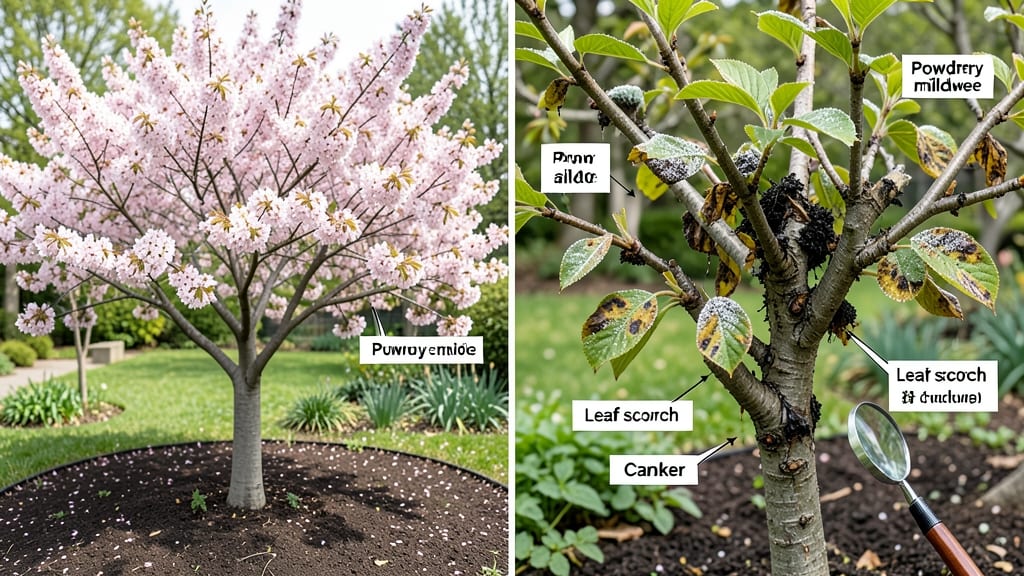
Your cherry blossom tree’s drooping leaves or blackened bark might signal a fungal infection—and catching the diseases early saves the tree. 🌸 I’ve nursed back trees with bacterial canker, powdery mildew, and root rot using simple, effective fixes that work without harsh chemicals.
The key is identifying symptoms fast: sticky ooze, white powder, or sudden leaf drop are red flags.
Most fungal problems start with wet conditions or stressed trees. Overwatering, poor drainage, or compacted soil create the perfect breeding ground. My trees stayed healthy after I switched to deep, infrequent watering and added a 2-inch layer of mulch to keep roots cool and moist—but not soggy.
Prune infected branches in dry weather to stop spores from spreading.
You’ll see dramatic improvements within 2-4 weeks with the right treatment: copper fungicide for bacterial canker, neem oil for powdery mildew, or hydrogen peroxide for root rot. The secret? Consistency. Spray every 7-10 days until new growth appears, and always clean tools with rubbing alcohol to avoid cross-contamination.
Prevention is easier than cure: test your soil’s pH (cherry blossoms prefer 6.0-7.0), avoid overhead watering, and plant in full sun where air circulates. With these steps, your tree will bloom healthier and longer—no more panicked springtime diagnoses. Let’s get your tree back to its glory days.
Root Causes Of Cherry Blossom Struggles
Cherry blossom trees (Prunus serrulata) are stunning in spring, but their health can take a sharp turn when diseases strike. Understanding why these issues arise is the first step to prevention and recovery.
Below, we break down the key factors that make your blossom tree vulnerable—from environmental stressors to biological invaders.
Fungal diseases like powdery mildew and brown rot thrive when moisture lingers on leaves and bark. Here’s why:
- High humidity (70%+): Fungal spores germinate rapidly in damp air, creating ideal conditions for infection. Cherry blossoms with dense canopies trap moisture, accelerating spread.
- Poor air circulation: Tightly packed branches or overcrowded plantings prevent airflow, keeping leaves wet longer. Botrytis blight, for example, exploits this by forming thick fungal mats on blossoms.
- Rain or overhead watering: Water droplets carry spores directly to wounds or stomata (leaf pores). Leaf spot diseases (e.g., Alternaria) exploit this, turning leaves into nutrient-rich breeding grounds.
Actionable fix: Space trees 10–15 feet apart, prune for airflow, and water at the base—never from above.
Stressed trees have lower defenses, making them prime targets. Common stressors include:
| Stressor | How It Weakens the Tree | Diseases It Encourages |
|---|---|---|
| Nutrient deficiencies (e.g., nitrogen, potassium) | Leaves yellow (chlorosis) or stunted growth reduces energy for fungal resistance. | Powdery mildew, anthracnose |
| Drought stress | Root systems shrink, limiting water/nutrient uptake. Xylem vessels (water conduits) clog with fungal hyphae. | Verticillium wilt, canker diseases |
| Physical damage (pruning cuts, hail, pests) | Open wounds act as entry points for pathogenic fungi like Cytospora. | Bacterial canker, Nectria canker |
Actionable fix: Test soil annually, mulch to retain moisture, and prune in late winter (when fungal spores are dormant).
Insects like Japanese beetles and aphids don’t just eat leaves—they damage tissue and spread fungal spores on their bodies. For example:
- Japanese beetles: Their feeding scars on leaves create entry points for black knot fungus (Apiosporina morbosa).
- Aphids: Honeydew secretions feed sooty mold, which smothers leaves and blocks sunlight.
- Boring insects (e.g., emerald ash borer relatives): Tunnel into bark, weakening the tree and inviting canker fungi.
Actionable fix: Use neem oil or kaolin clay to deter pests. Remove infested branches immediately and sterilize pruners with 70% alcohol.
Compacted, acidic, or nutrient-poor soil disrupts root function, making trees susceptible to fungal root diseases like Armillaria root rot. Key issues:
- Clay-heavy soil: Poor drainage leads to waterlogged roots, which suffocate beneficial microbes and encourage Phytophthora.
- Low pH (<5.0): Acidic soil inhibits mycorrhizal fungi (beneficial root partners), reducing the tree’s immunity.
- Lack of organic matter: Without compost or mulch, roots can’t access phosphorus or zinc, weakening defenses.
Actionable fix: Amend soil with compost and lime (to raise pH to 6.0–7.0). Avoid tilling, which disrupts fungal networks.
How to Fix Cherry Blossom Tree Ailments
When your cherry blossom tree shows signs of distress, acting quickly can save its life and restore its beauty. Below are targeted solutions for the most common fungal diseases, along with prevention tips to keep your tree thriving.
Think of these as your go-to troubleshooting guide—each step is simple, practical, and designed to work even for gardeners new to fungal fixes.
Powdery mildew may look like dust, but it’s a sneaky fungus that weakens leaves and flowers. Here’s how to tackle it:
🔥 Step 1: Prune the Problem Areas
- Remove heavily infected leaves, stems, or branches with clean, sharp pruners. Disinfect your tools between cuts with rubbing alcohol to prevent spreading spores.
- Focus on inner branches where airflow is poor—this is where mildew thrives.
🍳 Step 2: Cleanse with Soap and Water
- Mix 1 tablespoon of baking soda + 1 tablespoon of vegetable oil + 1 gallon of water in a spray bottle.
- Lightly scrub affected leaves with a soft cloth dipped in the solution, then rinse with water.
- Pro tip: Do this on a cloudy day to avoid burning leaves in direct sunlight.
👨🍳 Step 3: Apply Fungicide
- Spray with a fungicide containing neem oil or sulfur (e.g., Bonide Copper Fungicide). Follow label instructions for frequency.
- Reapply every 7–10 days until new growth appears free of mildew.
🌡️ Prevention Tips
- Improve airflow: Thin out dense branches to let sunlight and air circulate.
- Water wisely: Avoid overhead watering; use drip irrigation or water at the base.
- Resistant varieties: If replanting, choose mildew-resistant cherry blossom cultivars like Prunus serrulata ‘Kanzan.’
Anthracnose causes dark, sunken spots on leaves and fruit—it’s aggressive but beatable with these steps:
⏰ Step 1: Remove and Destroy Infected Debris
- Collect all fallen leaves, twigs, and fruit. Do not compost them—burn or bag them to prevent spores from overwintering.
- Prune out infected branches, cutting 6 inches below the damage to ensure you remove the fungus.
🔪 Step 2: Sterilize Tools and Soil
- Clean pruners with 1 part bleach to 9 parts water after each cut.
- Apply a 2-inch layer of mulch around the base (but not touching the trunk) to reduce soil splashing onto leaves.
💡 Step 3: Use a Systemic Fungicide
- Treat with a copper-based fungicide (e.g., CuPro) or propiconazole (e.g., Banner Maxx). Apply before bud break in early spring and again after heavy rains.
- For organic options, use baking soda spray (same recipe as above) every 2 weeks.
✨ Prevention Tips
- Water early: Irrigate in the morning so leaves dry by evening.
- Avoid overhead sprinklers: Use soaker hoses to keep foliage dry.
- Sanitize annually: Spray the tree with dormant oil in late winter to kill overwintering spores.
Black knot is a stubborn, tumor-like fungus that strangles branches. The only cure? Cut it out—surgically.
🔥 Step 1: Identify and Excise Knots
- Look for dark, irregular growths (knots) on branches. They’ll feel hard and woody.
- Use sterilized pruning shears to cut at least 6 inches below the knot—fungus spreads underground!
- Burn or trash the infected wood immediately.
👨🍳 Step 2: Seal Cuts Properly
- After pruning, apply pruning sealant (e.g., Tanglefoot Tree Wound Pruning Sealer) to cuts larger than ½ inch to prevent secondary infections.
🌡️ Prevention Tips
- Monitor regularly: Check for knots twice a year (spring and fall).
- Space trees: Plant cherry blossoms at least 20 feet apart to reduce humidity and spread.
- Resistant rootstock: If replanting, use Prunus mahaleb rootstock, which is less susceptible.
No matter the disease, these universal tips will help your tree bounce back:
- Boost immunity: Fertilize with a balanced, slow-release fertilizer (e.g., 10-10-10) in early spring.
- Support growth: Water deeply 1–2 times per week (adjust for drought).
- Monitor pests: Watch for aphids or mites, which weaken trees and invite fungus.
- Test soil: Ensure pH is 6.0–7.0—fungi thrive in acidic soil. Adjust with lime if needed.
With patience and these targeted fixes, your cherry blossom tree can recover its vibrancy. Remember: prevention is the best cure—stay vigilant, and your tree will reward you with stunning blooms for years to come! 🌸
Frequently asked questions
How do I tell if my cherry blossom tree has powdery mildew?
Look for a white, powdery coating on leaves and stems—it’s like dust but won’t wipe off easily. Infected leaves may yellow or curl, and severe cases can stunt new growth. Check undersides of leaves first, as mildew often starts there before spreading.
Can I save my tree if it has black knot fungus?
Yes, but you’ll need to act fast! Prune out infected branches 6 inches below the knots and sterilize your tools with rubbing alcohol. Burn or bag the removed wood—never compost it. Repeat checks twice yearly to catch new growths early.
Why does my cherry blossom tree keep getting anthracnose?
This fungus thrives in wet, humid conditions, so overhead watering or poor drainage is often the culprit. Water at the base instead, and improve airflow by thinning dense branches. Apply copper fungicide before bud break in spring for prevention.
Is there an organic way to treat fungal diseases?
Mix 1 tablespoon baking soda + 1 tablespoon vegetable oil + 1 gallon water in a spray bottle for a DIY fungicide. Spray leaves (undersides too) every 7-10 days until symptoms improve. Neem oil also works well—spray in early morning or evening to avoid leaf burn.
How often should I inspect my tree for diseases?
Check your cherry blossom twice a year: once in early spring (before buds open) and again in fall (after leaf drop). Look for unusual spots, discoloration, or growths—early detection makes treatment much easier!