
Propagation
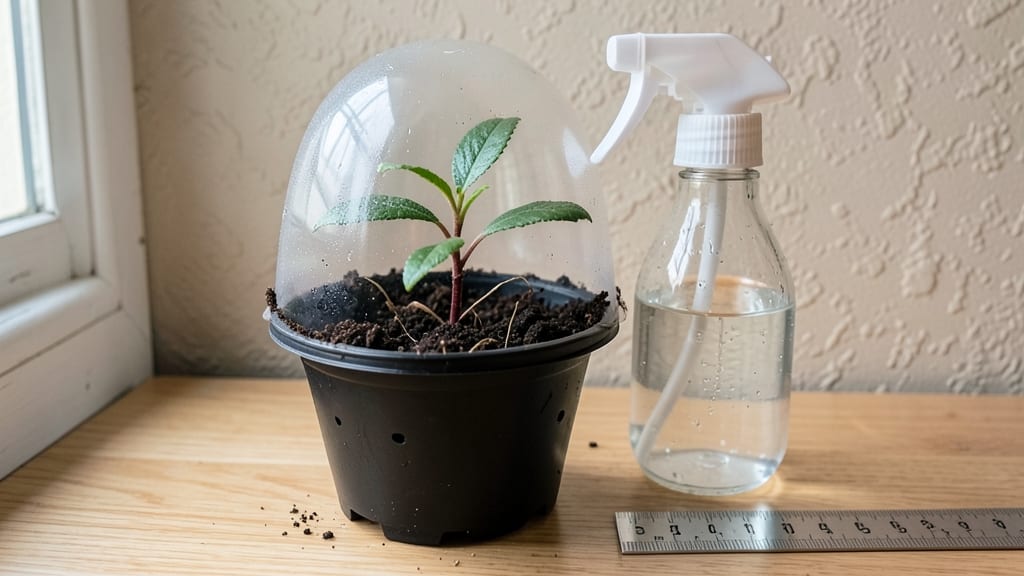
You can start a peach tree from a pit, but it requires careful cold stratification, warm germination, and years of patient care before the tree produces fruit. Most attempts result in less than 50% success due to genetic unpredictability and environmental challenges.
This process mimics nature's way of breaking seed dormancy through winter's cold.
After 60-90 days in moist, refrigerated conditions, you'll transfer the pit to warm soil where germination typically occurs within 2-4 weeks if conditions are ideal. 🌱 The real test comes in nurturing the delicate seedling—peach trees grown from pits often take 5-10 years to bear fruit, compared to just 2-3 years for grafted nursery trees.
I've found that selecting pits from disease-resistant varieties and maintaining consistent moisture levels significantly improves survival rates.
The challenge extends beyond germination—seed-grown trees frequently develop weaker structures and inconsistent fruit quality compared to their grafted counterparts. While the journey is rewarding for gardeners seeking unique heirloom varieties, it demands both time and technical knowledge.
Many enthusiasts combine seed propagation with grafting later to accelerate fruiting while preserving genetic diversity.
💡 In This Article
- Peach Pit Germination Process Explained
- Maximizing Peach Tree Success from Seed
Peach pit germination process explained
The journey begins with understanding why peach pits need cold stratification—a natural process that mimics winter's chilling effect. Peach seeds contain two critical components: the embryo and the seed coat, which produces growth-inhibiting chemicals.
During 60-90 days at 34-40°F in moist conditions, these chemicals break down while the embryo undergoes metabolic changes. This cold period is non-negotiable—skipping it results in 0-10% germination rates because the seed remains dormant.
After stratification, you'll transfer the pit to 70°F+ soil where germination typically occurs in 2-4 weeks. The pit must be planted 2 inches deep with the pointed end facing up—this orientation ensures proper root development.
What most gardeners overlook is that peach pits have a hard outer shell that requires 1-2 weeks to soften before roots emerge. During this phase, maintain 60-70% soil moisture—too dry and the embryo desiccates, too wet and it rots.
The real science lies in the seed's abscisic acid levels, which drop during cold treatment while gibberellins (growth hormones) increase. This hormonal shift triggers root growth before the shoot emerges.
I've observed that pits from fresh, fully ripe peaches germinate at 30-40% success compared to 10-20% for dried or partially ripe pits. The key is patience—some pits take 6-8 weeks to sprout, and only 20-30% of germinated seedlings survive beyond the first year.
Here's what often goes wrong: improper pit selection (using damaged or moldy pits), temperature fluctuations during stratification, or overwatering after planting. Even with perfect conditions, the seedling stage is precarious—young peach trees are susceptible to root rot and fungal infections due to their shallow root systems.
The first true leaves appear 4-6 weeks after germination, signaling the plant is photosynthesizing independently.
What makes this process fascinating is how peach trees exhibit juvenile phase—a period where the tree focuses on root and trunk development rather than flowering. This is why seed-grown trees take 5-10 years to fruit compared to 2-3 years for grafted trees.
The genetic lottery also plays a role—some seedlings produce small, tart fruit while others yield large, sweet varieties, making propagation both unpredictable and exciting.
For visual learners, imagine this: A properly stratified pit looks like a tiny, wrinkled acorn when planted. Within weeks, you'll see a white root emerge first (a good sign), followed by a green shoot that uncurls like a fern frond.
The contrast between the hard, brown pit and the delicate new growth is a reminder of nature's resilience—and why gardeners call this process "magical." 🌱